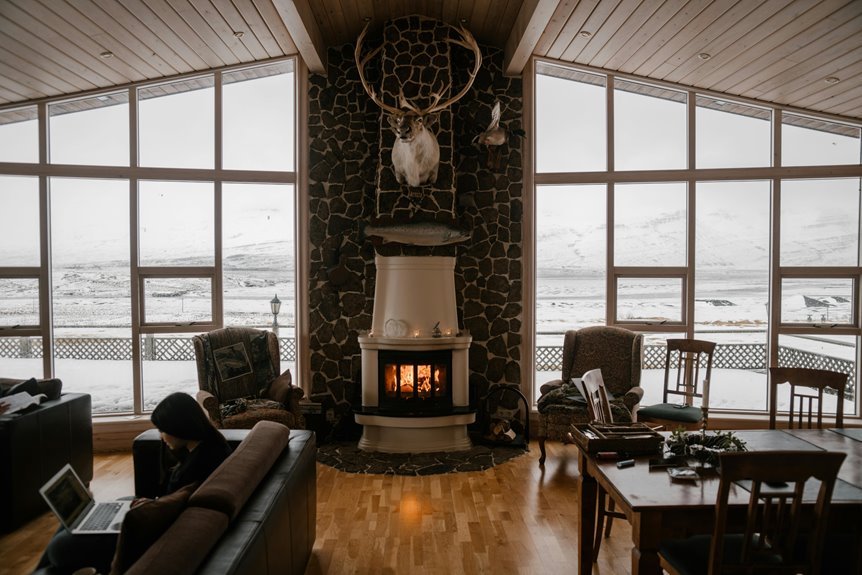
You can put a fireplace in your living room, dining room, home office, or even your kitchen, but bedrooms require careful consideration due to carbon monoxide risks. Electric fireplaces work virtually anywhere since they don’t need venting. Gas fireplaces need proper ventilation through walls or roofs, while wood-burning models require chimneys. Your choice depends on the room’s size, your local building codes, and whether you’re willing to handle installation complexity.
The right placement improves ambiance while keeping your home safe and efficient—but location-specific details matter more than you’d think.
Living Rooms: The Central Heating Hub
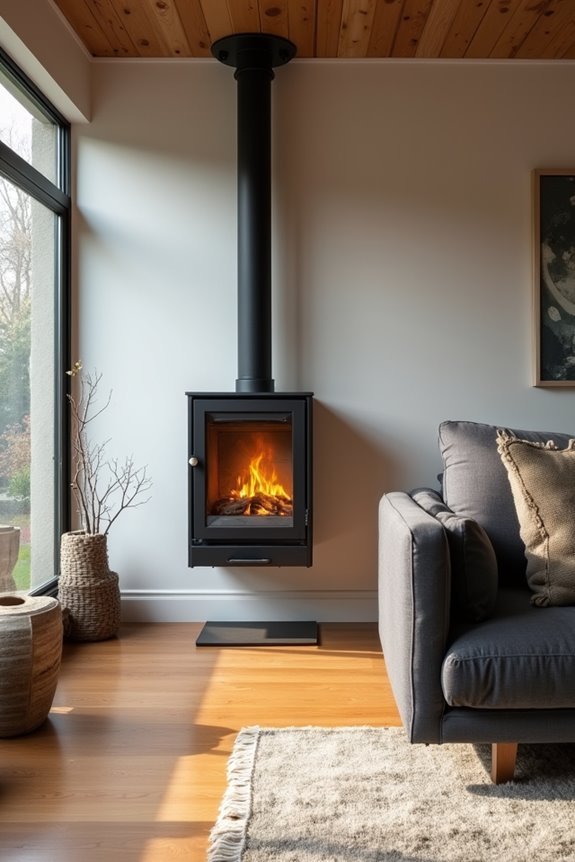
Why’s the living room the first place you probably picture when someone mentions a fireplace? It’s the heart of your home—where everyone gathers, and honestly, a fireplace just belongs there.
You’ve got flexibility here, which is pretty awesome. Gas and electric fireplaces don’t need a vent or complicated chimney setup, so you can place them almost anywhere without major renovations. Wood-burning options do require a chimney through your roof, but they’re totally doable if you’ve got the space.
The key is thinking about your room’s size and making sure you’ve got enough clearance around your fireplace for safety. Modus Fireplaces actually recommends working with design consultants to find the right spot and style that matches your décor. Your living room deserves a fireplace that looks like it was always meant to be there.
Dining Rooms: Ambiance Without Compromising Function
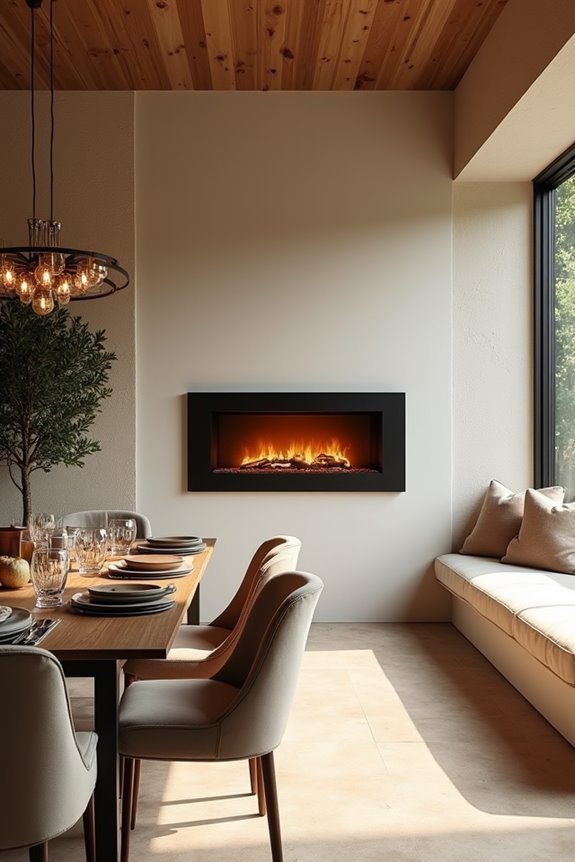
Ever thought about putting a fireplace in your dining room? You’re not alone! Creating warmth and ambiance while eating dinner has real appeal. The trick is balancing that cozy feeling without disrupting your meals.
A fireplace in your dining room creates warmth and ambiance, but the key is balancing coziness without disrupting your meals.
Gas fireplaces work well here because they offer flexible venting options—straight through exterior walls or roofs. They provide heat exactly where you need it, plus that glow everyone appreciates. Just maintain proper clearances around your dining table so nobody gets uncomfortably hot mid-meal.
Can’t vent easily? Ventless gas logs are your backup plan, though you’ll need carbon monoxide detectors for safety. Prefer no venting requirements? Electric fireplaces install almost anywhere without any venting needed.
Whatever you choose, position your fireplace thoughtfully—away from traffic flow and at a distance that respects your dining comfort. You’ll create the gathering spot your family actually wants.
Bedrooms: Why Most Installations Aren’t Safe
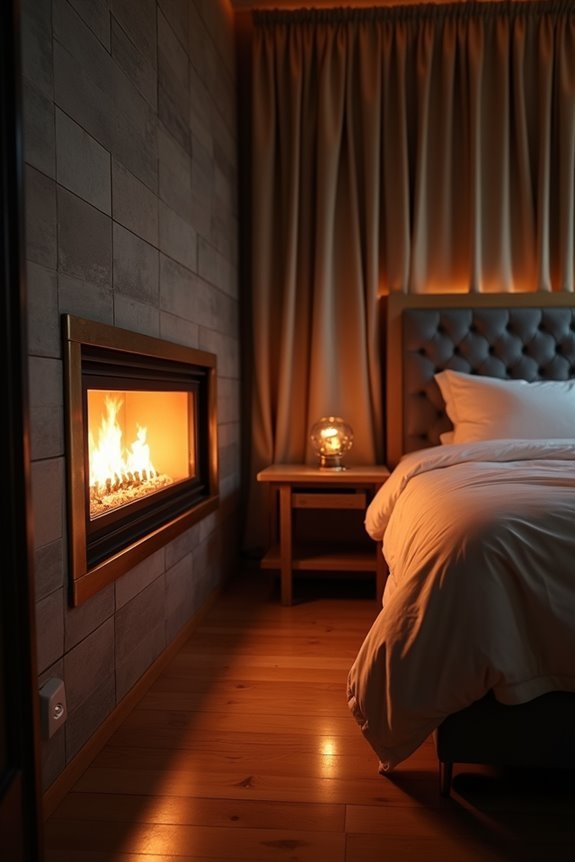
Although a fireplace might seem like the ultimate bedroom upgrade, here’s the reality: most bedroom fireplace installations come with serious safety concerns that make them pretty risky. You’re dealing with bedroom safety issues that shouldn’t be taken lightly.
Here’s why bedrooms are tricky:
- Carbon monoxide buildup – A gas fireplace needs proper venting or detectors nearby, and bedrooms often lack adequate ventilation for safe operation.
- Limited escape routes – If something goes wrong, you need a clear way out, which bedrooms typically don’t offer compared to other rooms.
- Complex installation requirements – Wood-burning setups demand dedicated chimneys and strict clearances that most bedrooms can’t accommodate.
Electric fireplaces sidestep these issues entirely since they need no venting. They’re your safest bedroom option if you’re determined to add warmth and ambiance.
Home Offices: Creating Warmth and Focus
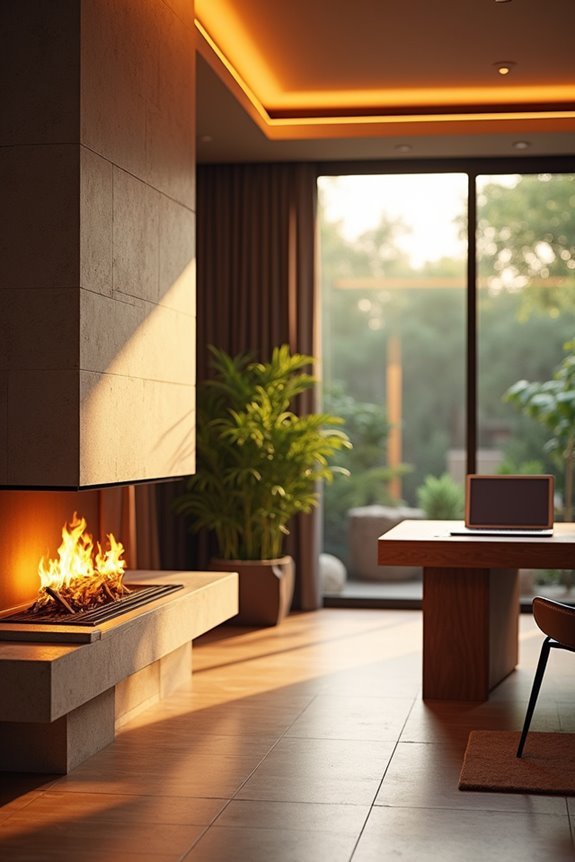
Unlike bedrooms, where safety concerns can derail your fireplace dreams, home offices actually give you way more flexibility—and they’re one of the best places to add a fireplace to your whole house. Electric fireplaces plug right in and need no venting, making them perfect for cramped spaces. Gas fireplaces deliver real heat and zoning options, though they require proper ventilation and clearances from walls. Bioethanol fireplaces skip the chimney altogether, needing just an electrical outlet for fuel storage. Whatever you choose, you’ll create a focused work environment. Check local building codes first, verify adequate ventilation, and consider your room’s heat capacity. Design consultants can help you position your fireplace as a focal point that improves how you work.
Kitchens: Design Integration and Ventilation Challenges
Can you actually pull off a fireplace in your kitchen without turning your cooking space into a ventilation nightmare? Yes, but you’ll need to pick the right type for your situation.
Your main options break down like this:
- Gas fireplaces require venting through walls or roofs, demanding careful planning to minimize vent length and keep combustibles safe
- Vent-free gas logs skip the venting hassle but demand a carbon monoxide detector and serious attention to indoor air quality
- Electric fireplaces offer maximum flexibility—just plug them in, though they provide limited heating
Consider proximity to food prep areas and moisture exposure when designing your layout. Others have successfully merged warmth and cooking spaces by matching fireplace choice to kitchen setup and needs.
Basements: Solving Moisture and Structural Issues
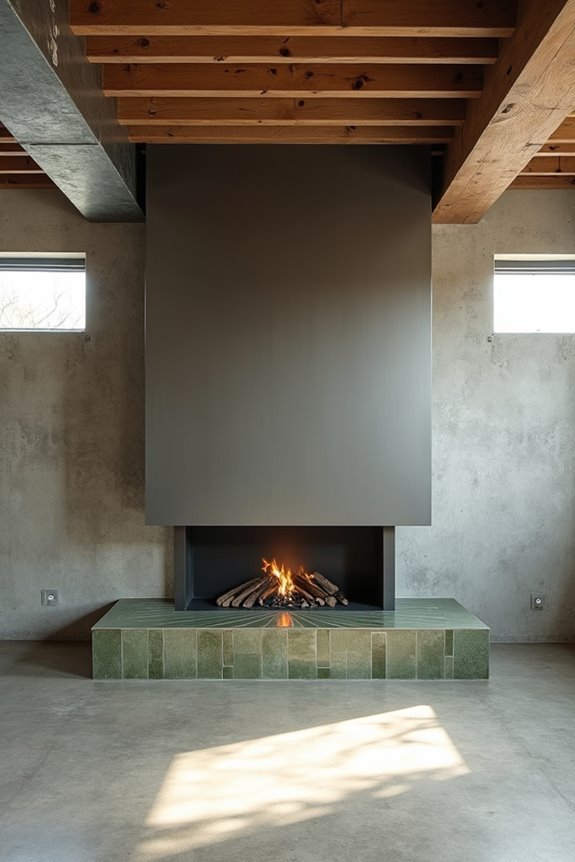
If you’re planning a fireplace in your basement, you’ll need to address a few key challenges first—and moisture is at the top of the list. Basements are basically water magnets, so you’ll install a vapor barrier and improve drainage before adding any fireplace. You’ll also evaluate your floor’s structural support to handle the weight safely.
| Challenge | Solution | Why It Matters |
|---|---|---|
| Moisture damage | Vapor barrier + drainage | Protects materials from decay |
| Weak foundation | Load assessment | Prevents safety hazards |
| Humid air | Corrosion-resistant components | Extends fireplace lifespan |
| Gas venting | Direct-vent or vent-free options | Avoids expensive chimney work |
Direct-vent gas fireplaces through exterior walls work well here. Install CO and smoke detectors, maintain clearance from damp walls, and you’ll have a functional basement fireplace that performs reliably.
Outdoor Spaces: Weather-Resistant Installation Options
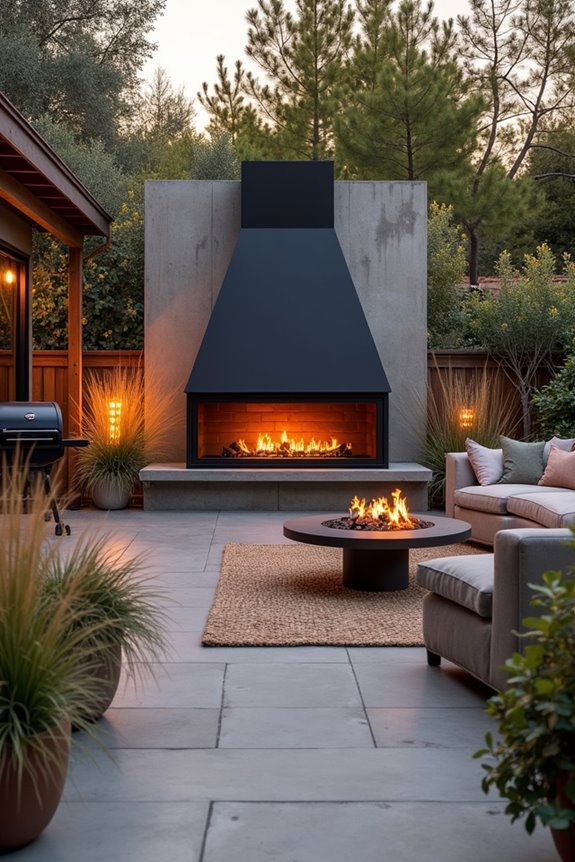
Outdoor fireplaces require special materials and smart placement strategies, because rain, wind, and temperature swings will damage a regular indoor unit quickly. Weather-resistant options like stainless steel components and outdoor-rated venting systems exist specifically to handle weather exposure, so you can have a functional fire without corrosion concerns. Your patio or exterior wall can work as a fireplace location once you account for proper clearances from structures and combustible materials, and verify that your local codes permit the installation.
Weatherproof Fireplace Materials
Ever noticed how the beautiful fireplace you installed last summer starts looking a bit rough by winter? That’s because outdoor fireplaces face serious challenges from rain, humidity, and temperature swings. You’ll want materials that hold up against bad weather.
When you’re shopping for outdoor fireplace components, look for these three essential materials:
- Stainless steel or powder-coated steel – These resist rust and corrosion, keeping your fireplace looking fresh for years
- Heat shields – They protect internal parts from moisture damage and temperature fluctuations
- Corrosion-resistant finishes – These sealed enclosures prevent degradation from outdoor elements
Choosing weatherproof materials means your outdoor gathering spot stays beautiful and functional, no matter what Mother Nature throws at it. You’re investing in durability that works.
Outdoor Placement Considerations
Where exactly should you plop that beautiful outdoor fireplace so it actually works and doesn’t create chaos? Smart outdoor placement is everything. You’ll want to position your outdoor fireplace away from strong winds that’ll mess with your flames and push smoke toward your guests—nobody enjoys that. Keep it at least ten feet from your house, deck, and any trees overhead; fire codes exist for good reasons. Consider afternoon sun exposure too, since you don’t want your fireplace baking in heat all day. Think about foot traffic patterns and where people naturally gather. Ground-level installations need proper drainage so water doesn’t pool underneath. Finally, check local building codes before finalizing your outdoor placement, meeting neighborhood requirements and keeping everyone safely enjoying those cozy gatherings.
Interior vs. Exterior Placement: Why Interior Wins
When you choose an interior fireplace, you’re basically getting a climate-control powerhouse that actually heats your home instead of letting warmth escape through exterior walls—pretty different from outdoor setups that fight Mother Nature constantly. You’ll also find that interior placement makes building codes way easier to manage, since your fireplace stays safer inside where you can monitor it, detect any smoke or carbon monoxide issues, and keep everything up to code without wrestling exterior clearance requirements. Plus, you get to design your fireplace however you want—wall-mounted, floating in the middle of a room, or tucked into a corner—because interior spaces let you express your personal style in ways outdoor fireplaces just can’t compete with.
Climate Control And Efficiency
How’d you like to heat your home without watching all that warmth slip right out the walls?
Interior placement beats exterior placement because you’re actually keeping heat where it counts. Here’s why interior fireplaces work better:
- Better insulation – Interior walls and rooms seal in warmth, reducing heat loss and boosting efficiency
- Shorter vent runs – Zero clearance fireplaces minimize complex venting through exterior walls, cutting down on wasted heat
- Smart positioning – Place your fireplace in living areas with good insulation, away from doors and windows where heat escapes
Vent-free gas logs and electric fireplaces offer the ultimate flexibility since they don’t require external venting at all. You’re creating a heat source that actually stays in your space, making your home feel warmer and your energy bills feel lighter.
Safety And Code Compliance
Because you’re dealing with fire and venting, safety isn’t something you can wing—and that’s where interior fireplaces really shine compared to their exterior cousins. Building codes actually require interior placement for good reason: you’ll get better draft control, fewer backdraft risks, and easier smoke and carbon monoxide detector installation. Interior setups let you integrate your fireplace smoothly with existing HVAC systems while keeping weather and pests out of your venting paths.
| Safety Factor | Interior | Exterior |
|---|---|---|
| Draft Control | Excellent | Unpredictable |
| Detector Access | Easy | Difficult |
| Weather Impact | Minimal | Significant |
| Code Compliance | Standard | Often fails |
| Professional Inspection | Simple | Challenging |
An interior fireplace provides the reliability and safety standards you need.
Aesthetic Design Flexibility
Why does putting your fireplace inside your home matter so much for how it looks? Interior placement gives you serious design flexibility that exterior options just can’t match. You’re creating a focal point that ties your whole room together.
Here’s what makes interior fireplaces work well:
- Zero-clearance installation lets you embed your fireplace flush against walls without needing exterior venting exposure
- Seamless TV integration means you can mount your screen above the flames for a cohesive entertainment hub
- Vent-free electric options work anywhere—bedrooms, offices, living rooms—requiring absolutely no chimney or ventwork
Electric fireplaces especially shine because they’re adapting to your space, not forcing you to work around awkward external vents. You’re building a room that feels well-planned and connected, not like your fireplace was an afterthought.
Chimney Routing and Multi-Story Constraints
When planning the ideal fireplace location in a multi-story home, think vertically as well as horizontally. Your chimney must travel straight up through every level, which presents more complexity than it initially appears.
The primary challenge involves navigating around rafters, trusses, and other structural obstacles. You can angle the chimney around these obstructions using stainless steel pipe, but building codes prohibit sharp 90-degree turns.
Optimal performance comes from keeping the chimney as straight and centered as possible, particularly within insulated spaces. This reduces heat loss across floors and improves overall performance. Advance planning prevents costly complications and reduces expenses later.
Electric, Gas, or Wood: Which Type Works in Your Room?
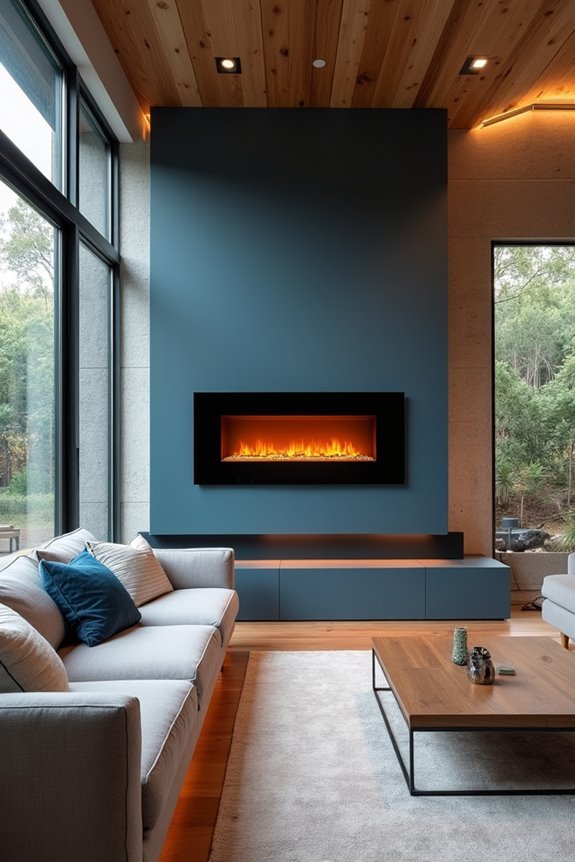
You’ve got three main fireplace types to choose from, and each one has different requirements for where you can install it in your home. Electric fireplaces offer the most flexibility—you can place them almost anywhere since they don’t need venting or chimneys. Gas fireplaces require piping through a wall, and wood-burning fireplaces need a full vertical chimney running through your roof. Understanding what each type requires makes selecting the right one for your room straightforward.
Electric Fireplaces: Versatile Installation
Ever tried squeezing a traditional fireplace into a bedroom or home office? Yeah, that doesn’t work. But here’s where electric fireplaces shine—they’re your answer to adding warmth and style practically anywhere.
Unlike their gas or wood cousins, electric fireplaces need no venting whatsoever. This means you can install them without worrying about chimneys or complicated setup. Consider these three installation options:
- Wall-mounted units save floor space and create a sleek, modern look
- Recessed models fit snugly into walls for a built-in appearance
- Freestanding units move easily between rooms whenever you want
You’ll control beautiful multicolor flame effects and LED lighting through remote or built-in controls. They’re perfect for bedrooms, dining rooms, and home offices—spaces where traditional fireplaces simply can’t go. Your installation flexibility means you can finally add a fireplace to any room, no matter your space’s layout.
Gas Fireplaces: Flexible Placement Options
What’s holding you back from putting a fireplace exactly where you want it? With gas fireplaces, you’ve got serious flexibility. Direct vent models need venting through an exterior wall or roof, sure, but that’s honestly pretty manageable. You’re looking at a double-walled pipe that handles both intake and exhaust, so placement becomes way simpler than you’d think.
Here’s what sets them apart: vent-free gas logs. No chimney, no complex venting needed. You can basically install them anywhere inside your home—just keep a carbon monoxide detector nearby for safety. Some gas fireplace models even allow 45° and 90° offsets, meaning you’ve got creative options for tricky layouts.
Local codes vary, so check yours first. You’re closer to that ideal fireplace spot than you realize.
Wood Fireplaces: Ventilation Requirements Matter
Gas fireplaces are pretty forgiving, but wood-burning fireplaces? They’re pickier about where you place them. Your venting setup matters because you need a vertical chimney running straight through your roof. Here’s what you’re working with:
- Chimney height rules: Your chimney must sit at least 3 feet higher than anything within 10 feet horizontally—that’s code, not suggestions.
- Limited offset angles: You can use 15°, 30°, or 45° offsets for your venting, but 90° angles? Absolutely not permitted.
- Straight runs work best: Whenever possible, keep your chimney run straight to maximize draft and performance.
These ventilation requirements mean your wood fireplace placement isn’t flexible. You’ll need to plan around your roof structure and existing framing. It’s doable, though—just requires upfront thinking before installation.
Space, Venting, and Load-Bearing Wall Requirements
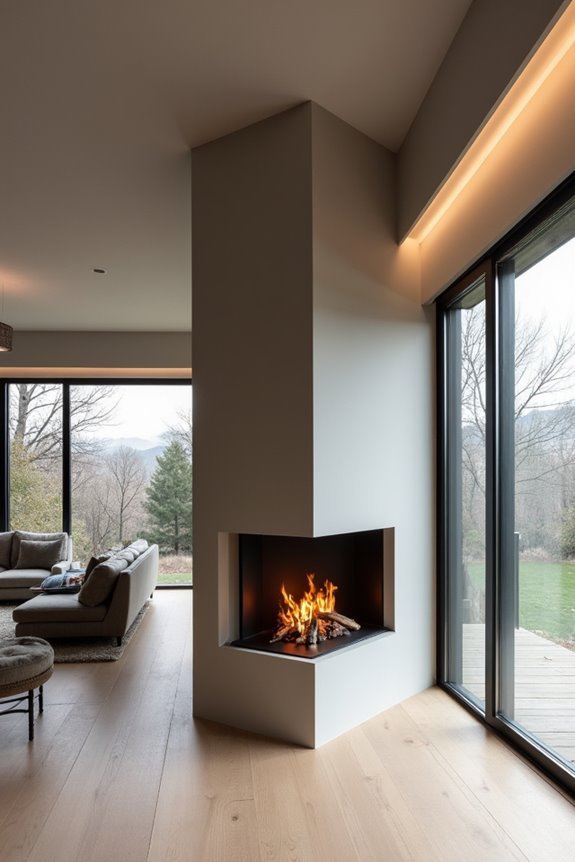
Before you start planning your fireplace installation, you need to consider the structural and technical requirements. Your fireplace needs load-bearing walls or proper structural framing to handle its weight without risking wall failure. Not all walls are created equal, so you’ll want to identify which ones actually support your home’s structure.
Venting is equally important. Wood and gas fireplaces require an exhaust path to safely remove smoke and gases, while vent-free models skip this step entirely. Exterior walls typically work best for venting since they offer shorter, straighter routes for your ductwork. Multi-story homes demand extra planning to maintain clearances through each level. Check local codes—they’ll dictate exactly where you can place your fireplace and what clearances you need.
Installation Mistakes That Waste Heat and Create Safety Risks
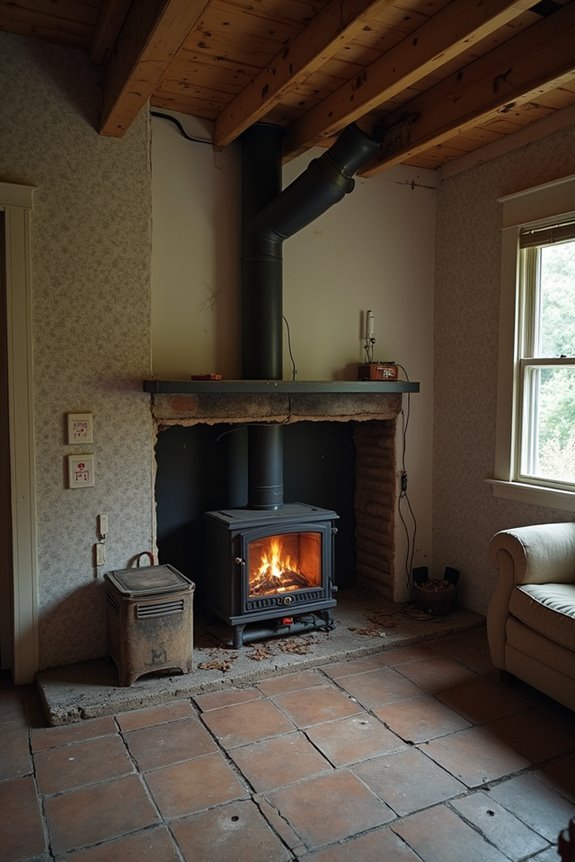
Now that you’ve got the right walls and venting route mapped out, here’s where lots of people stumble: actually installing the thing. Even small mistakes during installation can reduce your fireplace’s efficiency and create serious safety hazards.
Here’s what commonly goes wrong:
- Improper venting setups – Backdrafts, smoke backups, and carbon monoxide leaks happen when you skip proper clearances or attempt ventless installations without adequate room ventilation and CO detectors.
- Complex vent runs – Multi-angle paths, excessive elbows, and off-axis routing reduce efficiency and risk overheating vent components beyond manufacturer specifications.
- Wrong clearances – Missing that critical 3-foot clearance above and 10-foot horizontal buffer around your fireplace compromises safety and violates building codes.
You’ve invested in this upgrade—don’t let installation shortcuts undermine everything. Get the details right from day one.
Permits, Inspections, and Code Compliance by Region
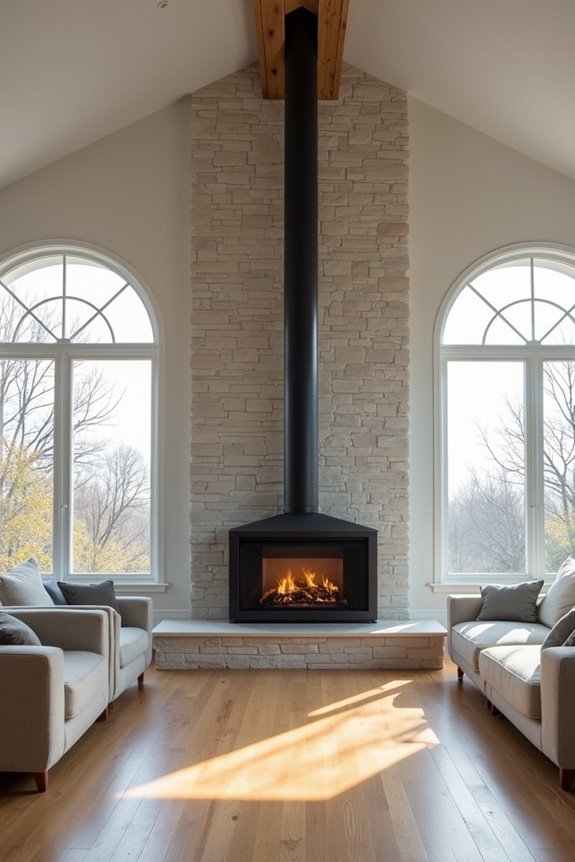
Before you can enjoy that cozy fireplace you’re dreaming about, you’ll need to navigate the sometimes confusing world of building codes and permits—and yes, they’re different depending on where you live. You’ll have to get local approval, which means acquiring the right permits and understanding what your region requires for wood, gas, or electric fireplaces (spoiler alert: they’ve got different rules). The good news is that professional installers know these regulations inside and out, and they’ll help you get through inspections by making sure your venting, clearances, and safety features meet your area’s specific standards.
Building Code Requirements
Why does it feel like fireplace installation comes with more red tape than actual flames? You’re not alone in wondering this. Building codes exist to keep you and your home safe, and they’re stricter than you’d think.
Here’s what you need to know:
- Permits are non-negotiable – You’ll need local approval before installing any fireplace, whether gas or wood
- Venting requirements vary by region – Your chimney, co-axial vent, or vent-free system must meet specific codes for rise, run, and elbows
- Zero Clearance fireplaces need manufacturer approval – Even though they’re designed for tight spaces, your local authority must inspect and sign off
Connect with a qualified professional who understands your region’s specific regulations. They’ll navigate the requirements so you can enjoy your fireplace without concerns.
Local Permit Acquisition Process
Once you’ve picked out your fireplace, comes the part that requires attention—getting permits. It’s not glamorous, but it’s necessary. Your local building department needs to approve your plans before work starts. You’ll submit documentation like manufacturer specs and venting diagrams showing exactly how everything connects. Then comes the inspection phase after installation wraps up. Inspectors check that electrical, gas, and venting work meets safety standards for your region. They’re verifying clearances, chimney height, and fire separation distances match local codes. Different areas have different requirements—some want plan approvals first, others focus on post-installation checks. Think of inspections as your fireplace’s final exam. Getting this right means you’re protecting your home and staying on good terms with your neighborhood’s safety rules.
Professional Inspection Standards
After you’ve submitted your paperwork and the building department’s given you the green light, inspectors step in to make sure your fireplace installation actually meets all those safety rules you’ve been reading about. You’re not alone in this process—many homeowners find inspections reassuring rather than stressful.
Your inspector will check:
- Venting systems to confirm smoke and gases escape safely outside
- Clearances around your fireplace, verifying proper distance from flammable materials
- Structural support to verify your walls can handle the installation’s weight
Inspections typically happen twice: before installation begins and after completion. Regional standards vary, but they’re all designed with your family’s safety in mind. Think of inspectors as your team, catching potential issues before they become problems.
Find a Licensed Installer: What to Ask and Why It Matters
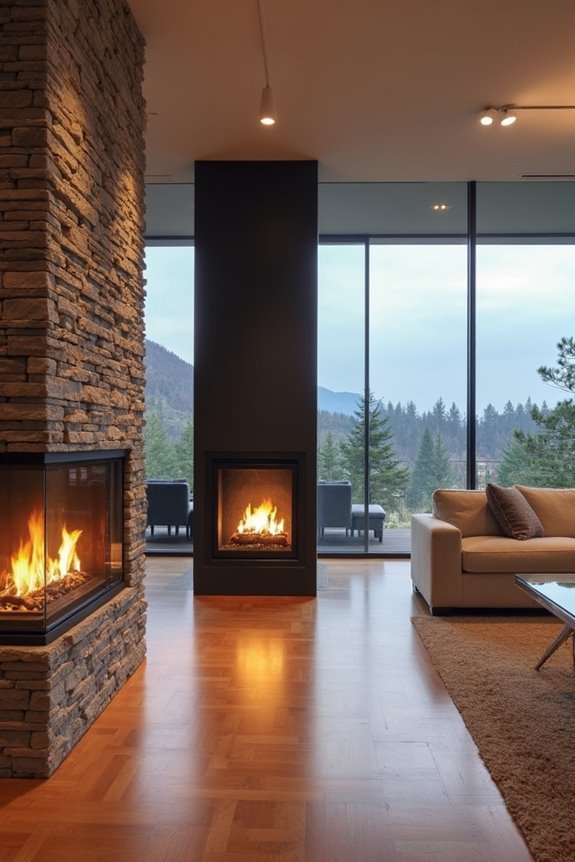
How do you know if someone’s actually qualified to install your fireplace, or if they’re just someone with a truck and confidence?
You’ll want to ask about licensing, insurance, and certifications—basically, proof they know what they’re doing. A licensed installer makes sure your setup meets permits and local codes, keeping your home safe and legal.
| What to Ask | Why It Matters |
|---|---|
| Licenses and insurance | Protects you if something goes wrong |
| Experience with your fireplace type | Gas, wood, or electric each need different skills |
| References from past jobs | Shows they’ve done quality work before |
Request a detailed written plan covering placement, clearances, venting, costs, and timeline. Verify they’ll handle code-compliant inspections and provide maintenance guidance afterward. This groundwork prevents costly mistakes and gives you confidence in the work.
Can You Retrofit a Fireplace Into an Existing Home?
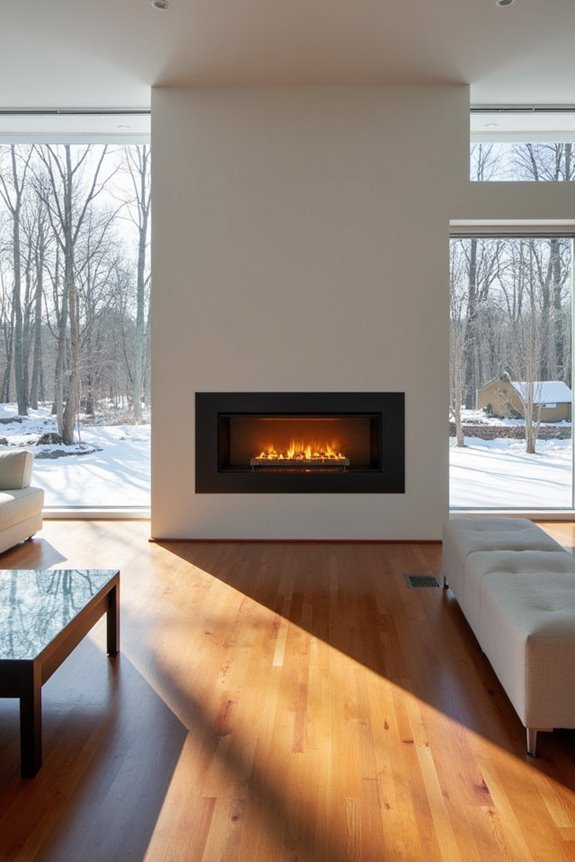
If you’re looking at your living room and thinking, “wouldn’t a fireplace be perfect right here?”—you’re not alone, and here’s the good news: you’ve got more options than you might think.
Retrofitting a fireplace into your existing home is possible. You can choose from:
- Electric or bioethanol units that need minimal work and skip the chimney requirement entirely
- Vented/gas options that reuse or modify existing venting paths already in your home
- Vent-free gas logs or electric inserts that fit into existing spaces without major structural changes
Before you proceed, have a structural specialist assess your space. They’ll determine what modifications your room needs and whether your home can accommodate your fireplace plans. Local building codes matter too, so obtain those permits first.