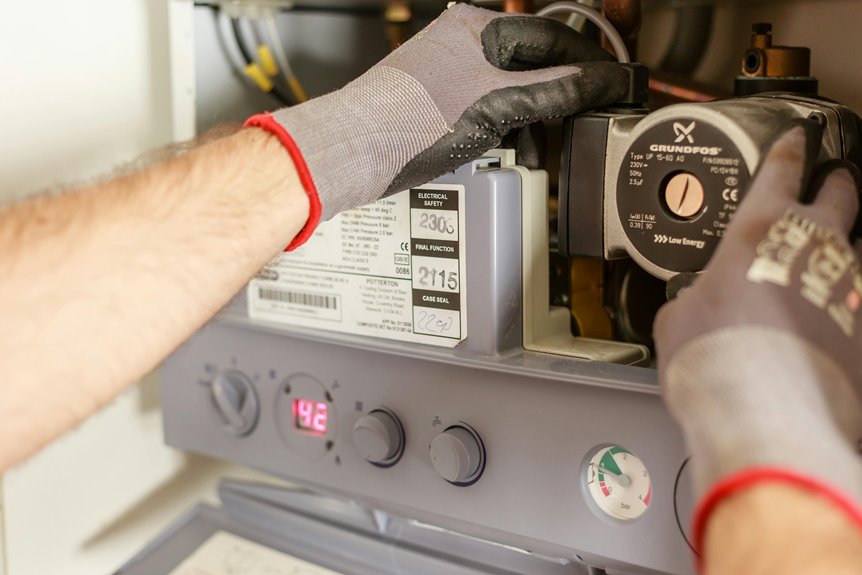
Start by checking if your gas valve’s fully open—it’s an easy miss. Next, inspect your pilot light and try relighting it if it won’t ignite. Verify you’ve got electrical power to your remote or wall switch, and check for blown fuses or tripped breakers. If flames look yellow or orange instead of blue, you have an air/fuel imbalance or dirty components. Smell anything like rotten eggs? Evacuate immediately and call your gas utility.
Most ignition and gas supply issues need a professional, but a certified technician will check several key components to identify the problem.
Check Gas Supply, Pilot Light, and Power
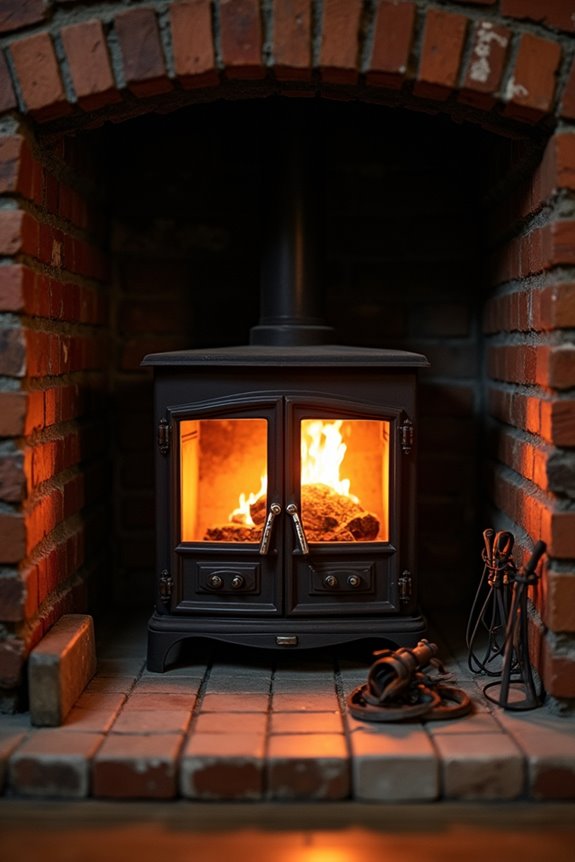
Ever wonder why your fireplace isn’t working? Let’s fix that together. Start by checking your gas supply—make sure the valve is fully open and gas flows continuously through the gas line. A closed valve is easy to miss. Next, inspect your pilot light. If it won’t ignite, try relighting it once or twice, but don’t obsess over it. Persistent failure might mean a faulty thermocouple or moisture in your system. Then check the electrical power. Verify that your remote, wall switch, or ignition module has power—blown fuses and tripped circuit breakers are common issues. Finally, examine your thermocouple for dirt or corrosion near the pilot assembly. A clean sensor keeps your gas valve working properly.
Diagnose Ignition System Failures
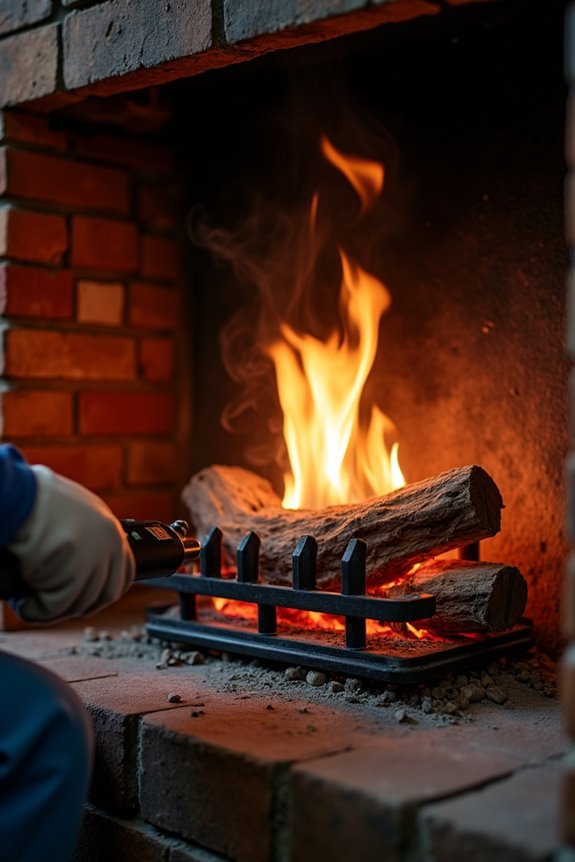
Why won’t your fireplace ignite, no matter how many times you try? Your ignition system might be malfunctioning. A dirty pilot tube, weak thermocouple, or misaligned flame sensor can prevent ignition from catching. If you’ve got electronic ignition, check whether your remote battery’s dead—this happens frequently. A faulty ignition module or broken wall switch could also be preventing operation.
Gas leaks are involved, so don’t attempt DIY repairs on these components. Instead, call a certified technician who’ll inspect, clean, or replace your igniter safely. Regular maintenance helps prevent these issues; just keep your igniter area clean and verify proper alignment. Professional help is available with one phone call.
Decode Flame Color and Smell
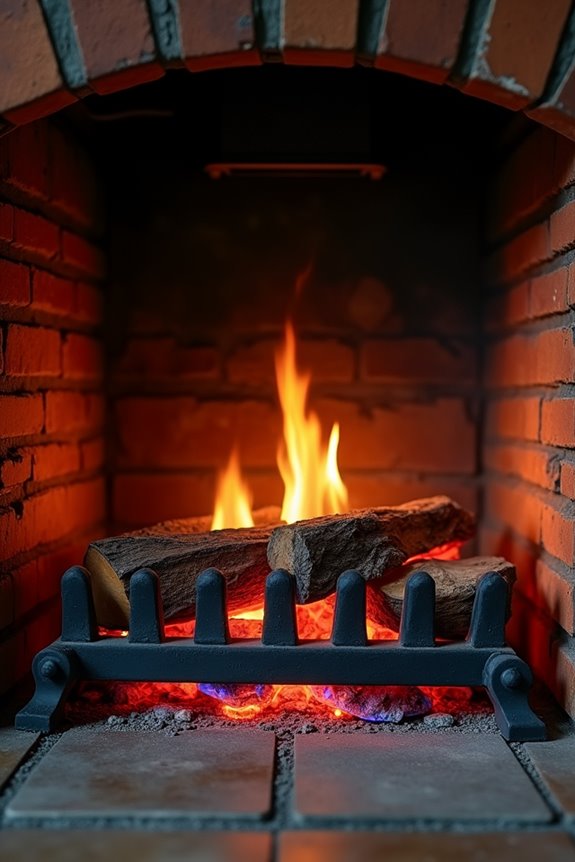
What’s your fireplace trying to tell you? Your gas fireplace communicates through its flame color and smell, giving you clues about what’s happening inside.
A healthy flame displays steady blue with a light orange or yellow tip. When you’re seeing yellow or orange flames instead, incomplete combustion or air/fuel imbalance is likely happening—time for inspection. That rotten egg odor? That’s serious; it signals a gas leak or improper gas combustion requiring immediate evacuation and emergency contact with your gas utility.
Here’s what to watch for:
- Flickering or dim flames shifting to dull orange indicate dirty pilot light or blocked burner orifice
- Soot buildup on burners affects flame quality
- Low gas pressure creates unstable flames
- Persistent unusual odors demand professional safety checks
- Smoke signals combustion efficiency and CO risks
Pay attention to unusual signs—they indicate you need professional gas fireplace maintenance.
Stop Here: Problems That Need a Professional
At some point, you’ve probably tried to fix something yourself only to realize you’ve made it worse—and your fireplace might be heading in that direction. When you’re dealing with your pilot light, ignition system, or gas supply, it’s time to call in backup. Issues involving safety sensors, the gas valve, and professional diagnosis really aren’t DIY territory—these systems protect your home. If you smell rotten eggs or detect gas odors, shut everything down immediately and contact your utility company. Similarly, problems with your chimney/vent inspection findings demand expert attention. Certified technicians have the tools and training to safely handle electrical ignition problems, thermocouple failures, and wiring issues. Don’t risk your family’s safety trying to save money. Professional service keeps everyone protected and your fireplace working reliably.
Prevent Future Fireplace Failures
Now that you know which problems belong in a professional’s hands, you’re ready to keep your fireplace running smoothly for years to come. Smart maintenance prevents headaches and keeps your cozy nights uninterrupted.
Your gas fireplace maintenance routine should include:
- Inspecting gas supply lines and valves regularly to catch leaks early
- Testing your pilot light monthly and cleaning the ignition components quarterly
- Checking damper and ventilation for proper airflow
- Scheduling annual professional chimney inspection and gas supply safety checks
- Replacing thermocouples before they fail completely
These steps protect your investment. Annual professional service catches issues before they become disasters—no surprise breakdowns on cold nights. By staying proactive with ignition components and gas fireplace maintenance, you gain the benefit of reliability. Your fireplace becomes the dependable gathering spot your family wants.
What to Expect From a Professional Inspection
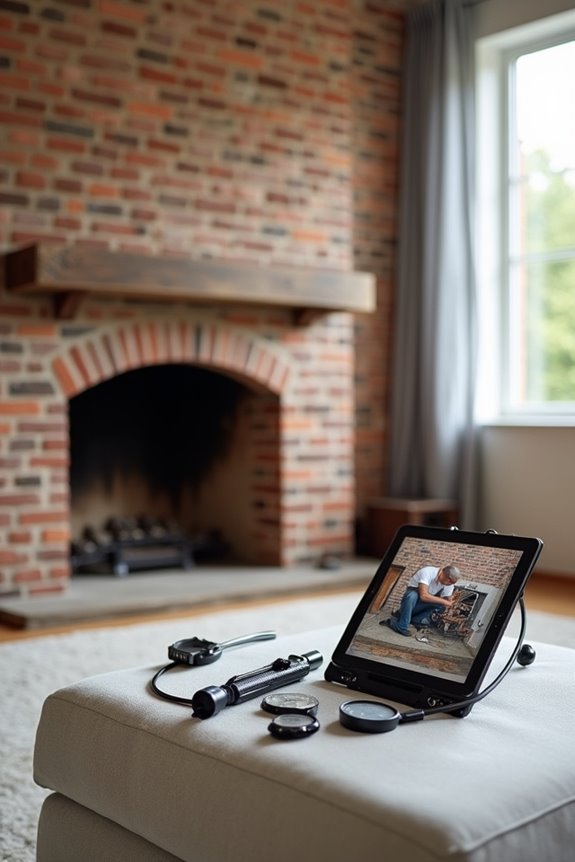
When you call in a pro to check out your fireplace, you’re getting a complete health checkup for your heating system. The technician will thoroughly examine your gas fireplace’s ignition system, checking whether the spark actually ignites and the flame stays put. They’ll test all electrical components—your remote, wall switch, and ignition module—to confirm everything powers up correctly.
Safety sensors get special attention since they’re basically your fireplace’s bodyguards. The inspector will verify venting and draft issues aren’t sneaking smoke into your room, then identify any blockages. Afterward, you’ll receive on-site repair recommendations with a written estimate. This diagnostic inspection gives you clarity on what’s broken and exactly what fixing it costs—no surprises, just solutions.
Hire a Certified Gas Fireplace Technician
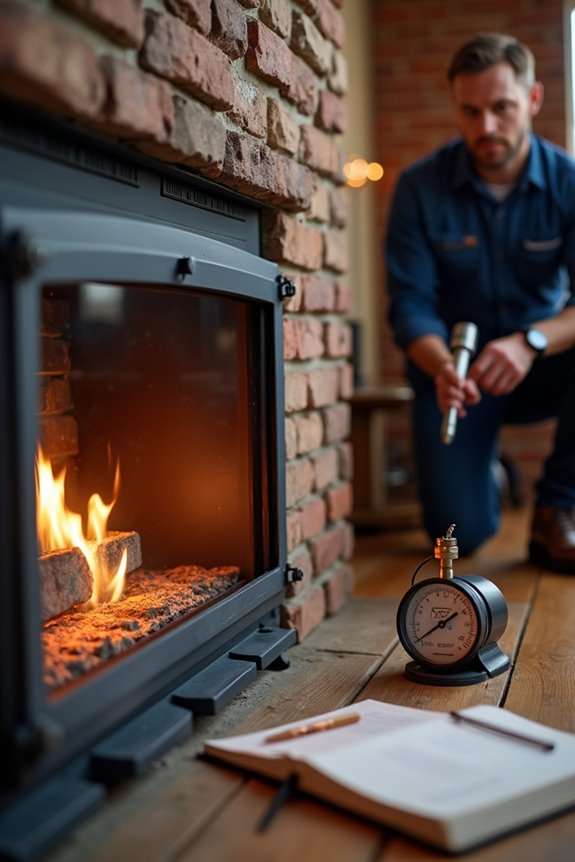
Why risk blowing yourself up trying to fix a gas fireplace yourself? You’ll want to hire a certified gas fireplace technician who knows their stuff. These professionals diagnose issues safely because they’re trained to handle live gas flows that could seriously hurt you.
Certified gas fireplace technicians safely handle live gas flows that could seriously injure you if handled improperly.
A certified technician will:
- Inspect and clean your pilot light, thermocouple, and gas valve for proper operation
- Test your ignition module and electrical components like wall switches
- Verify gas pressure and check for dangerous leaks
- Inspect chimney vents and confirm your CO detector works correctly
- Perform a complete safety inspection
They’ll catch problems you’d miss, like faulty thermocouples or regulator issues. This expertise protects your home and family while getting your fireplace working reliably again.