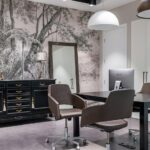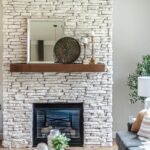
No, you don’t need to decorate every wall—and honestly, your space might look better if you don’t. Blank walls actually create calm by giving your eyes a rest, letting focal points like windows or key artwork shine without competition. Focus decoration on primary walls you see first or where furniture naturally draws attention. Leave other walls bare to balance visual weight and reduce mental clutter. The trick is being intentional about what you display, not filling every square inch. Continue exploring these strategies to make your walls purposeful design choices.
The Case for Leaving Walls Blank
Why do we feel like every bare wall is screaming for decoration? You’re not alone in that pressure. Here’s the truth: blank walls aren’t failures—they’re actually valuable design tools.
Negative space creates calm environments that help you breathe easier at home. When you leave walls intentionally empty, you’re giving your eyes a rest from visual clutter. This breathing room lets your focal points—that excellent mirror or statement piece—stand out instead of competing with surrounding elements.
Think of blank walls as your home’s natural pause buttons. They emphasize architectural features you already love and prevent that cramped, overwhelming feeling. Large windows become natural art installations, eliminating the need for decor on adjacent surfaces.
How Empty Walls Create Visual Equilibrium
Building on this idea of letting walls breathe, here’s where things get really interesting: empty spaces aren’t just nice to look at—they’re actually doing serious work in your room’s design.
When you strategically leave walls bare, you’re creating visual balance that makes your entire room feel deliberate and calm. Think of negative space as the foundation that lets everything else shine. Here’s how empty walls work:
- They distribute visual weight evenly, preventing one side of your room from feeling heavier or more crowded than the other
- They highlight your focal points, like that gorgeous window or that one piece of art you actually love
- They reduce mental clutter, giving your eyes and brain a genuine place to rest
Your room becomes a place where you—and your favorite pieces—actually belong.
Identifying Your Primary Feature Walls
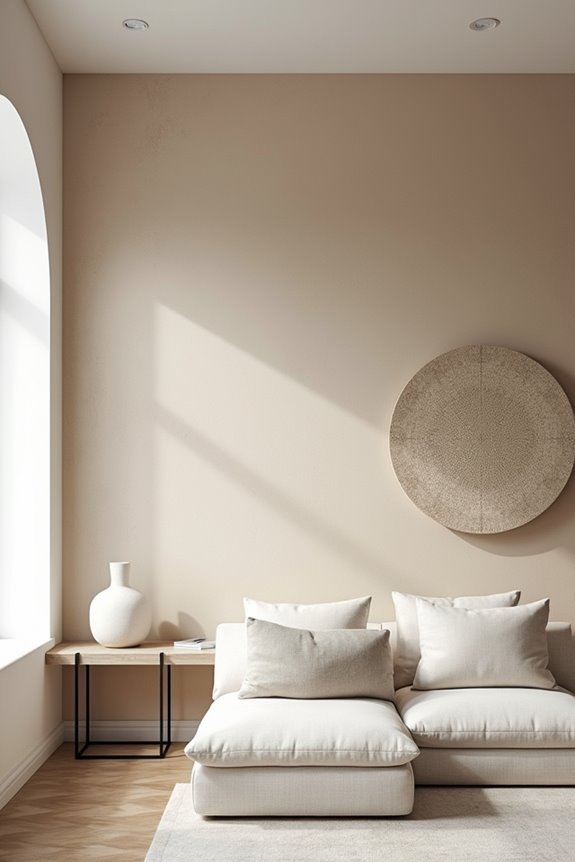
When you walk into a room, your eyes naturally land on certain spots—that’s where you’ll want your best décor, so don’t waste energy decorating walls nobody actually looks at. Your furniture arrangement basically tells you which walls matter most: the wall behind your couch, the one facing your bed, or that spot you see first when you enter are your real MVP candidates. Pick one main feature wall with a bold focal point like a large painting or mirror, then let the other walls stay neutral so your room doesn’t feel like visual overload.
Natural Sightlines And Entry
Before you start hanging art on every blank wall in your home, here’s the honest truth: not all walls deserve the same attention. Your entry sightlines—what you see the moment you walk through the door—matter most. That’s where your primary focal points should live.
Think about your naturally sightlines strategically:
- From your entry: What wall catches your eye first? That’s your primary feature wall.
- From seating areas: Which walls do you naturally face while sitting? Those deserve your best decor.
- Across the room: Can you create visual flow between furniture groups and wall art?
Your feature walls ground the room, while blank walls actually balance everything out. You’re not being lazy by leaving walls bare—you’re being deliberate. Skip decorating walls that don’t support your sightlines or furniture. That’s smart design, not incomplete decorating.
Furniture Groupings Define Priority
How do you actually decide which walls matter most? Your furniture groupings are your key tool. They reveal exactly where your eyes naturally land and which walls deserve your decorating energy.
When you arrange your sofa, chairs, and tables, you’re creating zones of importance. The walls anchoring these groupings become your focal walls—the ones that truly need attention. This alignment prevents visual chaos and creates decor balance that feels deliberate rather than random.
| Furniture Setup | Priority Wall | Decor Approach | Visual Weight | Result |
|---|---|---|---|---|
| Living room seating | Wall behind sofa | Large artwork or accent | High impact | Unified space |
| Reading nook | Adjacent wall | Floating shelves | Moderate | Cozy corner |
| Dining arrangement | Wall facing table | Mirror or gallery wall | Medium-high | Gathered feel |
| Bedroom layout | Headwall area | Prominent piece | High presence | Restful zone |
| Unused corner | None needed | Leave blank | Minimal | Breathing room |
Skip walls floating solo without furniture connections—they’ll just compete for attention you don’t have.
Focal Points Anchor Placement
Where do your eyes instinctively travel the moment you walk into a room? That’s where your focal point belongs. Your primary feature wall should anchor the entire space, creating a natural gathering point that everything else supports.
Consider these placement strategies:
- Entry sightlines: Position your focal point where it’s immediately visible, commanding attention without effort
- Main seating areas: Align anchor placement with where people actually sit, reinforcing connections between furniture and wall decor
- Varied configurations: Use one dramatic piece on one wall, then try a gallery wall elsewhere to prevent monotony
A large painting, sculptural mirror, or statement lighting becomes your anchor placement’s centerpiece. This focal point grounds surrounding decor and prevents your space from feeling scattered. You’re creating visual anchors that guide everyone’s attention naturally, making your room feel deliberate and organized rather than randomly decorated.
Should Every Wall Be Decorated? A Decision Framework
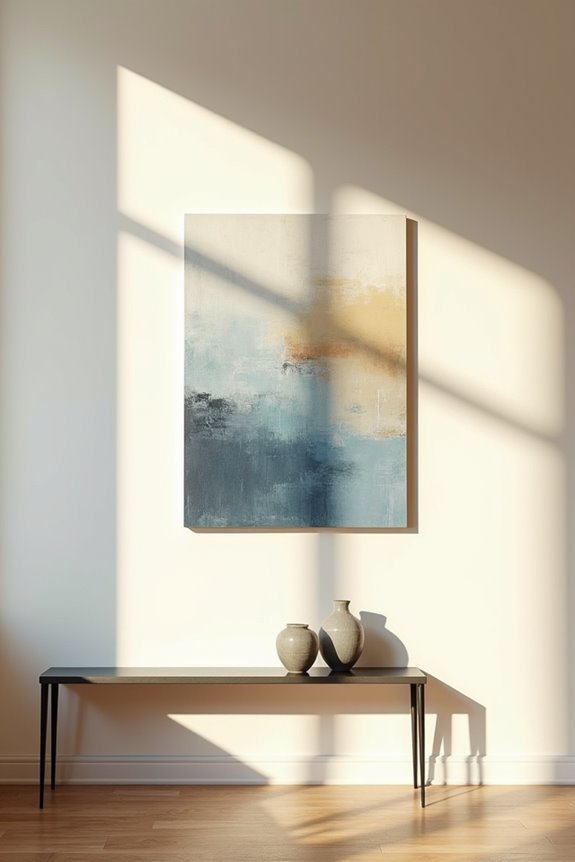
Why does it feel like every design magazine you flip through has art covering practically every inch of wall space? The truth is, you don’t need to decorate every wall. Instead, think strategically about wall decor placement based on your room’s layout and natural focal points. Here’s your decision framework:
| Wall Type | Best Approach | Why It Works |
|---|---|---|
| Large empty walls | Add art pieces | Prevents overwhelming feeling |
| Sunlit walls | Leave bare or minimal | Natural light becomes the main focus |
| Small walls | Single art or diptych | Creates mood without clutter |
| Behind furniture | Skip decoration | Hidden from main sightlines |
| Entry walls | Layer with mirrors | Anchors your entryway |
Balance empty space with targeted placements. This approach creates unity while allowing your room to breathe, making spaces feel deliberate rather than cramped.
Wall Size and Proportion Matter More Than You Think
Once you’ve figured out where your art should go, here’s the thing: the actual size of your wall is what’ll make or break whether your decor looks planned or just… lonely.
Your wall size and proportion directly impact how your décor functions in the space. Think about it this way:
- Large empty walls need appropriately sized pieces—undersized art creates visual gaps that feel awkward
- Small walls benefit from restraint; oversized décor overwhelms the space and competes for attention
- Narrow walls (24 inches or less) often work better with architectural features alone than forced decoration
The key? Match your artwork’s scale to your wall’s dimensions and furniture groupings. This anchors visual interest, balances visual weight, and creates that deliberate, organized look you’re after. Your space’ll thank you.
Architectural Features That Speak for Themselves
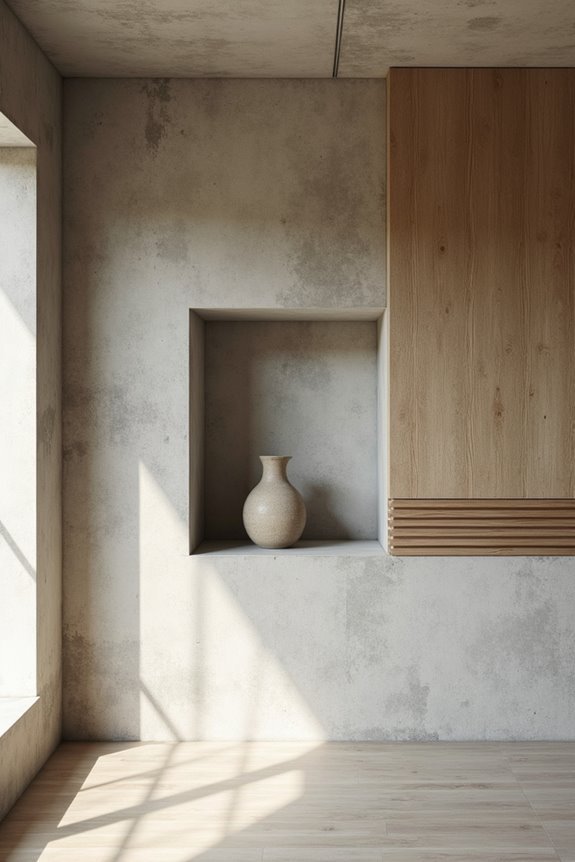
Cramming art everywhere dilutes what makes these details special. Your architectural features speak louder when they’ve got breathing room. By letting existing elements take the spotlight, you’re creating harmony and reducing clutter simultaneously. Sometimes, doing less means achieving more.
Natural Light as a Decorative Element
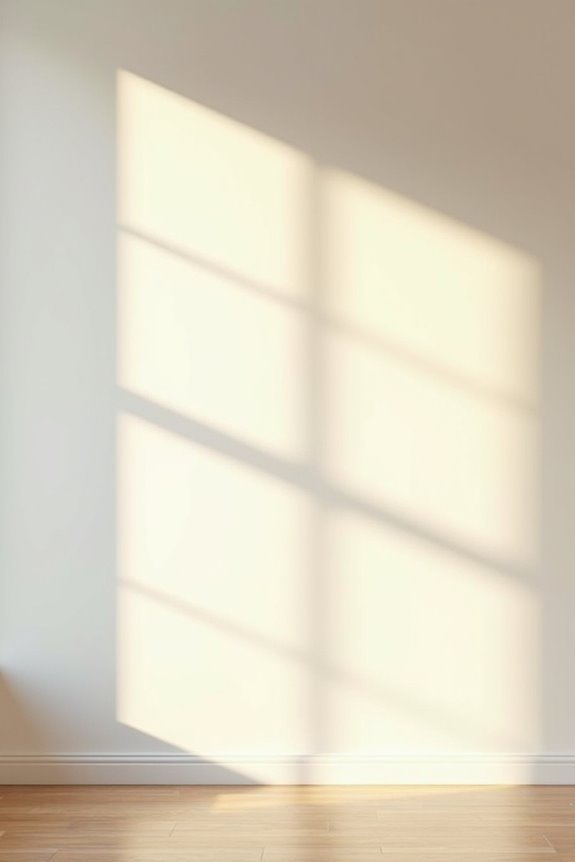
You’ve probably noticed how sunlight streaming through your windows creates its own evolving masterpiece—shifting shadows that dance across your walls throughout the day, turning them into living artwork you didn’t have to buy or hang. This natural light actually does the decorating job for you, highlighting your furniture shapes and architectural details way better than any framed piece could, especially when you keep those walls clear without competing wall decor fighting for attention. The trick is realizing that sometimes the most dramatic, impressive wall treatment isn’t something you add—it’s the play of light and shadow you already have working in your favor.
Sunlight As Natural Art
Have you ever noticed how a room can feel completely different depending on the time of day?
Your sunlight is doing serious work. Instead of hanging wall art on bright walls, let nature’s own masterpiece take center stage. Consider these benefits:
- Dynamic shadows and colors shift throughout the day, creating natural artwork that changes constantly
- Architectural features and textures get highlighted, replacing your need for framed pieces
- Brightness alone energizes the space, making extra wall art feel cluttered rather than helpful
When you preserve sunlit walls, you’re actually reducing glare on surrounding surfaces while maintaining that airy, luminous feeling you want. Skip the wall art in these zones. Your sun’s doing enough heavy lifting already, and honestly, fighting glare with more decor just creates visual chaos. Let the brightness shine—it’s the best decorator you’ve got.
Shadows And Architectural Drama
What if the walls themselves could change throughout the day without you lifting a finger? They can—through shadows and architectural drama. Your furniture, sconces, and built-in features cast dynamic shadows that shift with daylight, creating natural depth you didn’t have to purchase. Those focal walls with architectural details—think fireplaces, arches, or paneling—become their own story without extra decor competing for attention. Strategic lighting emphasizes textures and edges, making plain surfaces feel deliberate and alive. You’re working with daylight to do the heavy work, which means fewer decorations cluttering your space. This approach feels sophisticated and calming because you’re working with your home’s natural features instead of against them. The result? Walls that genuinely deserve to stand bare, letting shadows and architecture carry the visual weight.
Why Filling Every Wall Overwhelms a Room
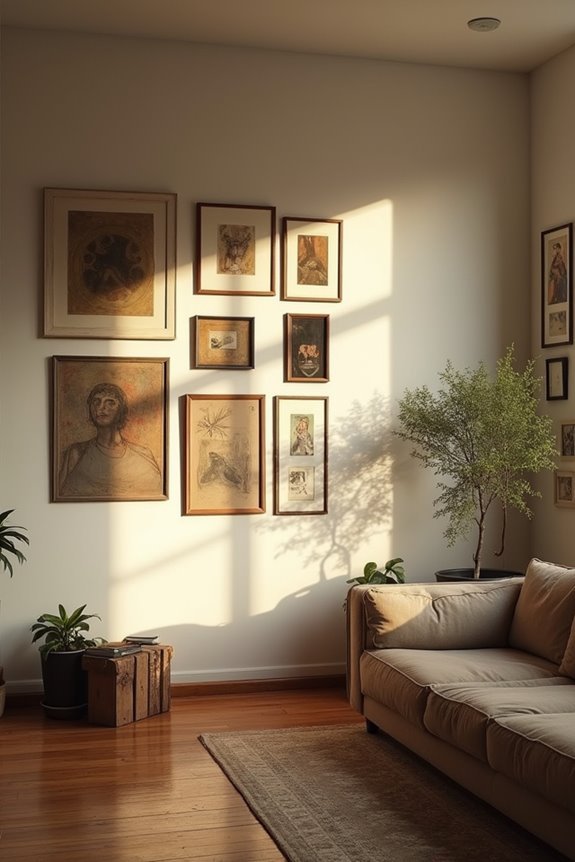
Ever walked into a room and felt like your eyes didn’t know where to look? That’s what happens when you fill every wall with decor. Your brain gets overwhelmed trying to process everything at once, and ironically, even your best pieces lose their impact.
Here’s what cluttered walls actually do:
- Create visual fatigue that makes you feel stressed rather than relaxed
- Make individual pieces blend together instead of standing out
- Turn your space into a busy gallery instead of a welcoming home
When you embrace blank walls and focal walls instead, something shifts. You’re not being lazy—you’re being deliberate. Your eyes rest, your favorite items stand out, and you finally feel at ease in a room with room to breathe.
Place Decor Strategically, Not Everywhere
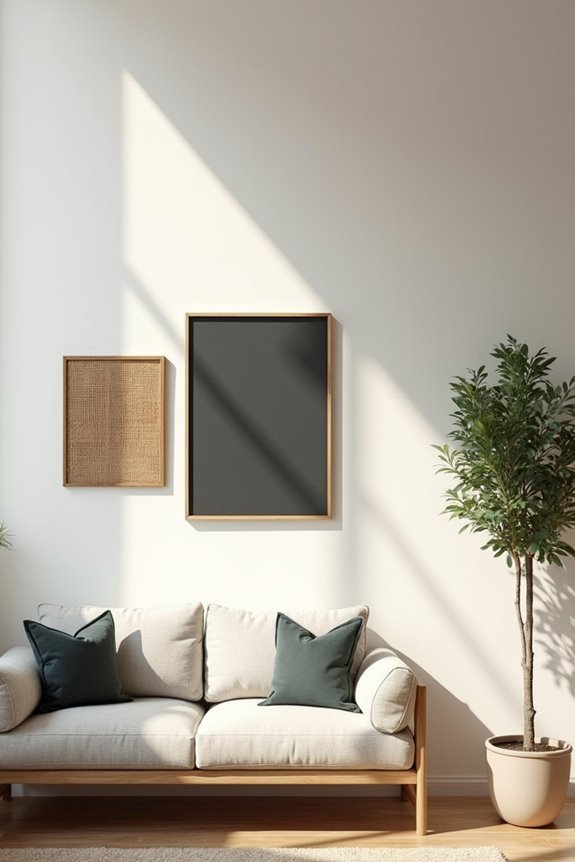
So here’s the thing about decorating: you don’t actually need a plan for every single wall in your home. Instead, think strategically by choosing one or two focal areas—maybe that wall behind your couch or the space above your dresser. This approach creates balance without making your room feel cluttered or overwhelming.
Here’s how: identify walls that naturally draw attention or connect to your furniture groupings. Leave negative space on other walls; blank walls actually calm your room and let your eyes rest. Use proportion wisely—match your art size to your wall and furniture scale, and consider mirrors or lamps for visual equilibrium.
You’re not being lazy by skipping decoration; you’re being deliberate. Your home feels more peaceful, your focal areas stand out, and you’ll actually enjoy the space you’ve created.
Beyond Frames: Three Decor Alternatives
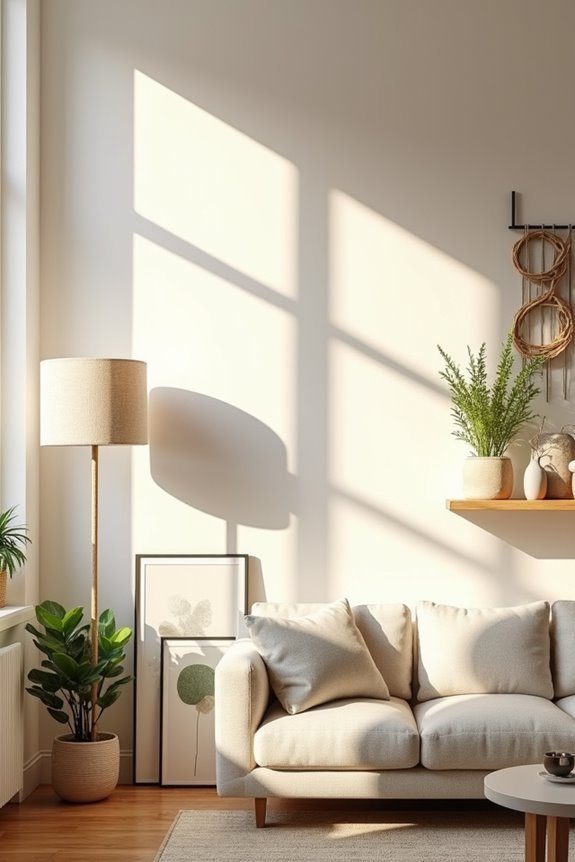
You don’t have to hang frames on every wall to make your space feel complete—there’s a whole world of other options available to you. Mirrors bounce light around your room and make spaces feel bigger (plus they’re way easier than painting), while architectural elements like exposed beams, textured wallpaper, or built-in shelving add visual interest without needing a single picture hook. These alternatives fill wall space, create depth, and let your room’s bones do some of the decorating work.
Mirrors and Reflective Surfaces
Why do mirrors work so well in interior design? They’re effective tools for making rooms feel bigger and brighter without hanging another picture frame.
Strategic mirror placement improves your space by:
- Expanding perceived space: Floor mirrors or leaning frames bounce light around, creating depth that flat art simply can’t match
- Enhancing lighting naturally: Position mirrors opposite windows to amplify natural light and reduce those shadowy corners
- Adding texture through reflection: Metallic or glass surfaces catch light, making your whole room feel more dynamic
You’re not cluttering walls; you’re being smart. One or two well-placed reflective pieces coordinate beautifully with your hardware and textiles, creating balance without overwhelming the space. That’s the design choice that works right there.
Architectural Elements and Texture
What if your walls didn’t need pictures at all? Your architectural elements—arches, millwork, and paneling—can be the stars of the show. These textured surfaces create subtle geometric patterns that add real depth without requiring framed pieces everywhere. Modern fluted panels or textured plaster finishes make your walls into art themselves, giving you visual interest that actually feels substantial.
You’re basically letting your walls do the decorating work for you. When you embrace this approach, negative space becomes your friend, preventing that cluttered feeling. Strategic lighting highlights these architectural details beautifully, especially around fireplaces or windows. Your wall decor strategy shifts from “what should I hang?” to “what’s already working here?” This shift takes pressure off constantly finding pieces and lets your home’s structure stand out in its natural form.
Oversized Mirrors as Art Alternatives
If you’re staring at a blank wall and feeling like something’s missing but you’re not ready to commit to hanging artwork everywhere, oversized mirrors are worth considering. They function as wall art alternatives that perform more effectively than traditional paintings.
Here’s what makes them practical:
- Expand your space – Mirrors reflect light and textures, making rooms feel noticeably larger
- Create focal points – A tall leaning mirror serves as sculptural decor on its own
- Preserve negative space – You maintain breathing room while avoiding visual clutter
The frame itself becomes a design element, contributing texture and style without crowded walls. Position them in entryways, bedrooms, or living areas where natural light flows, and you’ll create spatial reflection that changes how your room feels.
Decorative Sconces: Light and Elegance
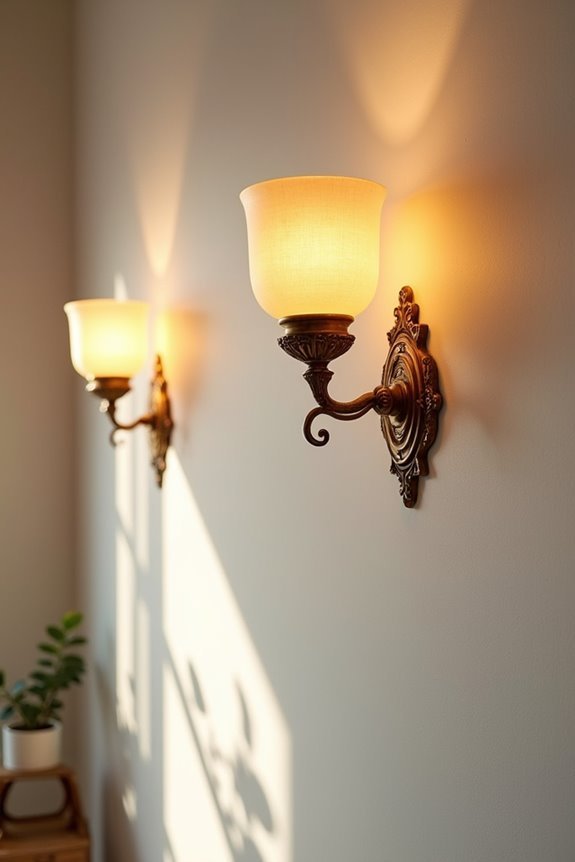
While mirrors brilliantly expand your space and catch light, they’re honestly doing half the job—you’ve still got blank wall real estate that could use some thoughtful attention. Enter decorative sconces: they’re the practical solution you didn’t know you needed.
Sconces deliver ambient lighting while functioning as sculptural art themselves. Flanking a painting or mirror with matching sconces creates beautiful symmetry and frames your focal point without cluttering walls. You’re getting a lighting fixture and decor rolled into one.
Choose brass, glass, or stone finishes to improve your room’s perceived quality. Position them at consistent heights aligned with your artwork, and you’ll create cohesive visuals that feel deliberate. Sconces particularly work well in hallways and bedrooms, softening harsh overhead lighting while adding warmth.
They’re the elegant solution that finally makes those bare walls feel purposeful and inviting.
Wall Texture Without Hanging Decor
Not every wall needs to be covered in paintings and prints to look good—sometimes the wall itself can be the star of the show.
Sometimes the wall itself can be the star of the show—no paintings or prints required.
You can create vibrant empty wall space by embracing wall texture instead of hanging decor. Think about what already catches your eye:
- Wood paneling brings natural character without needing artwork
- Textured plaster creates depth and shadows that change throughout the day
- Shiplap or exposed brick provides architectural interest on their own
These finishes give your blank walls personality while keeping things calm and clutter-free. Your eye rests easier when you’re not visually overstimulated, and that’s pretty refreshing. By letting wall texture do the heavy lifting, you’ll see how much visual interest you can achieve without hammering in a single nail. Sometimes simple approaches work best.