

Your curtain color works best when it starts with your wall color as the foundation. Use the 60-30-10 rule: walls anchor at 60%, curtains make a 30% statement, and accessories tie it together at 10%.
You can match curtains to walls for calm harmony or contrast them for drama.
Consider your room’s lighting—light curtains feel airy, dark ones cozy.
Test fabric swatches in your actual space at different times before committing.
Get the specifics right, and your curtains will have a noticeable impact on your room.
Wall Color: Your Foundation for Curtain Selection
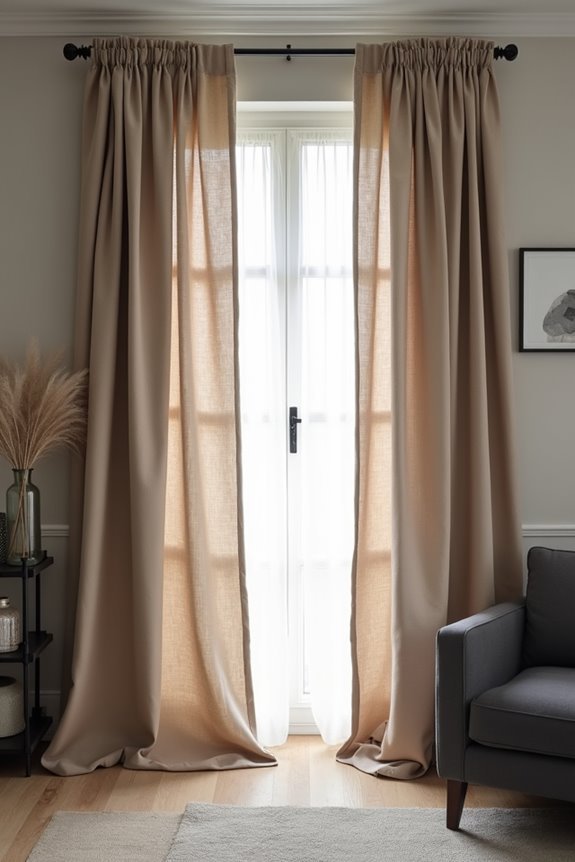
Why do so many of us stand in front of our walls wondering what color curtains would actually look good there? The answer’s simpler than you’d think: your wall color is the starting point. Think of it as your room’s personality guide.
Your wall color sets the tone for everything else, making it the foundation for curtain selection. When you choose curtain colors that work with your walls, you’re creating room harmony—that satisfying feeling when everything fits together. You’ve got two solid moves: match your curtains for a unified, calm vibe, or go bold with contrasting colors for drama.
Starting here narrows your choices dramatically, turning an overwhelming task into something totally manageable and fun.
The 60-30-10 Rule for Curtain-to-Wall Balance
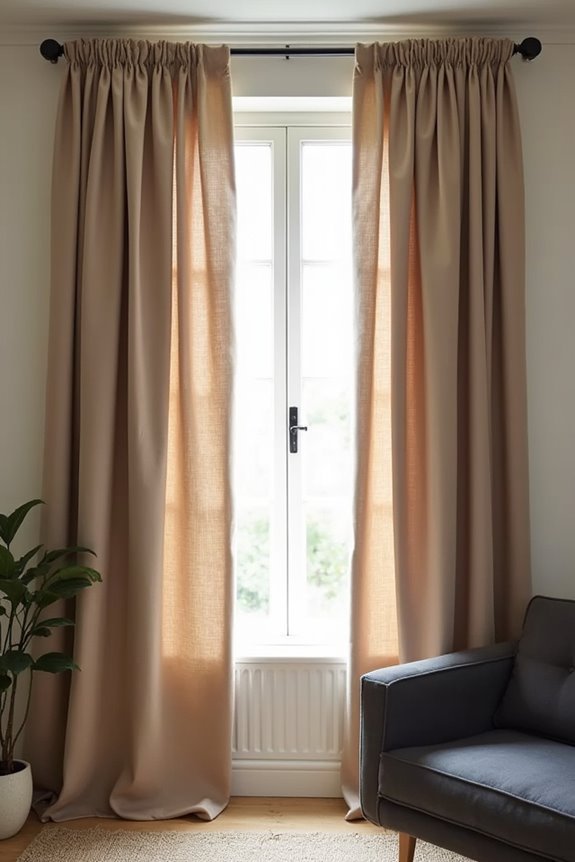
How do you keep your curtains from taking over the room like they’re the main character when your walls should be? Enter the 60-30-10 rule—a straightforward approach for creating balance.
This design principle divides your color scheme into three parts. Your walls get 60% of the visual weight, creating that calm foundation everyone needs. Your curtains claim 30%, letting them make a statement without overshadowing everything. Accessories fill the remaining 10%, tying everything together.
| Element | Percentage | Role | Color Intensity | Visual Weight |
|---|---|---|---|---|
| Walls | 60% | Foundation | Neutral/Soft | Dominant |
| Curtains | 30% | Statement | Bold/Medium | Secondary |
| Accessories | 10% | Accent | Vibrant/Pop | Accent |
| Balance | Total | Harmony | Cohesive | Complete |
| Result | 100% | Success | Unified | Peaceful |
This ratio prevents clashing and keeps your space organized and deliberate, not chaotic.
Should Your Curtains Match Your Walls or Contrast?
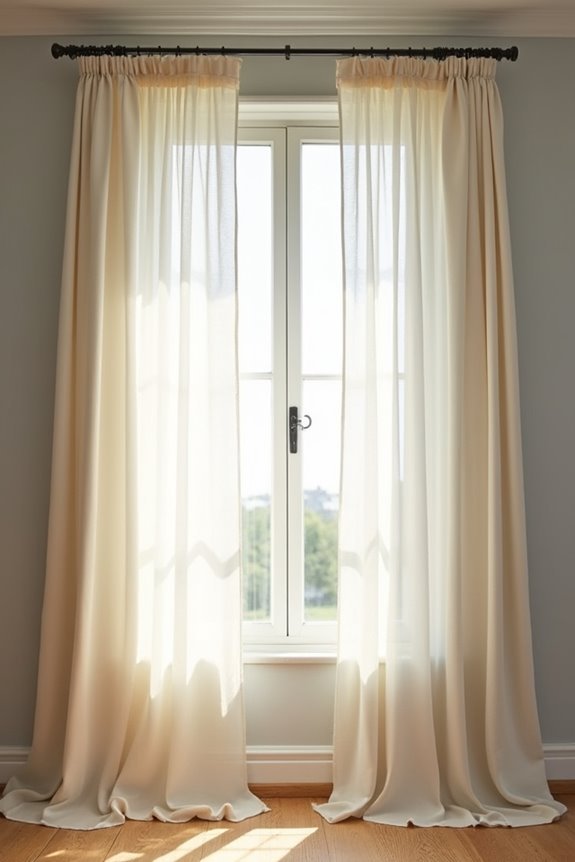
You’ve got two main ways to go with your curtains: you can match them to your walls for a calm, cohesive look, or you can pick a contrasting color that draws attention to your windows and furniture. Matching works well if you want your space to feel peaceful and connected, while contrasting curtains let you highlight the interesting features in your room. The choice comes down to whether you want your curtains to stay neutral in the background or serve as a focal point.
Matching For Seamless Harmony
When it comes to picking curtain colors, you’re basically facing one big decision: should they blend in with your walls or stand out against them?
Here’s the thing about curtains color coordination: matching your curtains to your walls creates harmony that makes your space feel intentional and organized. When you choose neutral shades like light gray or beige, you’re building a cohesive palette that ties everything together. This approach works especially well in open-concept spaces where you want the eye to flow naturally from room to room.
The beauty of this matching strategy? Your walls, furniture, and curtains all work as a team instead of competing for attention. You’ll feel calmer, more organized, and satisfied with how well the pieces work together.
Contrasting To Create Drama
But what if you’re tired of playing it safe? Contrasting curtains create drama and visual excitement that matching walls simply can’t deliver. You’re ready to make your space pop, and that’s where bold contrast comes in.
Here’s how to nail it:
- Use complementary colors (opposites on the color wheel) for maximum impact
- Apply the 60-30-10 rule: dominant wall color, bold curtains as your statement, small accessories tying it together
- Pair dark curtains with light walls to frame windows dramatically
- Layer textural contrast—think silk curtains against matte walls for depth
- Recognize that lively contrast turns ordinary rooms into conversation-starting spaces
This approach isn’t reckless; it’s deliberate design. You’re choosing drama over blandness, personality over predictability. Your curtains become the focal point that makes your room unmistakably yours.
Brightness and Darkness: Perception and Mood
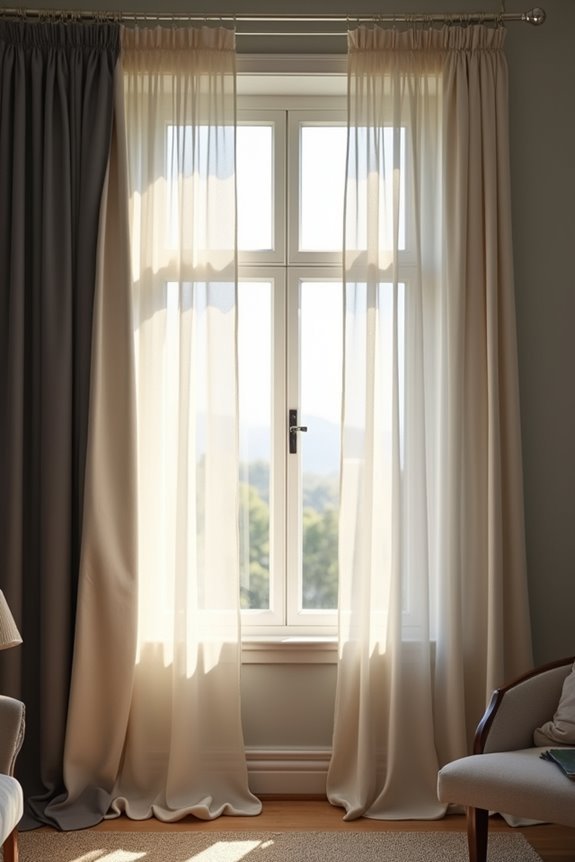
How much light do your curtains let into your space? Your curtain brightness directly shapes both how big your room feels and how you actually feel inside it.
Light-colored curtains reflect daylight, making cramped spaces seem airier and brighter. They work well if you’re working with a smaller bedroom or naturally dark living room. Dark curtains do the opposite—they absorb light and create a cozy, wrapped-up feeling. They’re ideal for larger rooms where you want intimacy without the echoing emptiness.
Here’s what matters: your perceived room size and mood lighting work together. Balance your curtain choice with what natural light you already get. Matte fabrics bounce diffuse light around gently, while glossy textures add sophistication. Match your curtain darkness to your actual lighting situation, and you’ll achieve the atmosphere you want.
Curtain Colors for White Walls
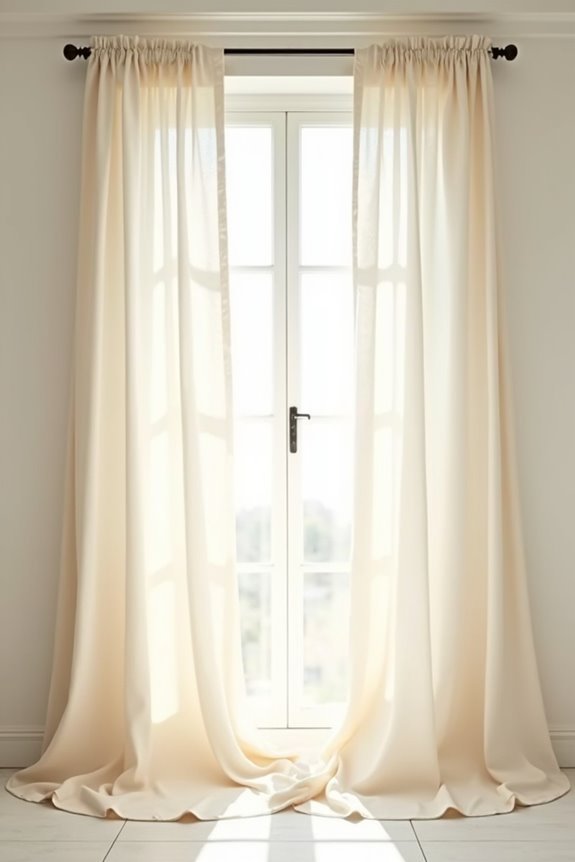
You have plenty of fun options when you’re working with white walls—you can keep things crisp and airy with light neutrals, go bold with navy or charcoal for a striking visual impact, or play it smart with soft pastels that add personality without making your space feel chaotic. The benefit is that white walls are basically a blank canvas, so you can match your curtains to whatever mood you’re going for. Whether you want serene and minimal or punchy and dramatic, your white walls can handle pretty much any curtain color you choose.
Crisp And Airy Elegance
When it comes to white walls, picking the right curtain color can feel tricky—after all, you’re working with a blank canvas that’ll magnify whatever you choose.
The good news? You’ve got plenty of options that create that crisp, airy feeling you’re after. Light, neutral tones keep your space feeling open and bright, while soft pastels add gentle personality without overwhelming the room. Here’s what works:
- Whites and light greys that maintain brightness
- Pale blues, pinks, or mint for subtle vibrancy
- Ivory or cream for refined elegance
- Navy or charcoal for bold contrast
- Matte fabrics to reduce glare while sheer options amplify daylight
The right curtains frame your windows and affect how light moves through your space, helping you create that peaceful, welcoming atmosphere you want.
Bold Contrast Options Available
If you’re ready to break free from soft pastels and gentle tones, bold curtain colors might be exactly what your white walls need. Navy, charcoal, and black create striking contrast that gives your space a dramatic and sophisticated quality. Rich reds, burgundy, and aubergine energize dining or living areas with serious visual impact.
| Color | Best For | Effect |
|---|---|---|
| Navy | Living rooms | Calming drama |
| Burgundy | Dining spaces | Warm elegance |
| Charcoal | Any room | Sleek sophistication |
Here’s the trick: pair those bold curtains with lighter furniture so your room doesn’t feel cramped. Choose fabrics with texture or subtle sheen too—they catch light beautifully and prevent that flat, boring look.
Pastel Vibrancy Without Overwhelm
How do you add color to a room without totally drowning it out? Pastels are your answer. These soft, gentle hues work beautifully on white walls because they don’t scream for attention—they whisper instead.
Light pastel curtains bring subtle vibrancy while maintaining that airy, serene feel you’re after. The key? Choosing translucent fabrics that soften light diffusion, creating a dreamy quality without harsh contrast. Pair them with neutral furnishings like ivory or light gray pieces to keep things balanced.
Here’s what makes pastels work:
- Soft blues, pinks, and mints add gentle color
- Translucent fabrics prevent visual overwhelm
- Natural light bounces beautifully through pale tones
- Neutral furniture prevents competing focal points
- The result feels well-considered and purposeful, not accidental
You’ll achieve that polished, carefully arranged look without the decorating stress.
Curtain Colors for Neutral Walls (Beige, Grey, Cream)
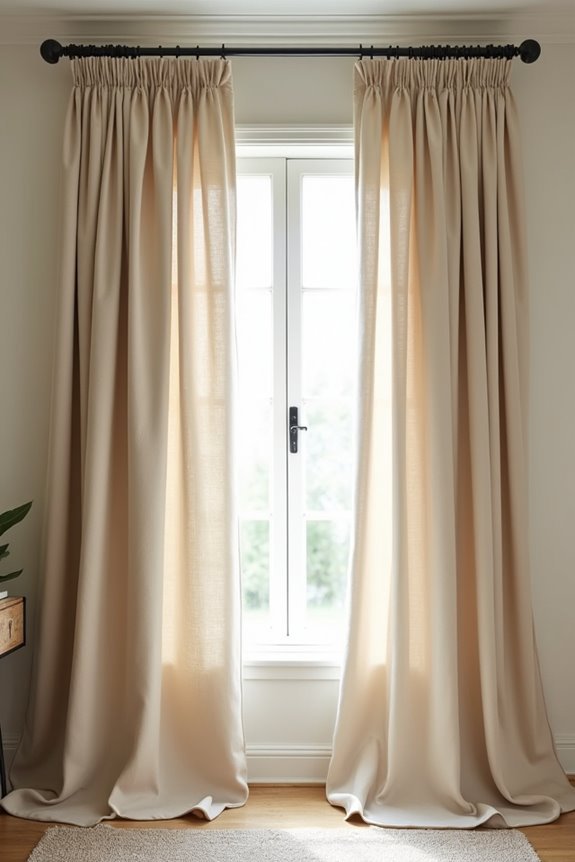
Why do neutral walls feel so tricky when you’re picking curtains? You’re staring at your beige, grey, or cream space thinking, “Now what?” You actually have plenty of options that’ll work well together.
Warm earthy curtain colors like rust, olive, or taupe enhance coziness without clashing with your neutral backdrop. These tones feel inviting and grounded, making your room comfortable. If you prefer something lighter, sheer whites or soft beiges maintain that airy, expansive feeling. Want drama? Deep blues or charcoals provide sophisticated contrast while keeping everything cohesive.
The key is choosing colors that match your room’s vibe. Whether you want cozy warmth or calm serenity, neutral walls give you a blank canvas to express your style.
Curtain Colors for Warm Walls (Yellow, Green)
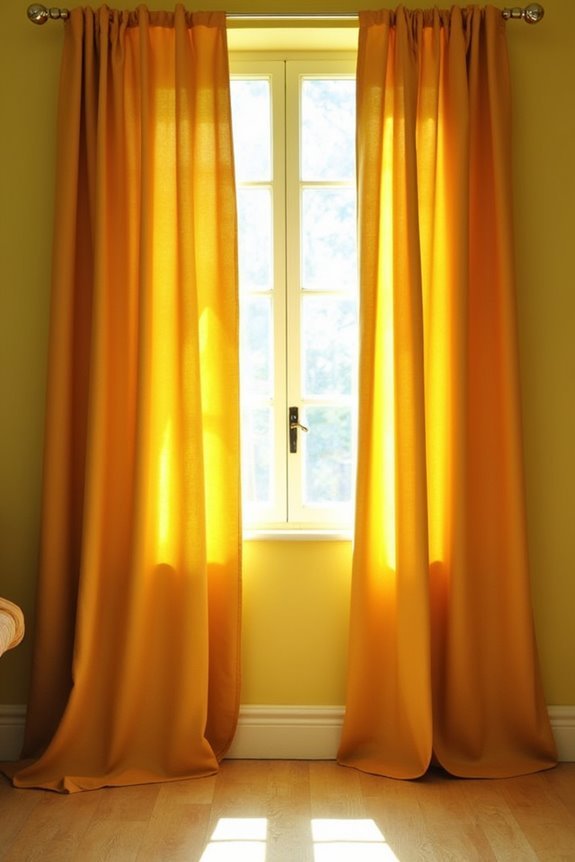
Picking curtains for yellow or green walls?
Warm walls deserve thoughtful color choices that either complement or contrast beautifully. Here’s what works:
Warm walls deserve thoughtful curtain choices that either complement or contrast beautifully with your overall design vision.
- Rich jewel tones (burgundy, aubergine) create striking, cozy contrast against yellow walls
- Deep blues or purples add regal sophistication while balancing warmth perfectly
- Neutral options like ivory, beige, or taupe keep things calm and let your walls shine
- Pale yellows or soft lavenders offer gentler ambiance without overwhelming brightness
- Light fabrics (linen, sheer materials) reflect natural light and prevent rooms from feeling too saturated
Your curtains don’t just cover windows—they’re part of your room’s overall design. Match your curtains with your style, and you’ll create a space where you actually want to spend time.
Curtain Colors for Cool Walls (Blue)
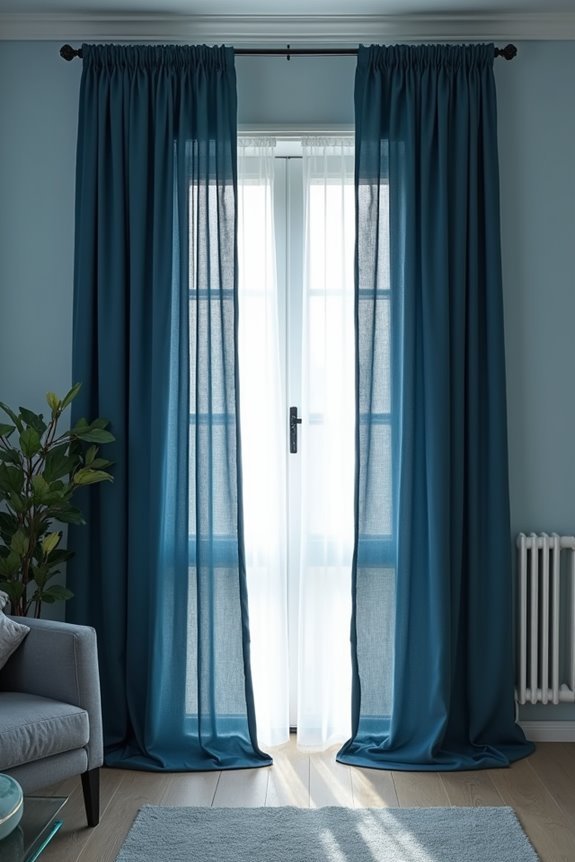
You’ve got three solid ways to style blue walls, and honestly, they each give you a completely different vibe. You can go all-in with a monochromatic blue look—using different shades of blue for your curtains to keep everything calm and connected—or you can shake things up by picking warm colors like mustard or soft orange to add gentle contrast against your cool blue walls. If you’re feeling fancy, throw in some metallic accents with silver or light gray curtains, which’ll catch the light and add visual interest without making your space feel chaotic.
Monochromatic Blue Harmony
How do you make a blue room feel even more peaceful without turning it into a sad cave? Monochromatic blue harmony works. You’re layering different shades of blue together, creating depth with blue walls while keeping everything cohesive and calming.
What makes this approach work:
- Pair lighter blue curtains with darker blue walls to maintain visual interest
- Add subtle textures like velvet or linen for dimension without breaking the monochrome scheme
- Introduce small metallic accents in silver or pewter hardware for sophistication
- Test fabric swatches at different times of day since lighting affects how blue reads
- Varying shades of blue actually feel more serene than you’d expect
This strategy lets you build a sanctuary that feels well-planned and restful.
Warm Contrast Options
While a monochromatic blue room feels wonderfully calm, you might find yourself craving a little energy and warmth—and that’s where warm contrast curtains come in. Think deep red, burgundy, or burnt orange. These colors sit opposite blue on the color wheel, creating visual pop without chaos.
Your warm-contrast curtains work best paired with lighter furniture, preventing your space from feeling cramped or overwhelming. Choose velvet or heavy drapes to add texture and depth against your blue walls. The fabric weight matters more than you’d think—it prevents that flat, sad look.
Don’t forget metallic hardware in gold or brass. These accents amplify warmth and sophistication, tying everything together beautifully. Your curtains coordination isn’t just about color; it’s about creating balance and belonging in your own home.
Metallic Accent Enhancement
If you’re tired of your blue room feeling a bit too serious or one-note, metallics might be exactly what you’re looking for. Metallic curtains work well with cool blue walls by bouncing light around your space in ways solid colors simply can’t match.
Here’s what makes metallics effective:
- Silver or pewter metallic curtains create sleek, modern vibes on cool blue walls
- Gunmetal options offer dramatic contrast and sophisticated depth
- Champagne or pale gold adds warmth while keeping things airy
- Silk or velvet textures maximize light reflection and visual interest
- Solid blue walls let the metallic sheen shine without visual clutter
Light reflection dances across your metallic curtains, making your whole room feel more intentional and polished. You’ll notice how this simple swap improves everything right away.
How Texture Enhances Your Curtain Color Choice
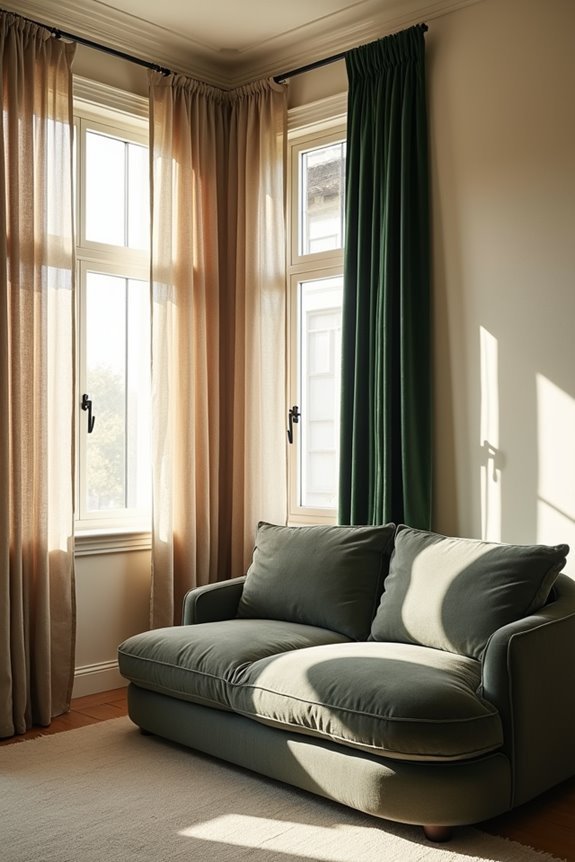
Ever picked out a curtain color, hung them up, and thought, “Wait, that’s not the shade I picked out at the store”?
Welcome to the texture plot twist. Your curtain color doesn’t exist in a vacuum—textures completely change how you perceive it. A velvet curtain absorbs light differently than a silky one, making the same blue appear deeper or brighter depending on the fabric. Light reflections dance across textured surfaces, shifting your room’s mood without changing the actual color.
Here’s what works: pair soft textures like linen with heavier fabrics such as velvet. This combo adds visual depth while keeping your chosen curtain color looking deliberate and polished. Dense textures create warm atmospheres, while sheer, lightweight options feel airy and modern.
The right texture choice amplifies everything you’ve already decided about color.
5 Curtain Color Mistakes to Avoid
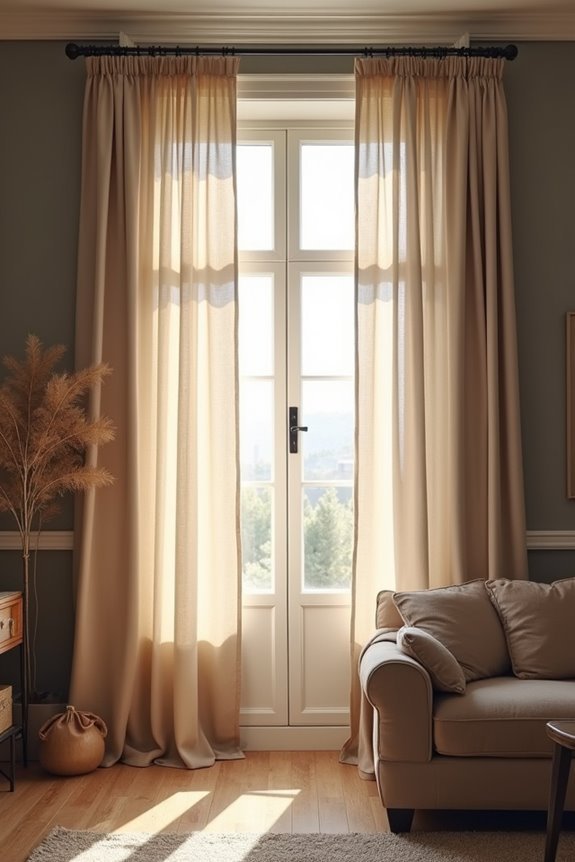
Now that you’ve picked the perfect texture to make your color shine, it’s time to talk about the mistakes that can undo all that good work.
You’re so close to nailing your curtain choice! Here’s what to watch out for:
You’re so close to nailing your curtain choice! Here’s what to watch out for to avoid common mistakes.
- Curtains misalignment with walls – Don’t let your color clash with wall tones; this creates jarring style conflicts that throw off your whole room’s vibe
- Ignoring your room’s mood – Pick colors that match your space’s purpose, whether that’s cozy or energizing
- Skipping lighting testing – Always test fabric swatches under your room’s actual lighting, since colors shift dramatically between natural and artificial light
- Overloading with patterns – In busy rooms, solid curtains keep things from feeling chaotic
- Dark curtains in small spaces – Very dark colors can shrink already-tight rooms, making them feel claustrophobic
These tweaks keep your space feeling deliberate and welcoming.
Adapt Curtain Colors to Room Function
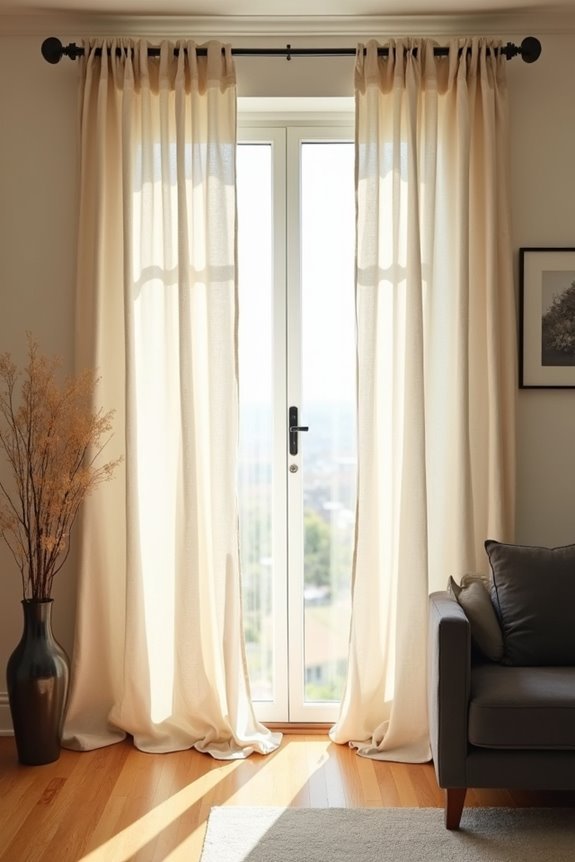
Why does a bedroom curtain that’d be perfect for your office feel totally wrong when you hang it up at home? Because your room function matters! Your curtains aren’t just decoration—they’re helpers that support what you actually do in that space.
Here’s the deal: bedrooms need calming colors like soft blues or lavender to help you relax and sleep better. Living rooms work great with earth tones like olive or beige that feel warm without being overwhelming. Dining areas? Warmer reds and burnt oranges energize conversation and appetite.
Your color choice directly affects your mood and behavior in that room. Think about the activity happening there, then pick curtains that support it. When you align your room function with your curtain color, you’ll get that “this feels right” feeling.
Choose and Install Your Perfect Curtains
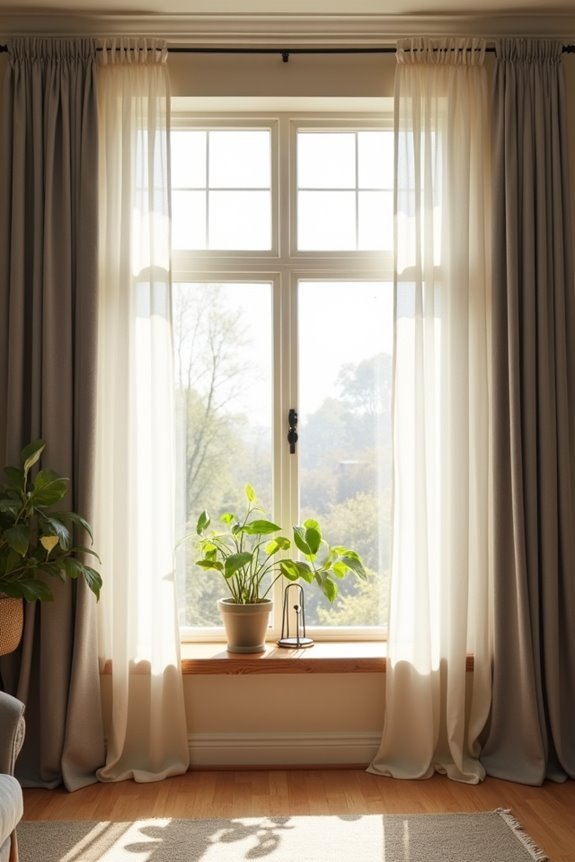
How do you actually go from “I like this color” to curtains that look good in your space? You test before you buy—seriously. Here’s your plan:
- Grab fabric swatches and hold them against your walls in both natural and artificial lighting
- Check the curtain color at different times of day, since morning light differs from evening light
- Consider your fabric choice carefully; heavier materials feel formal, lighter ones feel breezy
- Measure your windows twice (we all mess this up once), then add extra width for fullness
- Order samples first if you’re unsure—it’s worth the effort
Testing takes patience, but you’ll avoid buyer’s remorse. Go with what feels right when the color works in your actual space, not just online.