
Your dark curtains don’t necessarily need to be darker than your walls—it’s really about what you want your windows to do.
If you’re after a bold, dramatic look, darker curtains against lighter walls create visual interest.
But if you prefer everything blending together for a calm, cohesive feeling, matching your curtains closer to your wall tone works well too.
The key is considering your room type, how much sunlight you get, and whether you need serious privacy.
Your specific situation determines the best choice here.
Keep It Simple: Why Matching Curtains to Walls Works
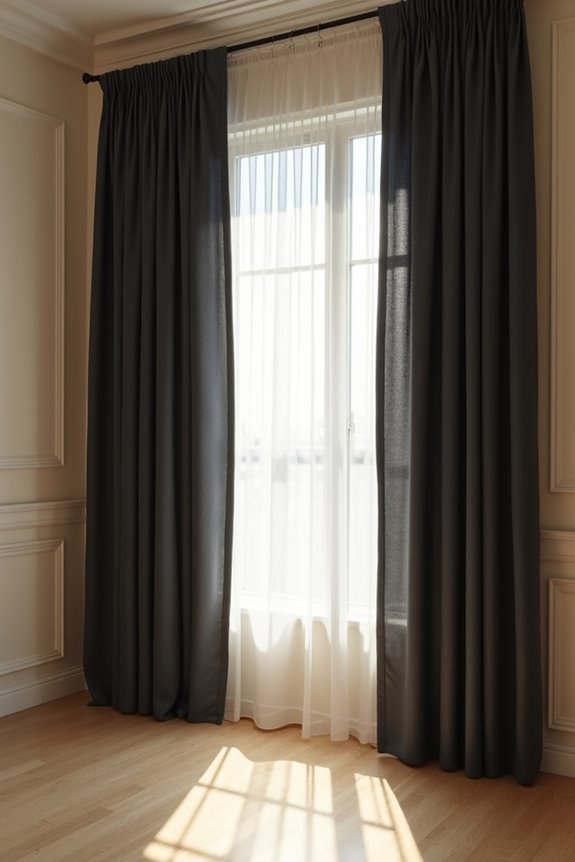
Why does matching your curtains to your walls sound so boring? Honestly, it’s not—it’s actually brilliant design thinking. When you choose curtains in a monochrome scheme with your walls, you’re creating visual calm that makes everything else stand out. Your furniture, artwork, and accessories become the focal points instead of competing for attention.
Think about it: unified curtains and walls form a seamless backdrop that feels planned and polished. You’re not fighting visual chaos or clashing colors that make your eyes hurt. Instead, you’re building a cohesive space where every element belongs.
This approach works especially well in bedrooms and contemporary living rooms. Choose your wall shade exactly, or go one shade lighter or darker for subtle dimension. You’ll feel that satisfying sense of togetherness in your room—like everything finally makes sense together.
Make It Pop: Dark Curtains on Light Walls
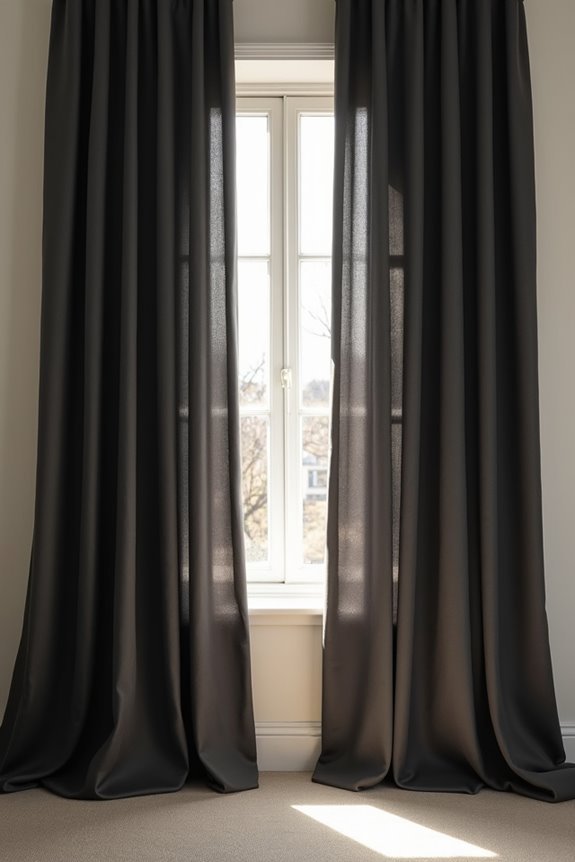
You’re about to discover that dark curtains on light walls aren’t just a design choice—they’re basically the room’s way of saying “look at me” while keeping everything feeling open and airy. When you pair that bold contrast with colors from your existing furniture or art, you’ll create a strong visual point where your window becomes the star of the show, adding serious depth without making the space feel cramped or cave-like. The trick is letting those darker fabrics work through lighter textures so they ground your room with an upscale touch, rather than swallowing all your light and leaving you feeling like you’re sitting in a dark tunnel.
Creating Visual Contrast
Have you ever noticed how a room can feel flat and boring, even when you’ve picked out nice colors? That’s where contrast comes in. When you pair dark curtains with light walls, you’re creating visual separation that makes your space feel alive and organized.
| Contrast Level | Wall Color | Curtain Color | Effect |
|---|---|---|---|
| Low | Beige | Tan | Subtle, calm |
| Medium | Cream | Charcoal | Balanced depth |
| High | White | Black | Maximum pop |
| Extra | Light gray | Deep navy | Rich definition |
The key is choosing curtains markedly darker than your walls. This difference makes your windows become the focal point. You’ll notice how the contrast adds depth and makes everything around it look more vibrant. Lighting matters too—natural and artificial light bounce off those light walls while your dark curtains ground the whole vibe, creating that designer-level atmosphere you’re after.
Depth And Design Impact
When you hang dark curtains onto light walls, you’re not just placing fabric—you’re creating a point of visual interest, and it genuinely shifts how your room functions. That curtain contrast isn’t merely decorative; it actually changes the spatial experience.
Dark drapes against pale wall color make your windows stand out as bold architectural features. Your eyes naturally gravitate there first, and suddenly the room gains layers—what designers call depth perception. Your brain interprets those shadows and shapes as dimension, making everything feel more deliberate and structured.
The key? Let those darker window treatments serve as an anchor for your color palette. Lighter accents and sheen on the fabric keep the space from feeling enclosed. This balance creates visual interest without a confined feeling.
Light Room Enhancement Strategy
Now that you understand how dark curtains create depth, let’s talk about making them work specifically in rooms that already get plenty of light.
You’re probably wondering: won’t dark curtains make my bright space feel cramped? Not if you’re strategic about it. Here’s your game plan:
- Pair dark curtains with light walls to anchor your space while letting natural light bounce around
- Choose fabrics with subtle sheen or texture, like velvet, so they stand out without overwhelming everything
- Use dark curtains to control glare, which gives you that evenly lit comfort you’re after
The contrast between your dark curtains and light walls creates visual interest. You’ll get a sophisticated look that feels deliberate, not accidentally dark. Your bright room stays airy while looking well-designed.
When Both Are Dark: The Cohesion Question
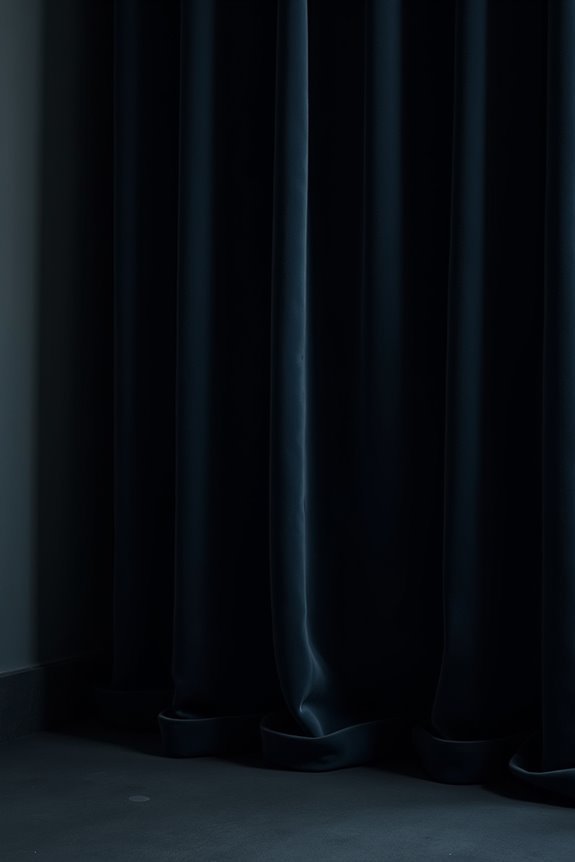
Why does it feel like some dark-on-dark rooms work beautifully while others make you feel like you’re sitting inside a cave? The answer lies in the details. When you pair dark curtains with dark walls, you’re not doomed—you just need curtain texture and contrast to save the day. Choose fabrics with subtle sheen or gentle patterns that catch light, creating depth instead of flatness. Deep blue walls paired with dark grey curtains work well because texture prevents that oppressive tunnel feeling. Balance your scheme by adding lighter elements elsewhere: trim, furniture, or pillows. This mix keeps your eyes interested and moving around the room. Your dark sanctuary won’t feel claustrophobic when you strategically reflect light and break up solid color blocks.
Room Type and Lifestyle: Does Privacy Matter More?
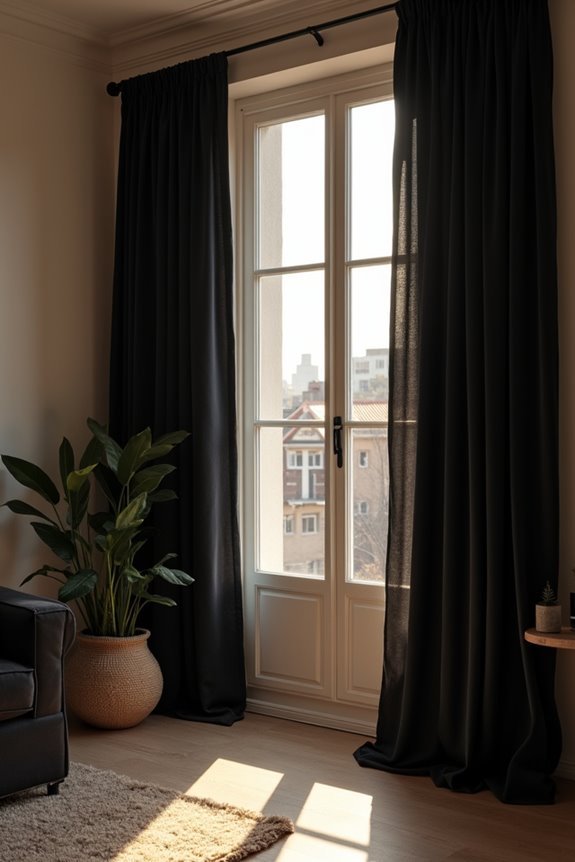
How you use your room actually matters more than you might think when you’re deciding how dark your curtains should be. Your lifestyle and privacy needs should guide your choices here.
Consider these situations:
- Bedrooms need serious light blocking – darker curtains than your walls create an effective sleep environment, especially if you’re sensitive to outside light
- Living rooms benefit from balance – you want privacy without feeling confined, so matching your curtains to wall darkness works better
- High-traffic spaces gain practical benefits – darker curtains hide dust and dirt, plus they set a warm room mood while protecting your space
If privacy matters most to you, go darker. But if you’re worried about your room feeling oppressive, pair darker curtains with lighter walls instead. You’ll get the privacy and light blocking you need without sacrificing comfort.
Sunlight and Orientation: How Direction Changes Everything
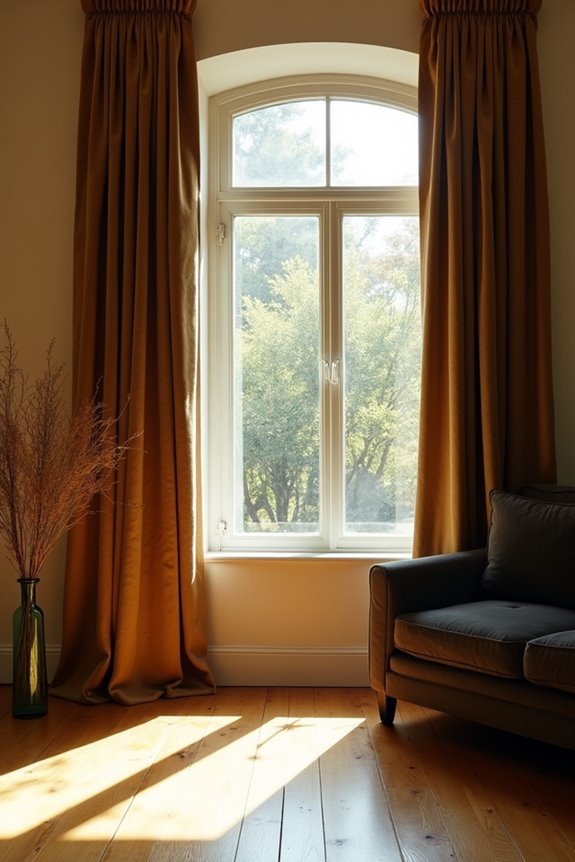
Your room’s direction—which way it faces—changes how you should choose curtain darkness. South-facing rooms get direct sunlight, so you’ll want thicker, darker curtains to reduce glare and heat. East-facing spaces catch bright morning light, meaning lighter or partially lined curtains work well without sacrificing privacy. West-facing rooms get that intense afternoon sun, so darker, lined curtains help control temperature and create a comfortable atmosphere. North-facing areas have steady, gentle light, so mid-tone to dark curtains feel balanced without making things feel dim.
Here’s the thing: darker curtains actually look different depending on your sunlight situation. On sunny walls, they appear cooler and more vibrant. In low-light spaces, they feel heavier and more intimate. Your orientation determines everything, so check your room’s direction before deciding how dark to go.
Balance Your Palette: The 60-30-10 Framework
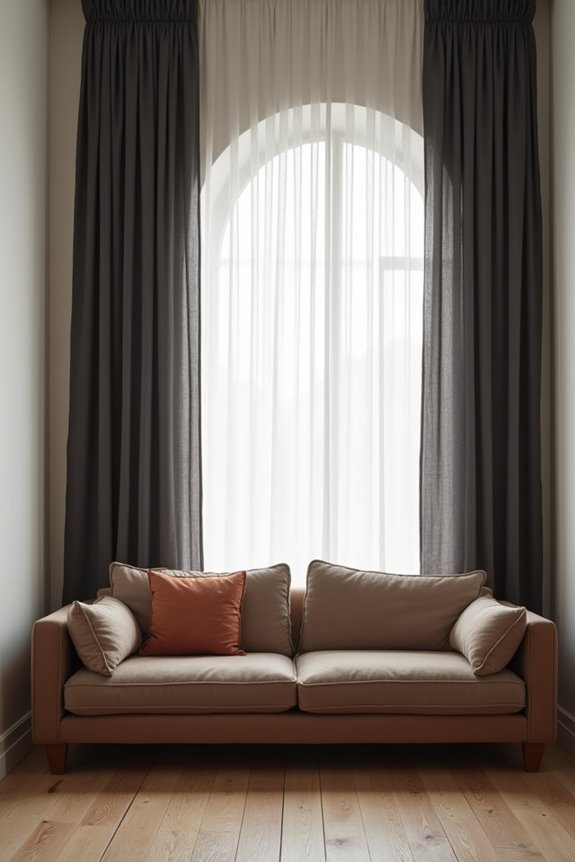
Your walls do the grunt work by anchoring your room’s entire color story, so they’ll take up about 60% of your visual space and set the foundation. Your curtains get the starring role at 30%, which means they’re bold enough to grab attention and establish a center point without overwhelming the space. Those last 10% go to accessories—the stuff on shelves and tables—which tie everything together and let you experiment without commitment.
Walls Anchor Your Color Scheme
That’s because your walls are doing the heavy lifting. They’re the foundation of your entire color balance, taking up 60% of your visual space. When you understand this, choosing curtains becomes way easier.
Here’s why walls matter so much:
- They set the mood for everything else in the room
- They create the baseline that curtains and accessories build upon
- They make or break whether your space feels calm or chaotic
Your walls aren’t just background noise—they’re the anchor. When you nail your wall color first, your curtains fall into place naturally. Whether you go darker or lighter with those curtains, you’re working within a framework that already makes sense. That’s what creates rooms that feel well-designed.
Curtains Command Secondary Attention
While walls do the heavy lifting, curtains are the ones who get noticed first when someone walks into your room. Your curtains occupy that important 30% of your color palette, which means they’re basically your room’s second star—and they’ve got real power.
Here’s the thing: your curtains can create emphasis or contrast depending on what you choose. If you want them darker than your walls, you’re intentionally drawing the eye there, making them a focal point. But here’s where balance matters. Your curtain color should complement your walls and furniture, not fight against them. Think of it this way—darker curtains against lighter walls create dramatic contrast, while matching tones create harmony.
The key? Choose curtains that feel deliberate, not accidental.
Accessories Provide Finishing Touches
How do you keep your room from looking like a mismatched thrift store? Accessories work as your key tool. That remaining 10% of your palette ties everything together, turning separate pieces into a cohesive story.
Think of accessories as the glue connecting your curtains and walls:
- Echo your wall tones in throw pillows, artwork, and rugs to reinforce harmony
- Repeat curtain colors through smaller decor items like bookends or vases for visual flow
- Bridge the contrast between dark curtains and light walls using accent pieces in complementary shades
When your curtains create bold contrast against your walls, strategically placed accessories prevent visual overwhelm. A patterned throw blanket, framed prints, or decorative objects in your 10% accent color ground the whole design. You’re not just decorating—you’re creating a space that feels purposefully designed and genuinely welcoming.
Lining and Fabric: Why Material Affects Color Impact
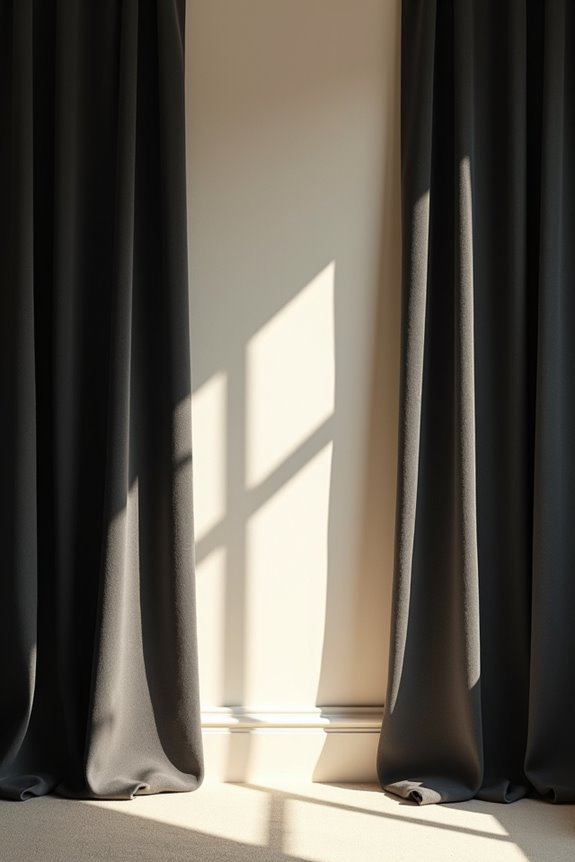
You’ve probably noticed that your curtains look different depending on the time of day, and there’s actually a real reason for that—it’s not just your lighting playing tricks on you. Your lining choice dramatically shifts how your fabric’s color reads against your walls.
| Lining Type | Color Effect | Best For |
|---|---|---|
| Blockout | Deepens, darkens appearance | Maximum drama |
| Thermal | Softens, slightly dulls tone | Balanced look |
| Unlined | Fades quickly over time | Budget-conscious choice |
Blockout lining intensifies darkness, making curtains pop against lighter walls. Thermal lining adds subtle warmth while mellowing contrast. Unlined curtains? They’ll fade faster without protection, shifting your color impact yearly. Consider your wall tone when selecting lining—it’s a critical factor that determines whether your dark curtains dominate or blend beautifully into your space.