You can make curtains at home by selecting affordable fabric like linen or thrifted bedsheets, then measuring your window width and multiplying by 1.5 for fullness.
Cut straight panels, hem the sides and bottom, attach lining for a polished look, and choose your hanging method—ring clips, rod pockets, or heading tape.
Add weights to the bottom corners for a professional drape, then hang and adjust.
The process is straightforward once you understand each stage, and no advanced sewing skills are required.
Choose the Right Fabric for Your Home Curtains

Picking the right fabric is honestly the make-or-break decision when you’re making curtains at home—it’s like choosing the foundation for a house, except way less expensive and way more forgiving if you mess up. You’ve got options that won’t drain your wallet or your sanity.
Linen is your best friend if you’re new to this. It’s easy to care for, comes in tons of colors, and different weights (thickness levels) let you control how much light gets through. Want something even sturdier? Upholstery-weight fabrics are the luxury choice for curtains that’ll last forever.
Thrifted bedsheets or deadstock fabric are also solid choices—they’re affordable, reduce waste, and often give you plenty of width already. You’re basically getting quality materials while saving money and helping the planet. That’s a win-win-win situation right there.
Calculate How Much Fabric You’ll Actually Need
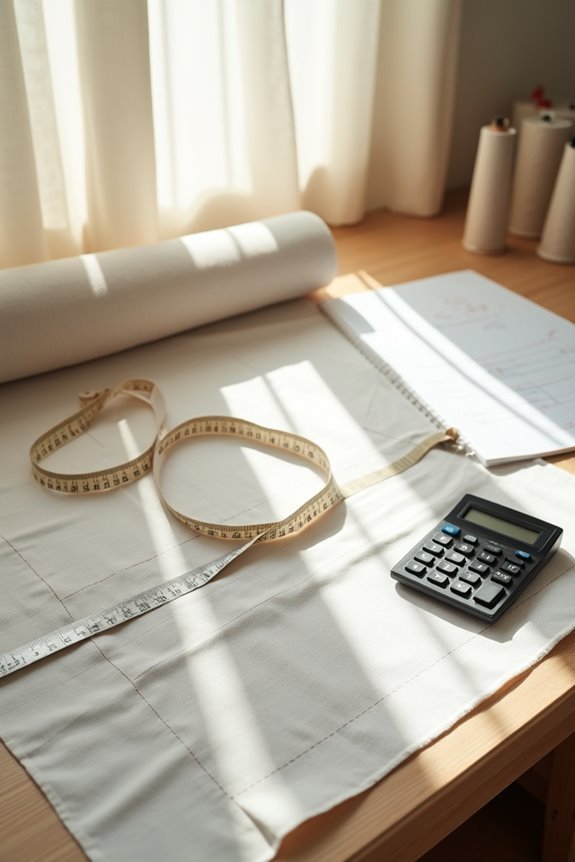
How much fabric do you actually need, and why does this part feel like a math test you didn’t study for? Start by measuring your window and multiplying the width by 1.5 (or 2 for extra fullness). That’s your fabric yardage starting point. Next, figure out your finished panel length by measuring from rod to where you want it to end. Add 14 centimeters for hem allowances and headers. If your fabric isn’t wide enough, divide your panel width by the usable fabric width to see how many fabric pieces you’ll need. Finally, bump up your total by 3–10 percent to account for shrinkage.
Gather Sewing Supplies for Your Curtain Project
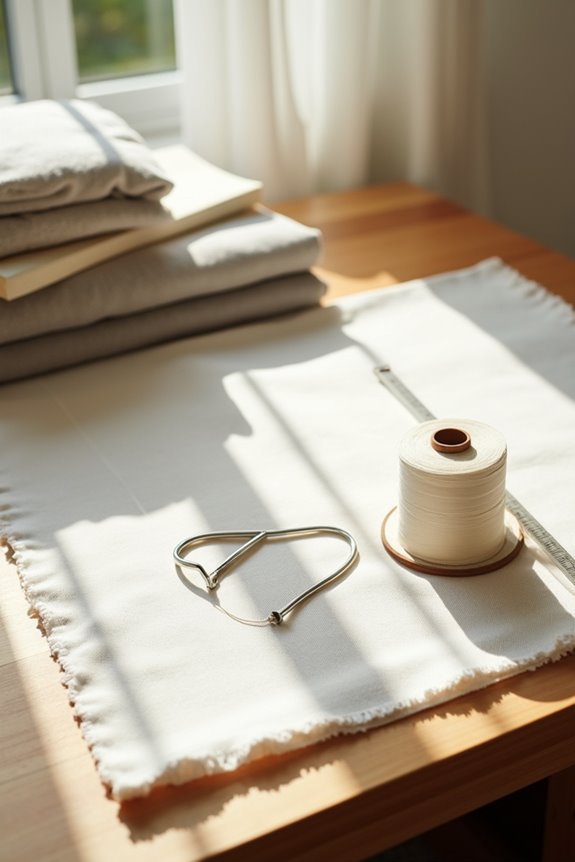
Before you can actually start sewing, you’ll need to round up your supplies—and honestly, this is where things get real. You’ll absolutely need a sewing machine, all-purpose thread, fabric scissors, pins, marking chalk, a ruler, and an iron. These basics are non-negotiable if you want your curtains looking polished.
Now here’s where you get creative: heading tape makes hemming way easier, especially the widest option available at 75mm. Grab curtain hooks or ring clips too, since they’ll hold everything up properly. If you’re feeling fancy, curtain weights keep hems from looking sad and droopy.
Don’t stress about spending tons of money. Hit up thrift stores for secondhand supplies, deadstock fabric deals, and gently-used heading tape. You’re building something awesome at a reasonable cost.
Measure Your Window to Size Your Curtain Panels
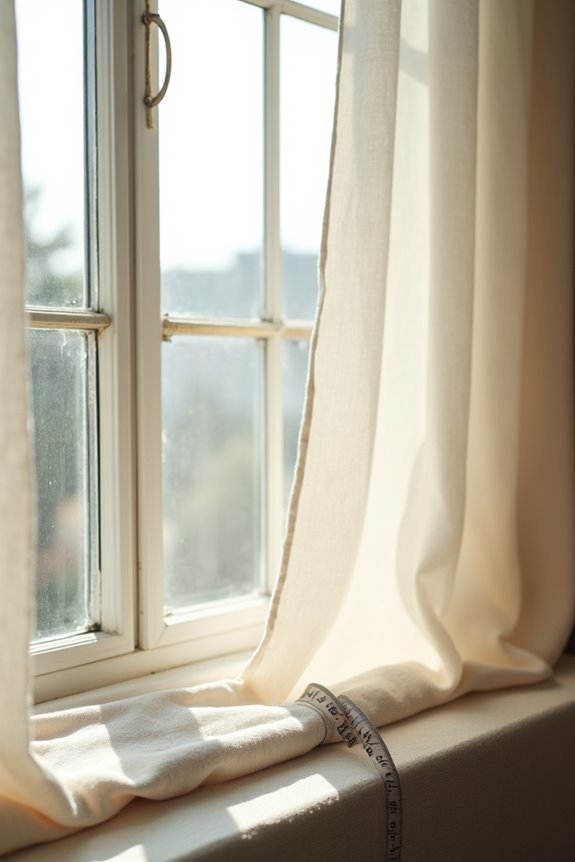
Now comes the part where precision actually matters—measuring your window. You’ll want to measure the height from where your rod sits down to your desired finished length, whether that’s the windowsill or floor. Getting this right saves you from awkward gaps or pooling fabric.
Next, measure your rod length. If you’re not using pleats, plan each panel width as half the rod length plus 20 centimeters for a two-panel setup. Don’t forget to add your hem allowance—typically 14 centimeters—to your calculations. You’ll also need to account for heading length, which is that fabric section above your rod.
Write everything down. Double-checking now prevents frustrating mistakes later when you’re cutting expensive fabric.
Cut Straight Fabric Panels: The Right Technique
You’ll want to grab either a rotary cutter with a large quilting ruler or, if you’re working with just fabric shears, pull a single thread through your fabric to create a cutting guide that’ll keep you honest. Laying your fabric face-up on a clean, flat surface is important, especially when you’re trying to get those pattern repeats to line up perfectly across multiple drops. These straightforward techniques remove the guesswork from cutting and help you avoid those frustrating wonky edges that’ll cause problems later.
Tools For Straight Cuts
Why do curtain panels sometimes look wonky, even when you’ve measured everything twice? The culprit’s usually your cutting tools. You’ll want a large quilting ruler and rotary cutter for the cleanest, most reliable straight cuts. These tools let you align edges perfectly with your pattern lines, giving you precise panel widths every time.
If you’re working without a rotary cutter, don’t stress. Pull a single thread from the fabric’s weave to create a visible guide line, then carefully follow it with scissors. The key is having a proper cutting surface—make sure your fabric sits flat and square to it. This prevents those frustrating slanted edges that haunt us all. With the right tools and setup, you’ll nail straight panels consistently.
Thread-Pulling Cutting Guide
How’s this for a catalyst: if you don’t have a rotary cutter handy, you can actually use the fabric itself to guide your cuts. Pull out a single thread from the weave running perpendicular to where you need to cut. That thread becomes your alignment guide—the fabric works with you.
Follow that pulled thread line with your fabric shears, keeping steady pressure as you cut. This method works well for creating straight edges without fancy tools. Before you start cutting, double-check your alignment against a ruler to catch any wobbles early.
Once you’ve cut your panels straight, you’re ready for pattern matching and joining drops at the hem.
Hem the Main Fabric and Lining Separately
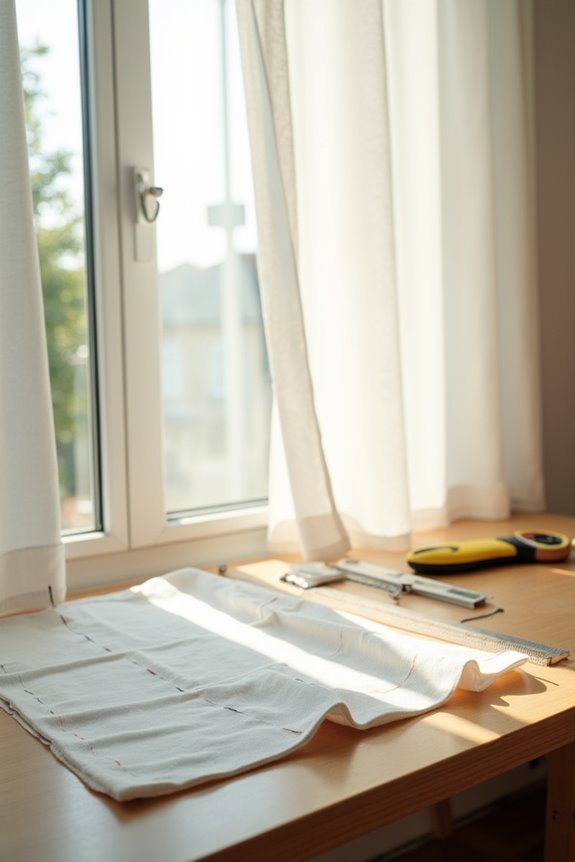
Creating separate hems for your main fabric and lining might seem like extra work, but it produces curtains that look professionally made instead of homemade. Here’s what you’ll do: fold your main drapery fabric’s bottom edge up 4 inches, then fold it again to create a double hem with a clean, front-facing edge. For the lining, you’ll fold its bottom edge up 6 inches, then fold again, making it about 1 inch shorter than your main panel. This difference matters because when you align everything during assembly, that 1-inch gap prevents visible stitching from showing through your drapery’s face. Finally, sew each lining hem with a straight stitch and press flat. You’ve eliminated the bulk that distinguishes amateur curtains from professional ones.
Attach Lining to Your Main Fabric Panels
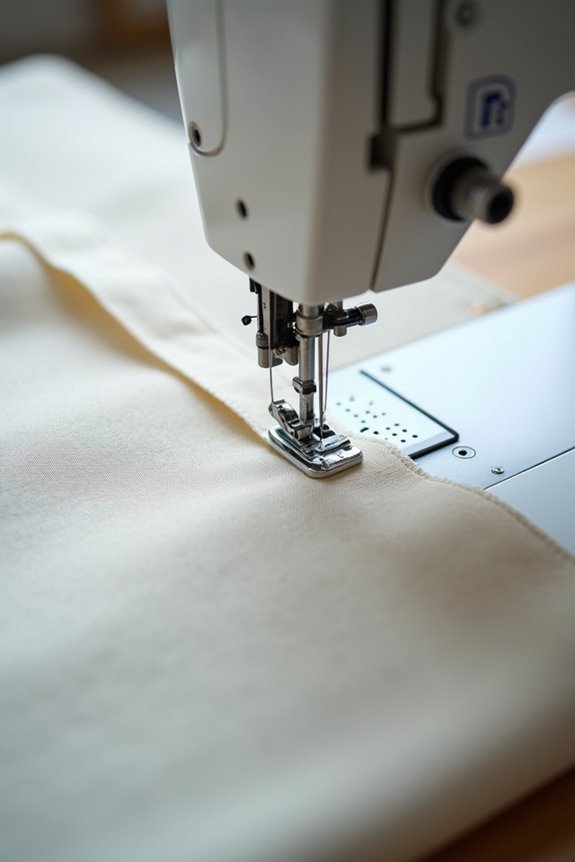
Lay your lining reverse-side down onto the curtain fabric, aligning the finished lining hem 2.5 cm above your curtain hem. Pin everything in place so nothing shifts around. Fold that lining edge 2.5 cm, press it flat, and slip-stitch along the edge to attach it to your curtain fabric. This invisible stitching keeps everything secure.
Complete this lining attachment before applying heading tape. Your custom curtains are nearly finished.
Sew 1.5-Inch Side Hems for a Polished Edge
Why do side hems matter so much when you’re making curtains? Because sloppy edges make your whole project look, well, sloppy. You’ve come this far—don’t let unfinished sides ruin your hard work.
Here’s your plan: fold your fabric 3 inches from the edge, press it down, then fold again to create a 1.5-inch finished fabric hem. This double-fold technique keeps everything neat and prevents fraying. Now grab your needle and use a straight stitch along the fold, keeping stitches invisible from the front. It requires practice, but it’s achievable.
After stitching, press your side hem to set the crease permanently. If you’re using blackout lining, match the hem allowances on both layers for a clean, professional finish. Your curtains will look store-bought quality.
Choose Your Curtain Hanging Method and Finish the Top
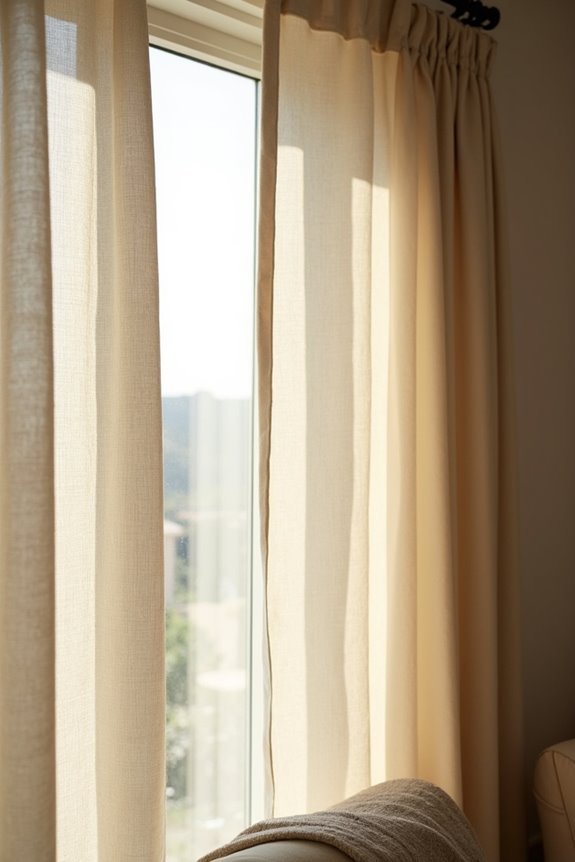
Now that you’ve got your side hems looking sharp, it’s time to pick how you’ll actually hang these curtains and finish that top edge—because a beautiful curtain that won’t stay up is just expensive fabric on your floor. You’ve got several solid options, from simple ring clips that slide right onto a rod to fancy gathering tape that creates those pleated looks, and each one needs a different top finish to work properly. Fortunately, once you choose your hanging method, finishing the top becomes pretty straightforward, whether you’re folding a simple hem or stitching on heading tape to get that polished, professional look you’re after.
Selecting Your Hanging Method
Before you sew that top edge, you’ve got to decide how your curtains’ll actually hang—and honestly, this choice matters more than you’d think because it determines everything from how wide your top hem needs to be to whether you’ll spend the next five years cursing at clips that won’t stay put. Your curtain header is basically the foundation of your whole project, so let’s explore your hanging method options:
- Ring clips that grip fabric with tiny teeth—perfect if you want a polished, modern look
- Rod pockets that slide directly onto your pole—the classic, elegant choice
- Heading tape with gathering strings that create professional pleats instantly
Each method affects your top edge differently. Ring clips need about 2 inches of fabric. Rod pockets demand 3–4 inches depending on rod thickness. Heading tape requires specific preparation beforehand. Pick what matches your style and skill level.
Finishing The Top Edge
Here’s where your hanging method choice actually pays off—you’ve picked how your curtains’ll hang, and now you’ve got to finish that top edge to make it work. You have solid options depending on your style and skill level.
| Method | Spacing |
|---|---|
| Ring clips | Every 3–4 inches |
| Rod pocket | 3–4 inches wide |
| Tabs | 3–5 inches apart |
For a rod pocket, you’ll sew a hem wide enough for your rod size. Ring clips need even spacing across the width for balanced drape. Heading tape? Knot those gathering strings, pin it across your top edge, sew through all layers, then fold to create a pocket.
Whatever you choose, press everything carefully and align it with your hardware. A polished finish comes from paying attention to these details right now.
Add Weights and Hang Your Completed Curtains
The final step in your curtain project is adding weights and hanging them up. This part significantly improves the appearance between curtains that look droopy and ones that hang beautifully. You’re almost there.
Adding weights to your curtains transforms droopy fabric into beautifully structured drapes that hang perfectly straight.
Here’s your weighted curtain plan:
- Sew fabric pockets into your lining at the bottom corners to hold weights safely
- Place lead pennies or cord inside those pockets, keeping them hidden from the curtain face
- Position extra weights along vertical seams for balanced, even drape
Once you’ve secured everything, hang your curtains on the rod and step back. Adjust weights as needed until that hem sits perfectly straight—no flutter, no sagging.