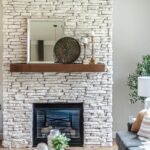
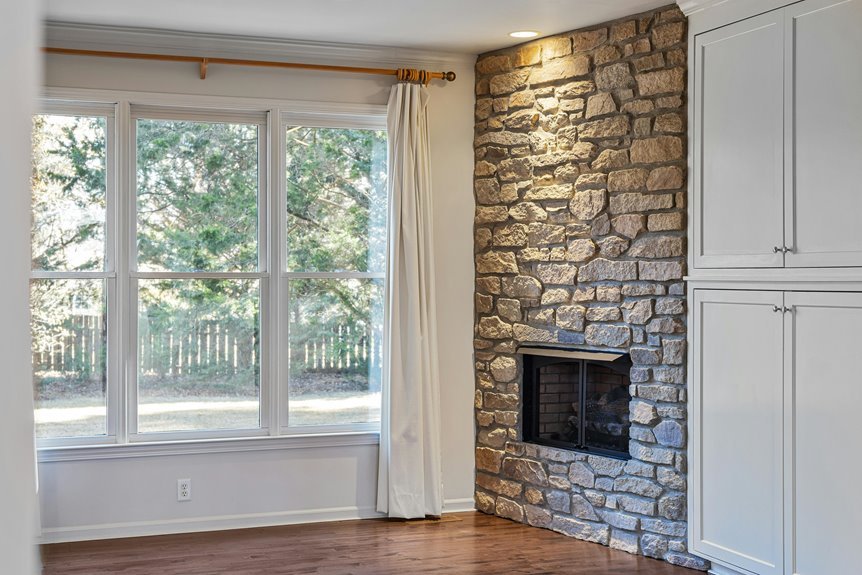
Corner fireplaces aren’t fading because they deliver practical benefits for modern homes. You get strong focal points from every angle without consuming floor space or blocking your sightlines across open rooms. They warm larger homes efficiently, guide foot traffic naturally, and define zones without walls—keeping everything connected. Plus, 2026’s material options (concrete, marble, slate) let you match any aesthetic. They’re reliable anchors that solve real problems while maintaining visual appeal. Want to discover exactly how to choose the right corner configuration for your space?
Space-Efficient Design Meets Open-Concept Living
How’re you supposed to make a fireplace work when your whole living space flows together like one giant room?
Corner fireplaces solve this puzzle effectively. You’re getting space-efficient design that doesn’t eat up your square footage or create clunky barriers. Instead, they naturally divide your open-concept living without blocking sightlines, so everyone stays connected while carving out distinct zones.
Here’s what makes them work: corner placement maximizes your viewing angles from multiple seating areas, delivering dual-facing warmth that brings people together. You’ll find they support flexible circulation—meaning you can move freely through your space without furniture awkwardly blocking pathways.
The modular design adapts to your style too, whether you prefer stone surrounds or sleek frameless inserts. This architectural cohesion makes your fireplace a strategic, unifying feature that gives your open layout purpose and warmth.
Corner Fireplaces Define Zones Without Blocking Sightlines
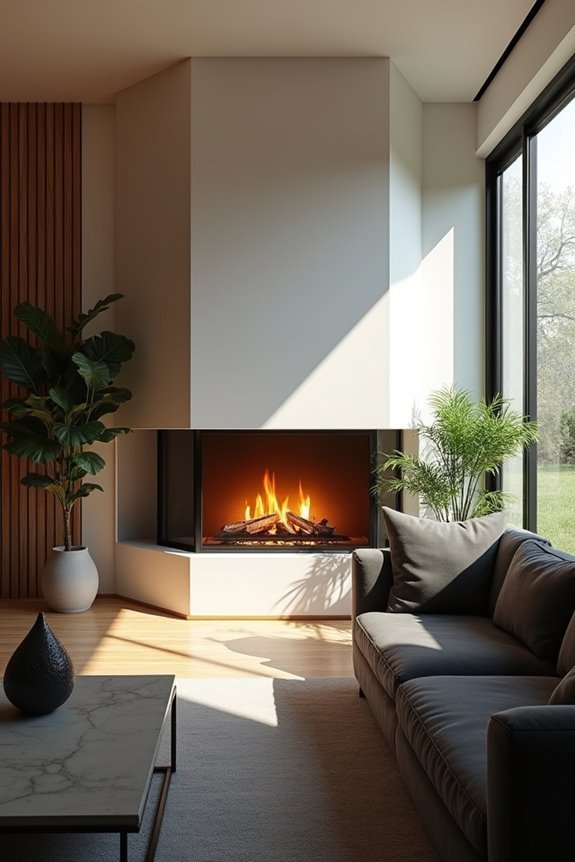
What if you could split your open-concept space into distinct living and dining areas without putting up a wall or sacrificing those sight lines you worked hard to create? Corner fireplaces do exactly that. By positioning your fire in a corner, you’re creating invisible boundaries that naturally guide traffic flow while keeping views open between rooms. Whether you choose masonry or framed units, these low-profile designs won’t obstruct sightlines the way a center-wall fireplace would. The key advantage is multi-sided views—you experience the flame from your couch, your dining table, and everywhere between. You’re not forcing anyone to face one direction; instead, you’re anchoring your furniture layout while maintaining that open, connected feeling that makes homes feel welcoming.
Multiple Angles Make Them Dramatic Focal Points
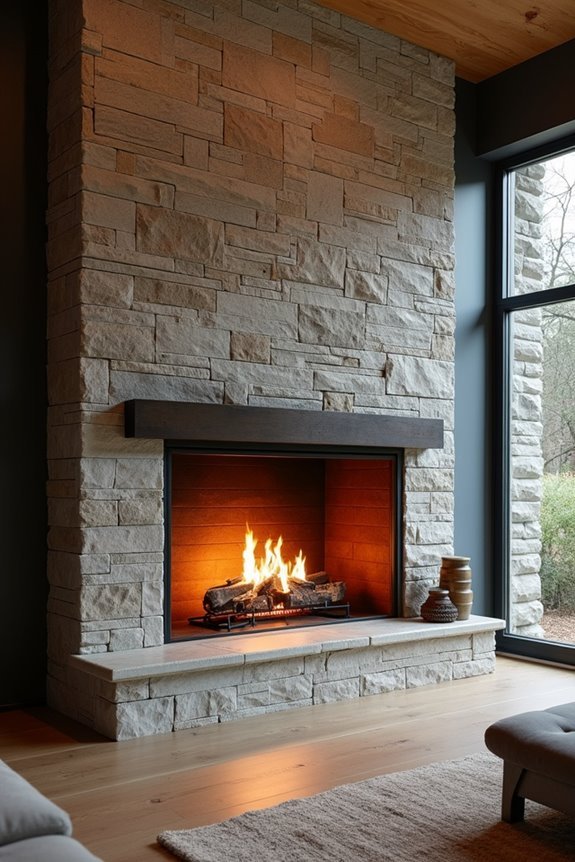
When you place a fireplace in a corner, you’re creating a visual magnet that pulls attention from every angle of your room—not just one direction like traditional setups. You’ll notice how the flames create a commanding anchor point that makes your space feel larger and more deliberate, especially in high-ceiling rooms where empty corners usually collect dust and neglect. The advantage is that corners give you natural sightlines across open spaces, layering depth and dimension throughout your layout so the whole room feels connected instead of fragmented.
Commanding Visual Anchors
Because corner fireplaces sit at angles rather than flat against a single wall, they command attention from practically anywhere in the room. You’re not stuck viewing them from one spot—instead, they become visual anchors that hold prominence from multiple vantage points. In open-plan spaces, this matters considerably. Four-sided and island-style configurations amplify that effect even further, positioning the flame as a destination rather than mere background decoration. Your sightlines stay clear, your circulation flows naturally around the fire, and suddenly furniture placement becomes logical. Corner fireplaces don’t just warm your space; they orchestrate how you move through it, creating focal points that carry purpose and appeal from every angle you choose.
Sightlines Across Open Spaces
Now here’s where corner fireplaces work well in modern homes—they’re not just visually interesting from your couch, they’re also practical for open floor plans. You get focal points visible from multiple angles, which means everyone enjoys the fire without awkwardly staring in the same direction. Corner fireplaces create multi-facing sightlines that naturally preserve connection between your living, dining, and corridor spaces. This architectural anchor provides structure for open-plan layouts, making them feel organized rather than scattered. The 90-degree configuration guides furniture placement while keeping sightlines clear, so your open spaces stay genuinely open. That’s the practical benefit—you’re zoning without walling anything off.
Layered Depth and Dimension
If you’ve ever felt like a traditional fireplace only looks good from one specific spot on the couch, you’re onto something—and that’s exactly where corner fireplaces work differently. They create prominent focal points visible from multiple angles, organizing your open-plan spaces into distinct zones. A corner placement delivers layered depth and dimension that a flat wall simply can’t match. You’ll get that multi-sided view from your living room, dining area, and hallways simultaneously. When you pair this strategic positioning with materials like stone or brick, the texture catches light differently from each vantage point, amplifying visual interest. This spatial strategy isn’t just visually appealing; it’s smart design that makes everyone in the room feel connected to the same gathering spot.
Thermal Comfort and Dual-Sided Warmth in Larger Homes
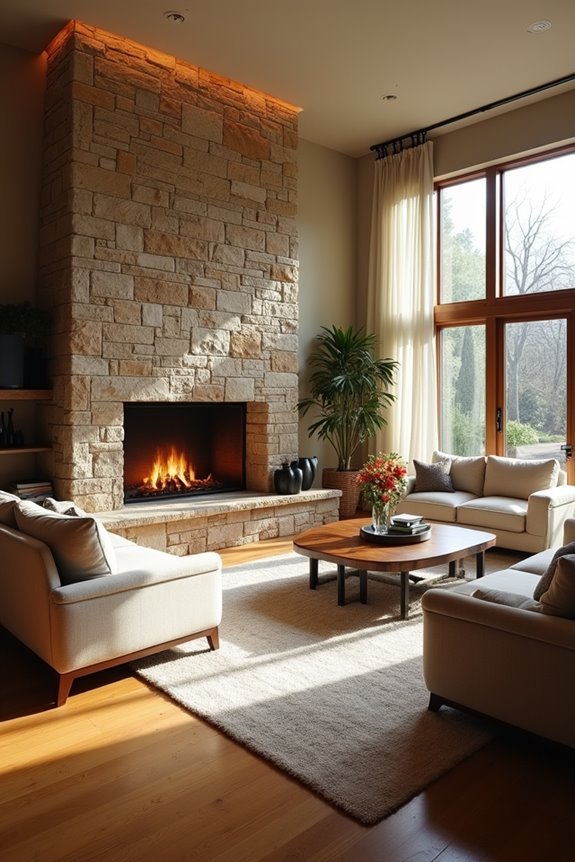
Wide, linear designs spread warmth horizontally, creating even heat distribution that tall, narrow fireplaces can’t match. Some dual-sided units extend outdoor-adjacent warmth, letting you use patios during shoulder seasons.
You’re heating larger homes efficiently while maintaining your layout’s flow.
Why Corner Fireplaces Never Go Out of Style
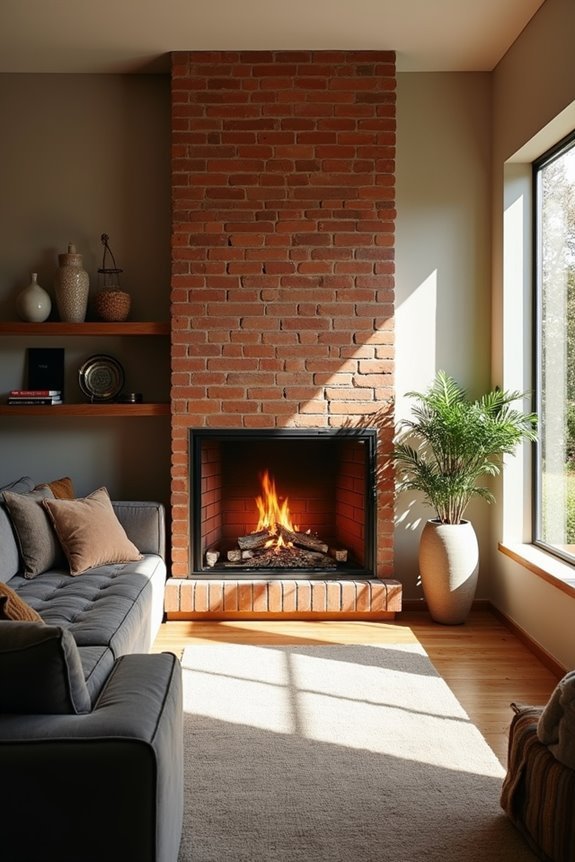
You’ve probably noticed that corner fireplaces have this lasting appeal—they’re not trendy one year and forgotten the next—because they work as both a strong architectural anchor that grounds your whole room and a flexible design element that adapts to however you want to arrange your furniture. Whether you’re rearranging your seating for the hundredth time or trying to make an open-concept space actually feel like separate rooms, a corner fireplace just works, giving you the freedom to play around without sacrificing that central point your room needs. The real reason they’ll never go out of style is straightforward: they solve actual design problems while looking good doing it.
Timeless Architectural Anchor
A corner fireplace isn’t just a place to watch flames flicker—it’s the structural element that organizes a room. Open-plan spaces can feel disjointed without a clear anchor point. A corner fireplace provides that purpose. It becomes your architectural centerpiece, the thing that makes everything else make sense. With multi-directional viewing and a four-sided or see-through configuration, you’re not stuck staring straight ahead like you’re at a movie theater. Instead, guests move naturally around it, creating distinct conversation zones without forced furniture arrangements. Modern frameless minimalist designs keep sightlines clear while maintaining that structural presence—like it belongs there as part of the architecture. The flame becomes your room’s visual center, unifying everything from stone to timber while keeping your space connected.
Spatial Flexibility and Flow
That architectural anchor we just talked about? It’s also your practical asset for spatial flexibility. Corner fireplaces divide open-plan spaces without those claustrophobic solid walls that kill your sightlines. You get room-to-room flow while actually feeling like separate zones exist—a functional approach, right?
Three-sided configurations work well here. Your flame becomes a visual anchor that guides how people naturally move through your space, creating gathering spots without blocking anyone’s view. Whether you’re lounging in the living room, eating dinner nearby, or stepping outside, you’ve got sightlines and access to the fire.
This approach addresses the problem of corners becoming awkward dead zones by turning them into purposeful architectural dividers. You’re not sacrificing openness; you’re strategically using the fireplace as a spatial tool that keeps everything connected while maintaining definition.
Material Versatility Aligns With 2026 Design Language
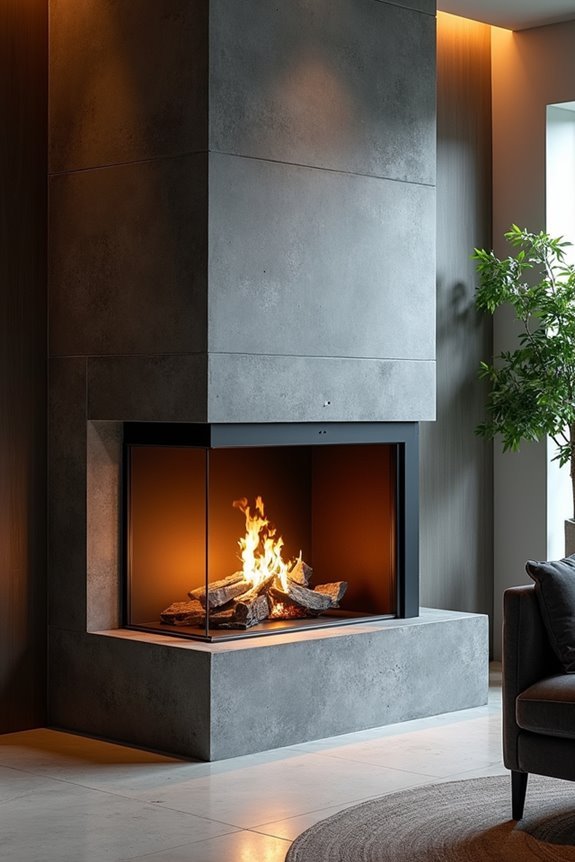
Why does it feel like every corner fireplace trend from five years ago looks dated now? That’s because material versatility in 2026 finally gets it right. You’re not stuck choosing between bland options anymore—concrete mantels with sustainable fly ash, stone surrounds in limestone or marble, and minimalist mantels in natural textures all work together well. The real advantage? Fluted detailing and customizable edge geometry let you tailor everything to your space without overthinking it. Want rounded edges for safety? Done. Need specific proportions? You’ve got it.
| Material | Finish | Vibe |
|---|---|---|
| Concrete | Matte | Grounded |
| Marble | Honed | Timeless |
| Slate | Natural | Moody |
| Limestone | Matte | Calm |
These choices align perfectly with 2026’s design language, creating mantels that integrate with your home instead of competing for attention.
How Corner Placement Guides Room Flow and Movement
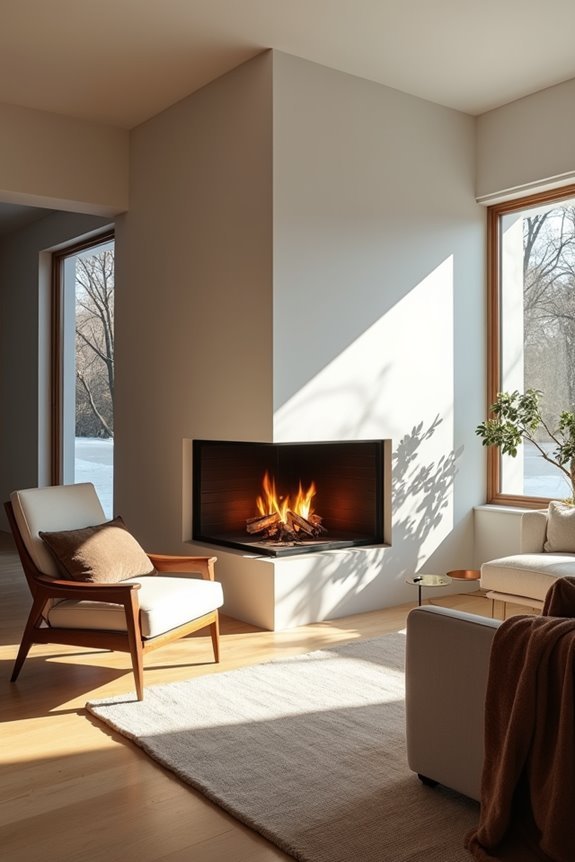
Ever notice how corner fireplaces work well in homes with open floor plans? That’s because they’re clever at guiding room flow without constraining your space. The 90-degree configuration naturally encourages movement around the fireplace instead of funneling everyone into one direction. You’re not stuck staring at flames from a single spot—you can drift between your living and dining areas while maintaining sightlines across zones. Corner fireplaces act as subtle dividers that preserve connection, so your open-plan doesn’t feel like one undifferentiated room lacking identity. The multi-view experience means you’re building community, not isolation. Your guests naturally gravitate toward it, creating gathering points that feel deliberate rather than forced. That’s the advantage of strategic placement.