Start by measuring your ceiling height—divide that number by two to determine your fixture spacing. Create lighting zones for different activities: task lighting for work surfaces, ambient lighting for relaxation areas, and accent lighting for architectural features or artwork. Before installing anything, use a flashlight to test your layout and mark potential locations with pencil. Select fixtures appropriate for your ceiling height and the function of each zone, then install dimmers to achieve layered lighting control. Professional lighting designers rely on these fundamentals to create functional, well-lit interiors.
Step 1: Measure Your Room and Space Recessed Lights
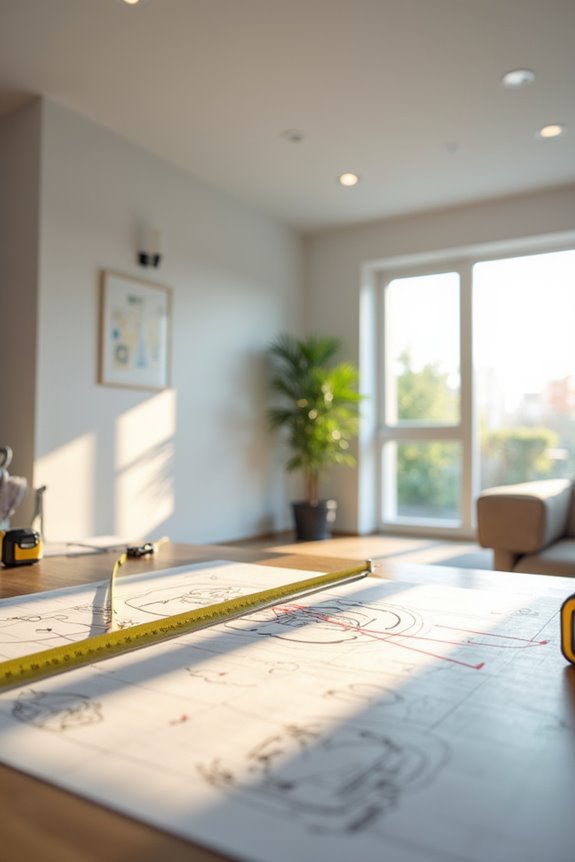
Before you even think about touching a drill, you’ve got to measure your room—and yeah, I know, measuring sounds about as fun as watching paint dry, but it’s the difference between a well-lit space and a room that looks like a disco had a fight with a cave.
Grab your tape measure and jot down your room’s length, width, and ceiling height. These numbers become your foundation for everything else. That ceiling height? It’s actually your strategic advantage. Divide it by two, and you’ve got your ideal spacing between recessed lights. An 8-foot ceiling means roughly 4 feet apart.
Now map out your grid mentally. Position your first and last lights about 2–3 feet from the walls to avoid those annoying shadows. You’re creating balanced coverage, not just randomly drilling holes everywhere.
Step 2: Map Recessed Lighting Zones by Function
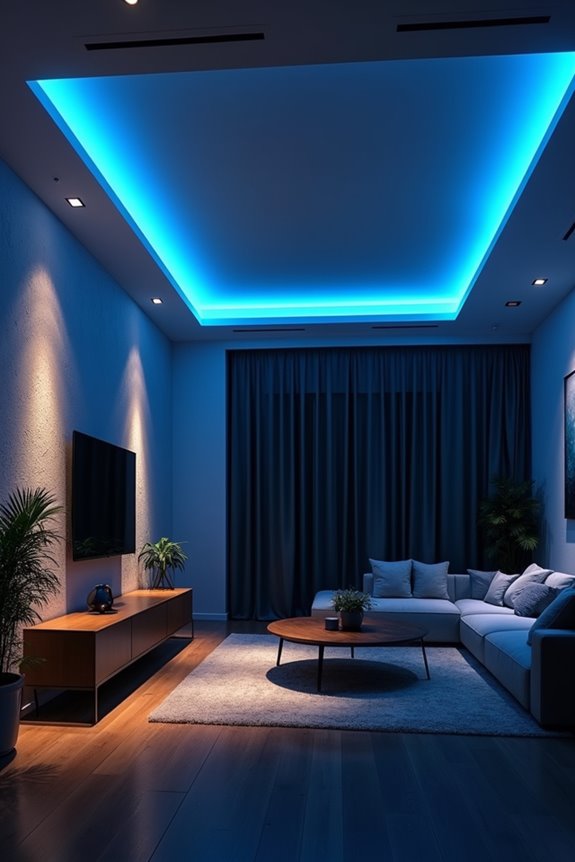
You’re going to identify three main recessed lighting zones for your function-based layout:
- Task lighting over work surfaces like kitchen counters and bathroom mirrors where you need bright, focused light
- Ambient lighting in living rooms and bedrooms that creates a comfortable, relaxed glow for everyday use
- Accent regions highlighting artwork or architectural features that add intentionality to your space
This approach prevents those awkward dark corners and overly bright spots. By mapping zones this way, you’re creating a lighting strategy that matches how you actually live. It’s like giving each area permission to do its job properly, rather than hoping one light does everything (spoiler: it won’t).
Step 3: Test Your Layout Before Marking the Ceiling

Now that you’ve got your zones mapped out, it’s tempting to just grab a drill and start making holes—but hold up, because this step saves you from ceiling regret.
Before you commit to your recessed lighting layout, grab a flashlight and tape it where you’re thinking about placing fixtures. This simple move simulates your actual illumination and reveals whether you’ll create annoying dark spots or harsh shadows. Test your layout from the room’s center outward, moving gradually toward walls to catch problems early.
Use the spacing rule: divide your ceiling height by two for initial fixture distance. For eight-foot ceilings, that’s roughly four feet apart. Mark intersections on your ceiling grid with pencil, then step back and assess the overall effect. This hands-on ceiling grid validation prevents costly mistakes and keeps lighting balanced throughout your space.
Step 4: Choose Fixtures for Your Ceiling Height
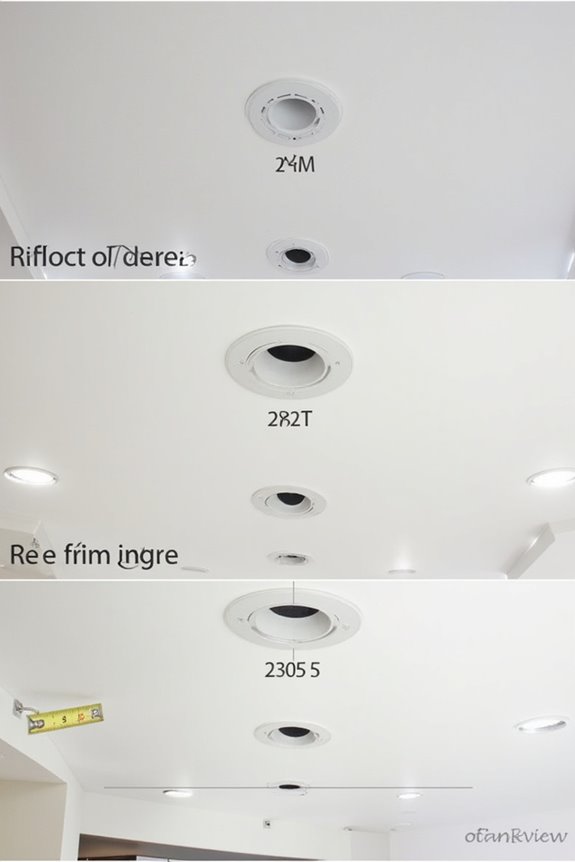
What’s the point of nailing your layout if you slap the wrong fixtures into your ceiling? You’ll end up with a mismatched mess that looks awkward and doesn’t work right.
Here’s where fixture selection matters:
- Apply the spacing rule: Divide your ceiling height by two. An 8-foot ceiling? Space your recessed lights about 4 feet apart for balanced coverage.
- Select 4-inch fixtures: These work perfectly for kitchens and work areas, giving you solid brightness without overwhelming your space.
- Pick your trim: Choose adjustable trim for task areas to direct light where you need it, plus wet-rated options for bathrooms.
Your ceiling height determines everything about how fixtures perform, so match them correctly from the start.
Step 5: Add Dimmers to Create Adaptable Lighting Layers
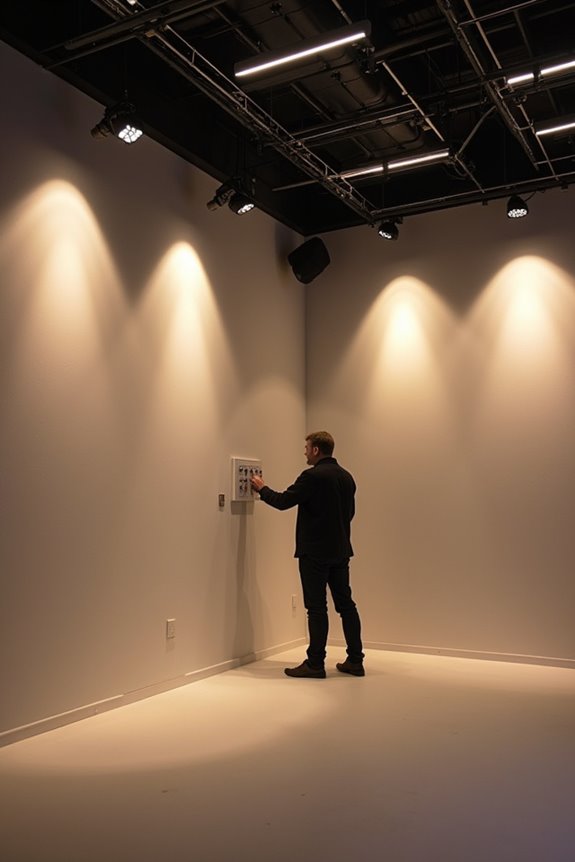
Once you’ve got your fixtures locked in and positioned just right, adding dimmers to your setup gives you control over brightness levels. You can increase brightness when preparing dinner, then reduce it for a relaxed evening in the same room without switching fixtures or moving anything around.
Smart dimmers work well with LED recessed cans, letting you create layered lighting that matches your needs. Install dimmer-compatible switches to coordinate multiple zones. Make sure your dimmers are rated for LED loads and match your total wattage. This adaptable lighting control reduces glare, enhances textures, and saves energy while keeping your space looking intentional and polished.