You’ve got options, and honestly, they’re all good. Go bold with one massive piece of art for sophistication, or create a gallery wall for personality. Try canvas prints on a budget, add warmth with tapestries, or build in shelving for storage plus style. Layer mirrors with artwork to brighten things up, anchor furniture strategically, or mix wallpaper with art for depth. Sometimes leaving space empty works too. Stick around to discover which approach matches your room best.
Make a Bold Statement With Oversized Single-Piece Art
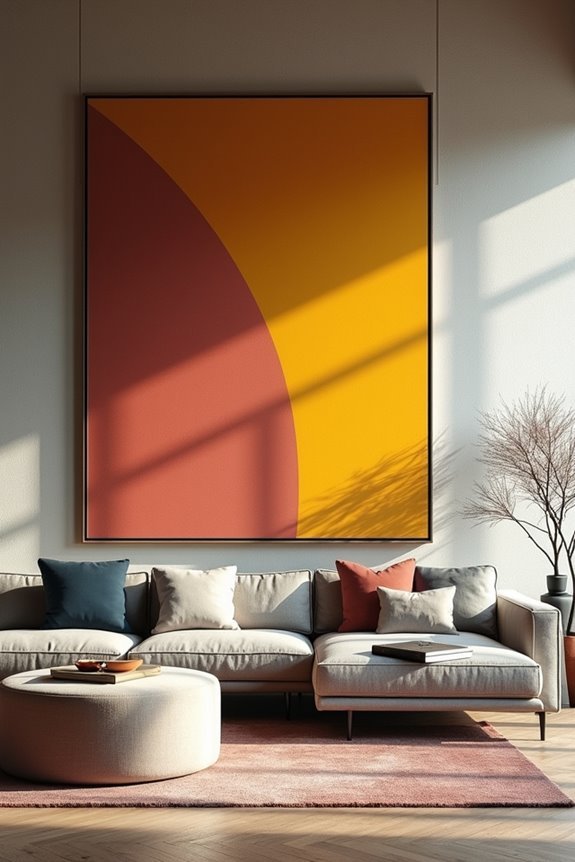
How many times have you walked past that giant blank wall and just felt… nothing?
You’re not alone. That empty space demands attention, but a dozen tiny pictures won’t solve the problem. Here’s where oversized art works. A single-piece artwork turns your large wall into an immediate focal point that captures attention the moment someone enters the room.
Skip matching your décor perfectly. Instead, choose bold colors and punchy imagery that you actually love. This dramatic impact creates a memorable centerpiece that anchors your entire space.
Unlike crowded gallery walls, one substantial piece feels deliberate and sophisticated. Pair your oversized art with strategic lighting or a minimal vignette nearby, and you’ve created something genuinely distinctive—a room that finally feels like yours.
Create Visual Interest With a Gallery Wall or Curated Set
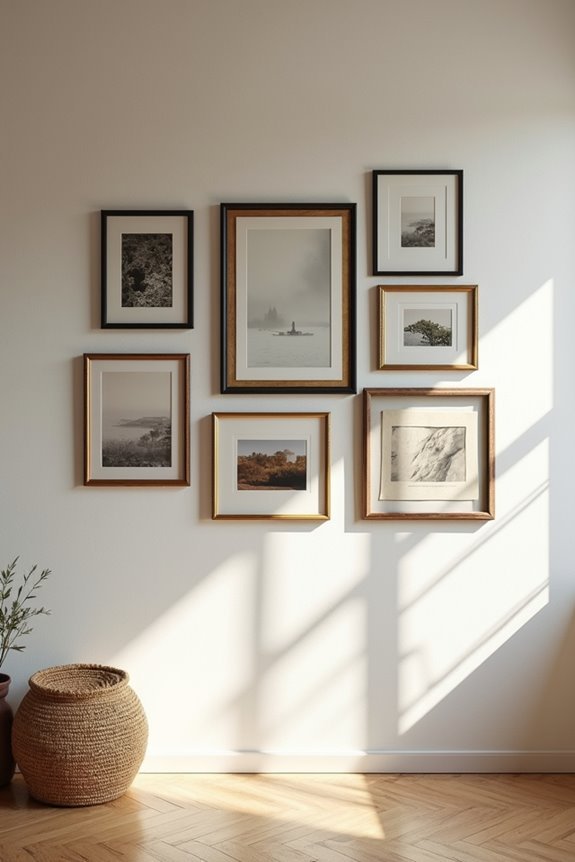
Turn that massive wall into a personal museum that tells your story.
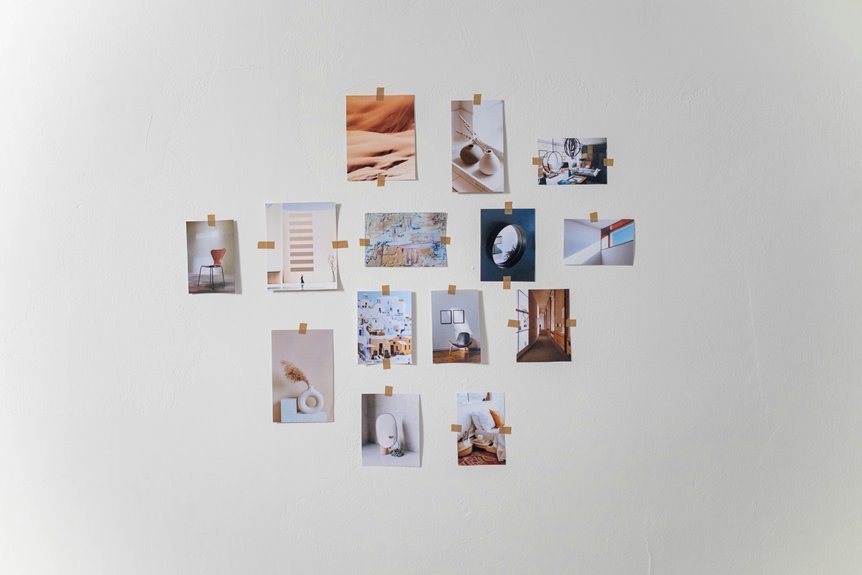
A gallery wall or curated set converts blank space into something that belongs to you. You’re arranging artwork, photographs, and decor that reflect who you are—no cookie-cutter prints required.
Here’s what works: a gallery wall uses an eclectic mix arranged in a grid or salon-style cluster, while a curated set features matching, themed pieces for polish. Both approaches work well for large wall decor.
Start by varying frame sizes and aligning key pieces along a common vertical axis. This maintains rhythm without looking chaotic. Consider anchoring around a TV or standout piece for balance.
The result? A dynamic focal point that communicates something meaningful about you, turning wall decor into genuine self-expression.
Use Canvas Prints for Budget-Friendly Large-Scale Impact
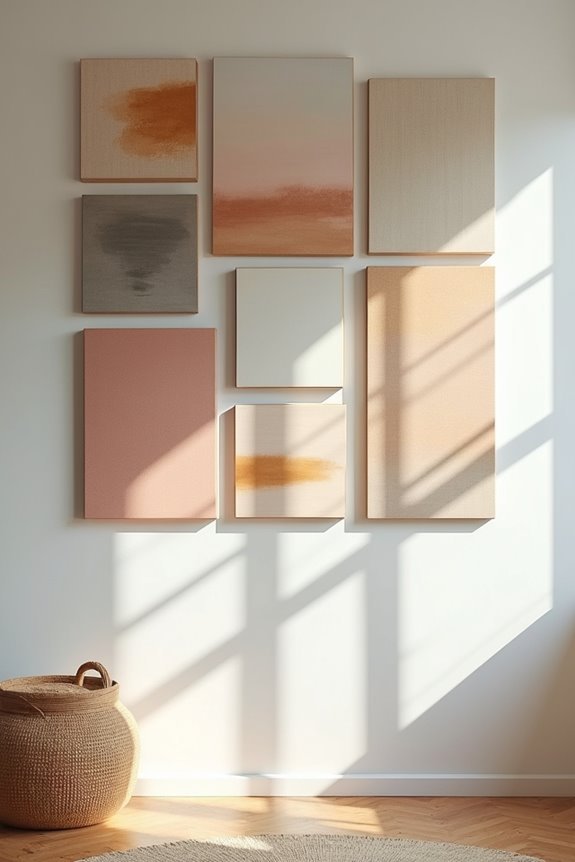
Canvas prints offer an effective way to cover large wall spaces affordably. You can arrange multi-panel options however you prefer, creating coordinated designs across your walls. Modern printing technology keeps images vibrant and fade-resistant for long-lasting results. Whether decorating a living room, hallway, or office, canvas prints provide bold color and visual impact without requiring complicated mounting hardware. They’re a practical wall decor solution that delivers results, making your space feel complete and well-designed.
Add Texture to Your Large Wall: Tapestries & Woven Art
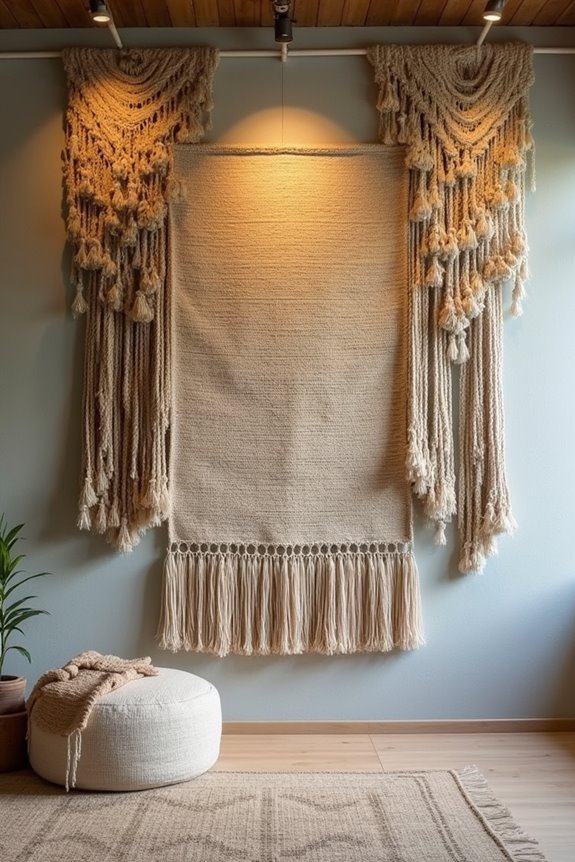
If you’ve been staring at that bare wall feeling like something’s missing, tapestries and woven art are a practical solution—they bring warmth, absorb sound, and look deliberate (unlike when you just hang a poster and hope nobody notices). You’ll want to know what materials hold up best in your space, how to actually get these textiles on the wall without damaging them, and why that chunky weave or bold pattern suddenly makes your whole room feel less like an empty box. We’re breaking down everything from choosing durable fabrics to installation tricks to understanding how texture changes a massive wall from plain to visually interesting.
Tapestry Materials & Durability
When you’re picking out a tapestry or woven piece for your big wall, the material you choose really matters—it’ll determine how long your new décor lasts and how much maintenance you’ll need to keep it looking fresh.
Cotton tapestries offer easy care and affordability, making them perfect for beginners. Wool blends provide durability and rich texture, though they’re pricier. Jute creates that natural, earthy aesthetic. Each tapestry material varies in weight and drape, so consider your space’s style and your maintenance comfort level.
Durable options mean your investment lasts longer. Check edges regularly for loose threads, dust gently, and keep sunlight at bay to prevent fading. With quality materials plus basic care, you’ll have years of appealing wall décor.
Woven Art Installation Methods
Once you’ve picked the right tapestry or woven piece for your space, you’ll need to figure out how to actually get it up on that wall—and this part matters just as much as the material you chose.
You’ve got solid options here. Lightweight rods work well for most textile installations, threading through a rod pocket sewn into the top of your woven art. If you want something cleaner, hidden mounting systems keep brackets out of sight while supporting heavier mixed-media pieces. For smaller tapestries, gallery hooks do the job.
Some modern textiles come pre-drilled for direct wall mounting with brackets—very convenient. The key is choosing a method that matches your piece’s weight and your room’s style, so your woven art actually stays put.
Texture & Visual Impact Design
Think of your large wall as a blank canvas that needs some personality—and here’s where woven art and tapestries become useful. Large-scale textiles serve multiple purposes. Hanging a substantial tapestry or macramé piece creates acoustic warmth, which means it absorbs sound and makes your room feel cozier. When you layer mixed textures by combining woven pieces with wood or metal accents, you’re building real depth that photographs struggle to capture. Textile wall art gives you flexibility too; you can swap pieces whenever you want without any permanent commitment. This approach turns blank walls into focal points that show your design choices rather than leaving them empty.
Build Shelving Into Your Large Wall for Style & Storage
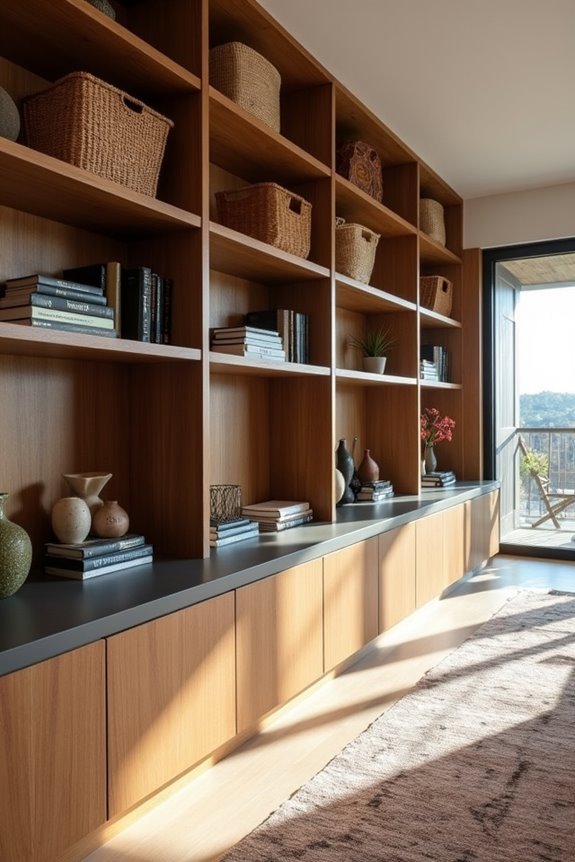
One of the smartest moves you can make with a giant blank wall is to fill it with shelving that actually works for you. You’ll create a gallery-style display that shows off your personality while keeping floor space open and clutter-free.
Fill a giant blank wall with shelving that showcases your personality while keeping your space open and clutter-free.
Here’s what makes shelving so effective:
- Custom shelving around art pieces creates a tailored look that fits your oversized wall perfectly
- Repeated shelf lines on contrasting walls add rhythm and visual interest across tall surfaces
- Flexible ledges and niches let you rotate pieces seasonally without rehanging everything
- Strategic lighting—like wall sconces or picture lights—highlights your arrangement and adds depth
You’re not just storing stuff; you’re building a personal gallery. Pair your shelving with thoughtful lighting, and you’ll have a wall you actually enjoy living with every single day.
Paint Your Large Wall: Accent Colors & Murals
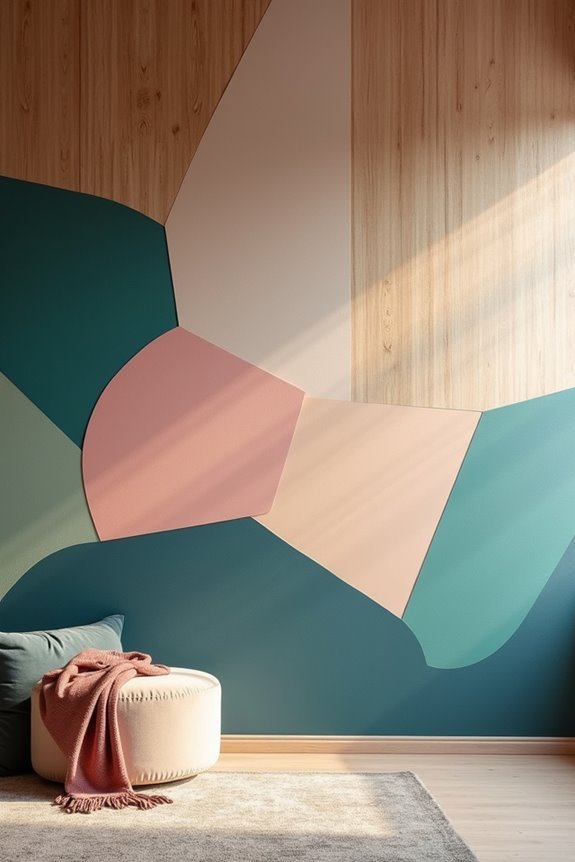
You’ve got two powerful options for that blank wall: bold accent colors that make your furniture and art actually stand out (instead of disappearing into the void), and murals that cover massive space without requiring you to become an art expert or spend a lot of money. Whether you’re painting a single wall in a punchy color or hiring someone to create a custom design, you’re giving your room an instant personality upgrade. Let’s break down how to pick the right color or mural style so your wall becomes the centerpiece you’ve been imagining, not something you’ll regret in three months.
Bold Accent Wall Colors
Why settle for bland walls when you can paint an entire room with a single coat?
A bold accent wall creates immediate impact without clutter. You’ll draw attention and define your space while keeping things simple and deliberate. Here’s how to do it:
- Choose your color wisely—pick one that complements your existing decor and neutral furnishings
- Test before committing—use large swatches or sample boards to see how lighting affects your choice
- Create a focal point—use color-blocking or painted designs that make your large wall stand out
- Keep it balanced—pair your bold accent wall with minimal furniture and one or two accent pieces
This approach gives you maximum visual impact with minimal effort. You’re creating a space that feels deliberate and cohesive, not chaotic.
Mural Design & Installation
How far can a single wall actually go? When you’re ready to make a change, mural design turns that blank space into something distinctive. Your painterly mural becomes the room’s focal point—no furniture required.
Start by choosing a base color, then add two or three accent colors from your existing decor. This keeps everything connected and cohesive.
| Mural Type | Best For | Difficulty |
|---|---|---|
| Full-wall scenes | Statement rooms | Medium |
| Geometric patterns | Modern spaces | Easier |
| Gradient transitions | Subtle updates | Easiest |
Before committing, test a sample swatch. Use painter’s tape for crisp edges. Plan your large wall installation around natural lighting and windows—they’ll highlight your work beautifully. Color blocks and painterly elements turn your space into something that reflects your preferences, and the results deliver professional-quality design at a reasonable cost.
Layer Mirrors and Art to Brighten Your Large Wall
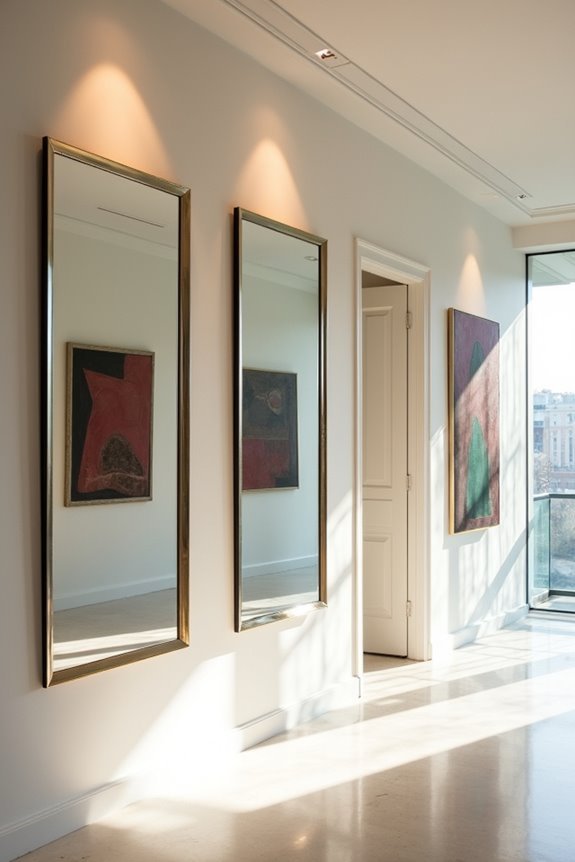
One of the smartest tricks for making a big empty wall feel less like a boring void is combining mirrors with artwork. You’re basically using mirrors as design partners that bounce light around your space, making everything feel brighter and bigger.
Mirrors and artwork are design partners that bounce light around your space, making everything feel brighter and bigger.
Here’s how to pull it off:
- Layer a large mirror behind or beside bold, colorful art to create depth
- Position smaller framed pieces around mirrors in a gallery-wall style arrangement
- Add sconces or plug-in lighting near reflective surfaces to highlight textures
- Center a vertical mirror between two art clusters for balanced, professional-looking results
When you strategically place mirrors on your large wall, they expand the room visually while your art keeps things interesting. You’ll notice your space feels open and welcoming with a gallery-worthy appearance.
Anchor Your Large Wall With Large-Scale Furniture Placement
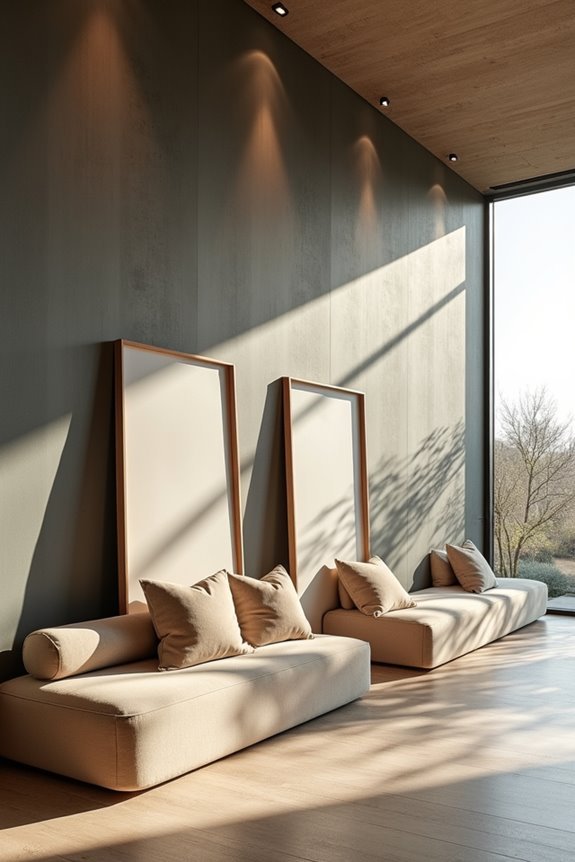
While mirrors and art create visual interest on their own, they need something solid to work with—and that’s where smart furniture placement comes in. You can anchor your large wall by positioning key pieces strategically, creating the grounded foundation that makes oversized art work effectively.
| Furniture Piece | Placement | Purpose | Result |
|---|---|---|---|
| Credenza | Along wall base | Low-profile anchor | Stabilizes focal element |
| Armoire | Off-center position | Vertical grounding | Complements oversized art |
| Shelving unit | Wall edge | Creates depth | Balances gallery cluster |
| Low cabinet | Center placement | Solid foundation | Preserves wall dominance |
Move main pieces away from walls to create breathing room for your focal element. Choose furniture with solid colors and low profiles so they don’t compete with your wall anchoring efforts. This approach turns your large wall from empty and awkward into intentional and inviting.
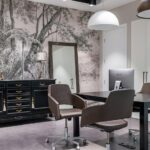
Combine Wallpaper & Art on Your Large Wall
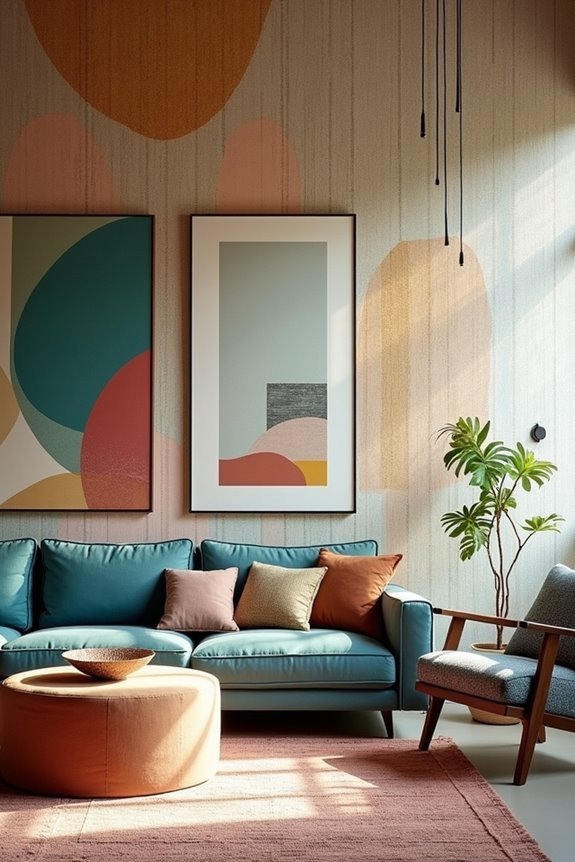
Why settle for just one design element when you can layer them together? Combining wallpaper and art creates visual depth on your large wall that demonstrates thoughtful design choices.
Here’s how to create this combination:
- Choose a cohesive palette between your wallpaper and artwork so everything connects rather than clashes
- Let one focal piece shine by giving it breathing room with negative space around it
- Pick subtle textures like faux shiplap that support your art without competing for attention
- Go removable with wallpaper or mural panels you can swap seasonally or whenever your taste changes
The key is letting your wallpaper play the supporting role, allowing your focal piece to stand out. You’ll create depth and pattern without overwhelming the space. This approach demonstrates deliberate design choices that visitors will recognize.
Know When to Leave Your Large Wall Empty
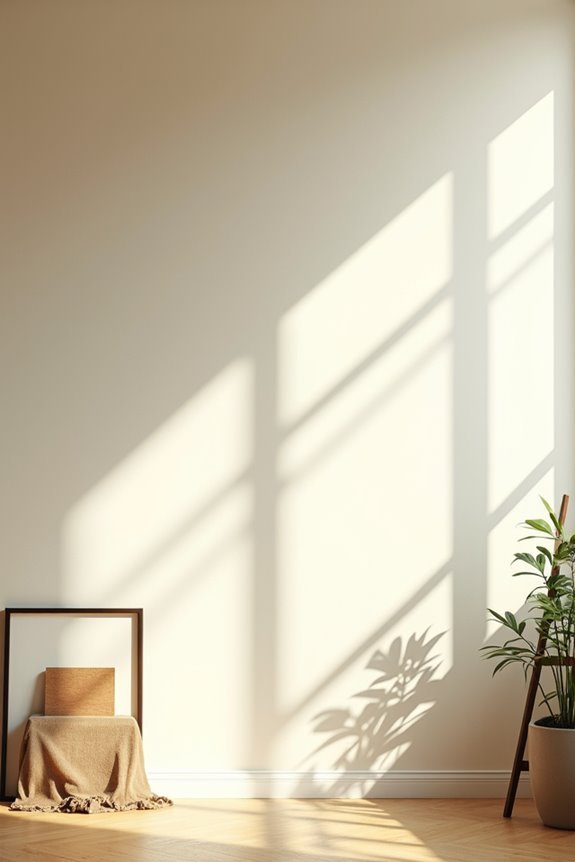
Not every large wall needs to be covered in art, wallpaper, or décor—and that’s totally okay. Sometimes, leaving your large wall empty actually creates better design. Strategic negative space helps balance busy furniture and prevents your room from feeling cramped or overwhelming. When you leave portions of your wall bare, you’re allowing natural light and architectural features to stand out without competing for attention.
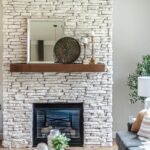
Empty walls work especially well around focal points like TVs or fireplaces, where bare space actually emphasizes what matters most. You’ll also reduce stress in high-traffic living areas where constantly changing wall decoration feels impractical. Plus, an empty wall gives you flexibility to experiment with future color schemes or textures whenever inspiration strikes. Embracing emptiness isn’t lazy—it’s deliberate design.