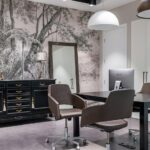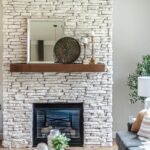
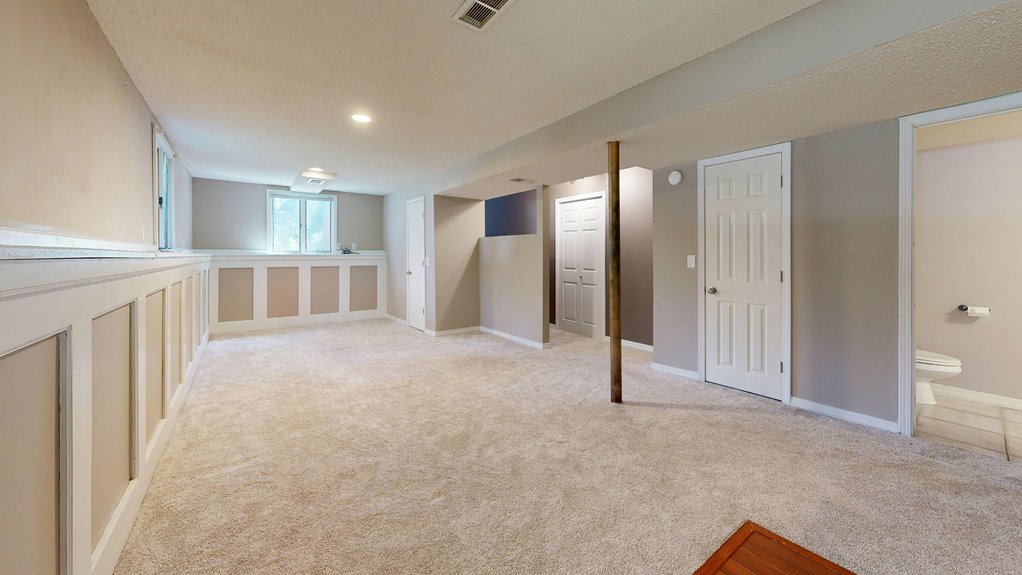
Turn your dingy basement into an inviting hangout by layering lighting—pendant lights and sconces beat harsh fluorescents—then pick a bar or game zone as your focal point.
Paint walls bold colors to hide imperfections and add warmth, then mix textures with rugs and upholstery so it doesn’t feel cold and concrete-y.
Upgrade your flooring with epoxy or tile, and style smart storage that blends in.
These elements work together to create a space that rivals your main floor.
Lighting Ideas to Brighten Dark Basements
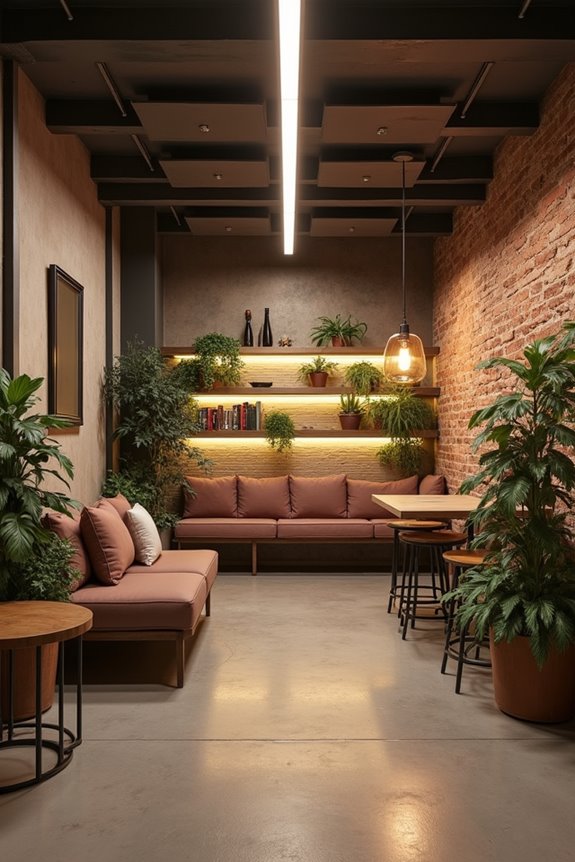
Because basements are basically caves with drywall, they need smart lighting to feel inviting instead of like you’re descending into a dungeon. You’ll want layered lighting—combining ambient, task, and accent options—to create warmth and depth. Start by painting walls lighter colors; they’ll reflect light and make your space feel bigger. Skip those harsh fluorescent tubes that make everyone look exhausted.
Instead, try LED pendant lights over a bar area or string lights across the ceiling for a cozy atmosphere. Use wall sconces and recessed lights to enhance ceiling height and distribute illumination evenly. Install moisture-safe fixtures since basements stay damp; this protects your investment and keeps everyone safe.
Remote-controlled lighting lets you define different zones—theater area, game space, hangout spot. You’ll create a welcoming basement retreat where friends actually want to gather.
Choose Your Basement’s Primary Purpose: Entertainment, Work, or Play
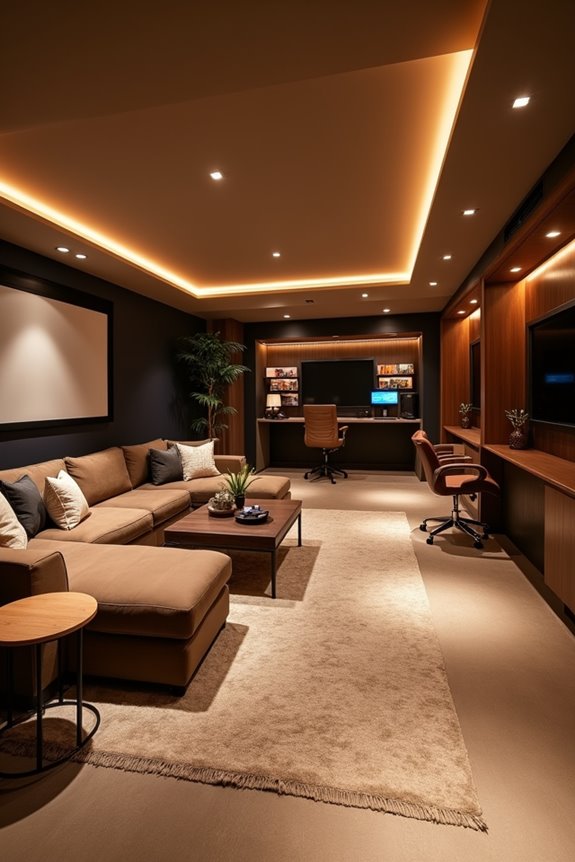
Before you start decorating, you’ve gotta figure out what you actually want your basement to be—because turning it into a half-finished entertainment zone that nobody uses is basically throwing money into a dark hole. Are you dreaming of hosting game nights with a killer bar setup, creating a quiet work-from-home office away from distractions, or building a safe play area where your kids can burn off energy without destroying your living room? Your answer totally changes how you’ll design the space, so let’s walk through each option and find what fits your lifestyle.
Entertainment-Focused Social Spaces
What’s better than a basement that actually gets used? Creating an entertainment-focused social space where friends actually want to hang out. You’ll want large-screen TVs positioned so everyone catches the action, a comfortable seating area for those marathon game nights, and a basement bar as your command center. Add a game zone with pool tables or foosball nearby, and you’ve got the ideal setup.
| Feature | Purpose | Vibe |
|---|---|---|
| Multiple TVs | Simultaneous viewing | Inclusive |
| Bar Setup | Central gathering spot | Sophisticated |
| Game Zone | Active entertainment | Energetic |
| Lighting & Acoustics | Mood setting | Immersive |
| Seating Areas | Comfort & conversation | Welcoming |
| Storage Solutions | Organized chaos | Polished |
Strategic lighting and acoustics set the right mood in your space, making it the hangout everyone requests.
Work and Productivity Zones
While a killer entertainment setup sounds great, not everyone’s basement dreams involve a pool table and a mini-fridge—some of us actually need to get work done down there. You’ll want to carve out a dedicated work area that feels separate from the play zones, even in an open basement design. Strategic zoning using matching millwork and coordinated colors creates natural boundaries without walls.
Your productivity zone needs serious lighting—task lights above your desk, ambient overhead options, and wall sconces to fight that dungeon vibe. Hidden storage keeps cables and supplies out of sight:
- Floor-to-ceiling cabinetry conceals clutter while defining your work territory
- Wall-mounted shelving holds reference materials within arm’s reach
- Modular furniture lets you reconfigure as your needs change
Proper ventilation and moisture control keep your workspace comfortable year-round, so you’ll actually want to spend time there.
Family Recreation and Play
How’d you like to turn your basement into the place your family actually wants to hang out instead of just using it for storage and mysterious boxes?
A smart basement remodeling converts your underground space into a multipurpose area where everyone thrives. Design your kids’ play area with climbing walls, reading nooks, and foam pits that spark joy and adventure. Incorporate built-in storage—hidden shelving, wall-to-wall cabinetry, under-bench compartments—keeping toys organized so clutter doesn’t interfere with daily use. Balance kids’ zones with adult-friendly features like game tables or bars for a design that works for the whole crew.
Use consistent materials and color throughout, creating smooth transitions from upstairs. This unified family recreation approach makes your basement feel integrated, not separate. You’ll finally have the gathering spot everyone wants.
Paint Walls Bold Colors to Hide Imperfections
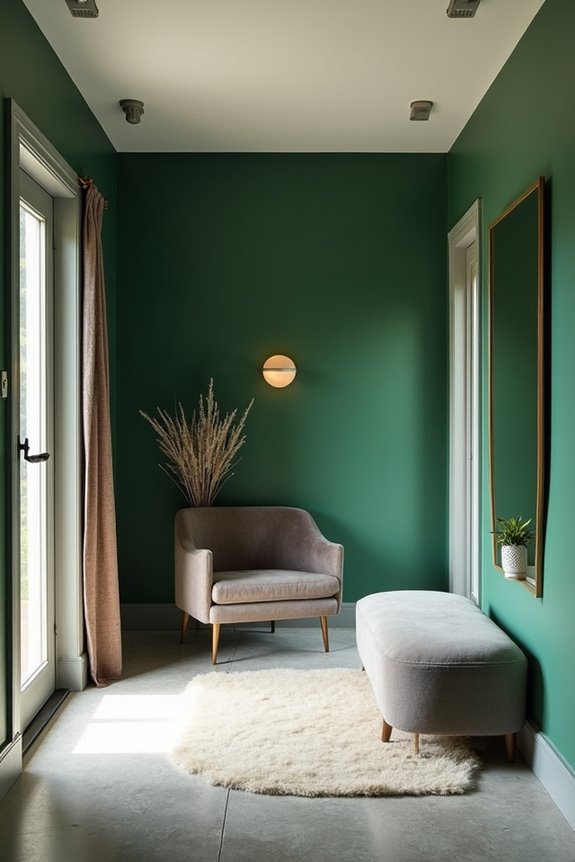
Your basement’s walls don’t have to advertise every crack, water stain, and structural quirk—bold colors are basically the ultimate cover-up, hiding imperfections while making that dingy space somewhere you’d actually want to hang out. When you pick the right deep hue or vivid shade, you’re not just slapping paint on concrete; you’re using color psychology to set the whole mood, making your underground room feel deliberate and dramatic instead of like a storage dungeon. The trick is picking colors that work with your space’s purpose, whether that’s a moody speakeasy vibe or an energizing recreation room, so your basement finally feels like a real part of your home instead of just the place where you hide your holiday decorations.
Dark Colors Conceal Structural Issues
Why do so many basement makeovers skip right past the wall color question? You’re probably staring at those imperfect basement walls—the cracks, the uneven patches, the spots where moisture left its mark—and feeling stuck. Here’s your solution: dark colors on basement walls conceal structural issues effectively.
Deep charcoal, navy, and rich browns hide structural imperfections while creating that intimate vibe you’re after. You’ll want to balance darkness with smart lighting choices:
- Ambient lighting installed above to prevent a cave-like feeling
- Task lighting near entertainment areas to highlight texture and built-in features
- Reflective surfaces like mirrors or metallic accents bouncing light around the space
When you pair dark walls with these lighting strategies, you’re not just concealing problems—you’re building an atmosphere where everyone wants to gather.
Bold Hues Transform Dreary Spaces
What if the answer to your dingy basement wasn’t more lighting or better furniture, but simply a coat of bold paint? Navy, emerald green, or other rich tones completely change dreary spaces into destinations you actually want to visit. Bold wall colors create focal points that draw attention away from imperfections while establishing a cohesive design throughout your lower level. Want a moody vibe? Pair dark walls with industrial touches or exposed brick accents. Need a bar area that feels upscale? Bold hues set the mood instantly. These aren’t timid beige choices—they’re statement-making colors that define zones, hide flaws, and give your basement the personality it’s been craving all along.
Color Psychology Enhances Basement Ambiance
Ever notice how a space feels completely different the moment you add color to those bare walls?
Color psychology helps you shape basement ambiance. When you choose bold hues strategically, you’re not just hiding imperfections—you’re creating an emotional sanctuary that pulls everyone downstairs.
Dark navy, charcoal, and deep gray tones work well because they:
- Absorb light beautifully, reducing glare and creating warm contrast
- Mask concrete imperfections while adding sophisticated depth
- Complement layered lighting to enhance perceived spaciousness
Pair these wall treatments with coordinated finishes and thoughtful accent lighting, and your basement no longer feels like a dungeon. You’ve built a design language that makes people want to gather there. The right color choices literally change how your space makes you feel—that’s the psychology part at work for you.
Design a Focal Point: Bar, Theater, or Game Space
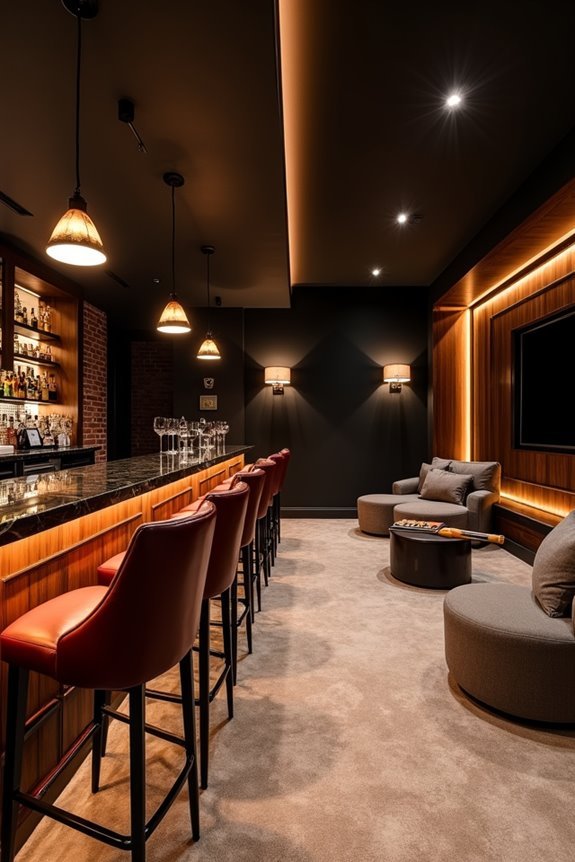
The heart of any basement worth hanging out in needs a star of the show—something that makes people walk downstairs and immediately think, “Now *that’s* cool.” Whether you’re picturing yourself mixing cocktails behind a sleek bar, hosting movie nights in your own personal theater, or challenging friends to epic game tournaments, creating a strong focal point makes your basement an actual destination instead of just another storage zone. A basement bar with built-ins for glassware creates moody ambiance while keeping everything organized. A theater setup with large screens and comfortable seating pulls people in naturally. Game spaces work similarly. The key? Layer in architectural details like brick or dark walls, add strategic lighting, and incorporate storage around your focal point. This approach makes your basement feel deliberate, polished, and genuinely inviting—a place where people actually want to spend time.
Upgrade Flooring to Set the Foundation for Style
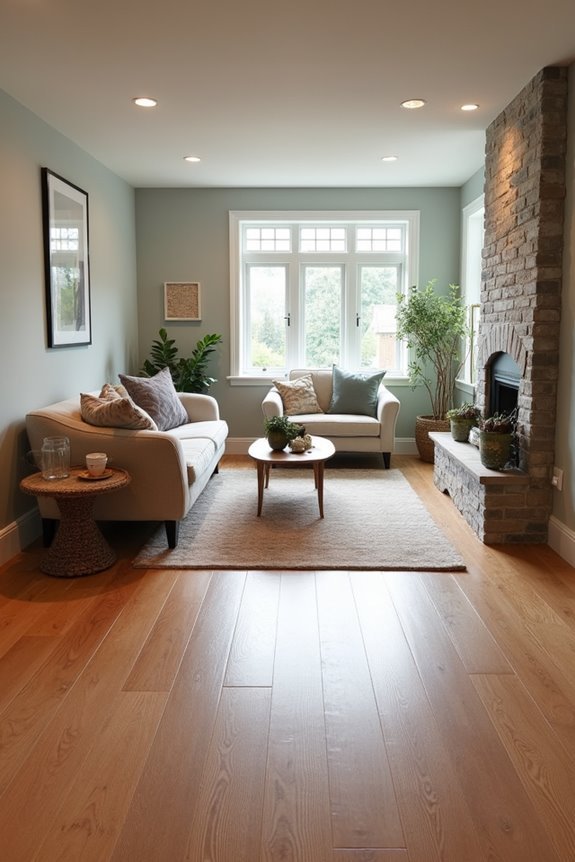
Why does basement flooring matter so much when you’re creating that awesome space you’ve been dreaming about? Your floor sets everything up—literally and stylistically. You’ll want basement flooring that handles moisture while looking fantastic.
Consider these options:
- Epoxy floors — 100% solid, two-component coatings that resist moisture and bacteria; choose matte or glossy finishes
- Concrete staining — acid-based stains seal floors while reducing moisture; add decorative chips or tile-like patterns for personality
- Porcelain tile — mid-sized options complement any design scheme and provide durability around bars or game areas
Each finish option protects against moisture while making your basement a space worth enjoying. You’re not stuck with dingy concrete anymore—upgrade your flooring and watch your entire space improve.
Panel or Drop Your Ceiling to Add Drama and Height
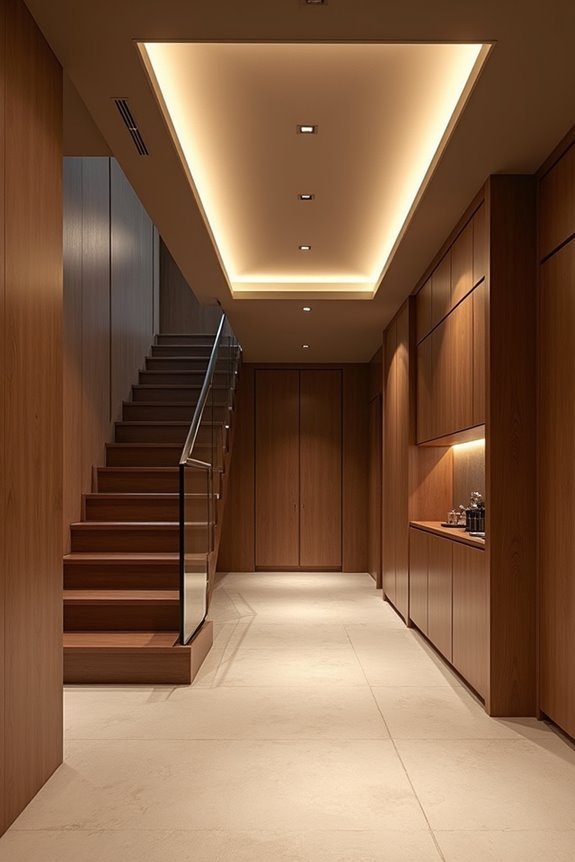
You can upgrade your basement’s ceiling by either dropping it lower for an intimate feel or adding panels that draw the eye upward and make the space feel larger. Before starting work, assess what’s already in place—pipes, beams, electrical systems—so your new ceiling integrates with your basement’s existing structure rather than conflicting with it. Pairing the right ceiling choice with proper lighting helps your underground space function as a genuine room instead of feeling like a basement.
Dramatic Visual Impact
How’d you like to turn your basement from “dark cave” to “fancy theater” with one smart move?
A dramatic ceiling—whether vaulted, dropped, or paneled—instantly improves your space’s visual appeal. You’re not just covering drywall; you’re creating architectural interest that makes people notice the design choices.
Pair your dramatic ceiling with bold wall treatments and dark finishes to multiply the impact:
- Rich brick veneer or faux brick creates depth and contrast against lighter floors
- Black-painted exposed ceilings paired with ambient lighting draws eyes upward
- Zoning architecture like barrel vaults separates entertainment areas in a natural way
Strategic ambient lighting then highlights these features, making your basement feel deliberate and designed—not like an afterthought. You’ll join that exclusive club of homeowners who actually succeeded with their basement project.
Structural Design Considerations
Before you start dreaming about that coffered ceiling or sleek modern panels, let’s talk about what’s actually holding up your basement—literally.
Your drop ceilings need proper framing to handle weight, plus you’ve got to consider moisture management in this underground space. You’ll need adequate egress (fancy word for “safe exit routes”), and your finishes must resist dampness. Concealed mechanicals—that’s your HVAC and wiring hidden behind panels—require strategic planning so you can still access them later.
| Consideration | Why It Matters |
|---|---|
| Framing | Supports ceiling weight safely |
| Moisture | Prevents mold and damage |
| Egress | Keeps you safe |
| Mechanicals | Allows future maintenance |
| Finishes | Withstands basement conditions |
Think of structural planning as the unglamorous foundation for your functional space. Get this right, and your ceiling will actually last.
Mix Textures: Rugs, Upholstery, and Wood Accents
Why do basements feel so cold and industrial, even when they’re supposed to be fun hangout spaces? The answer lies in hard surfaces. You’ll address that concrete cave by layering textures throughout your decor.
Start by mixing materials that invite you to relax:
- Plush rugs over concrete or epoxy floors create warmth and define your entertainment zones
- Soft upholstery on seating contrasts beautifully with exposed brick walls and black ceilings
- Wood accents like Core-Tec flooring around bar areas ground the space emotionally
These textures aren’t just visually appealing—they’re practical. Rugs absorb sound, upholstery invites lounging, and wood brings life to industrial basement decor. When you blend soft fabrics with hard architectural elements, you’re creating a space where friends actually want to hang out. That’s what happens when you mix textures deliberately.
Style Your Storage: Shelving, Baskets, and Cabinets That Blend In
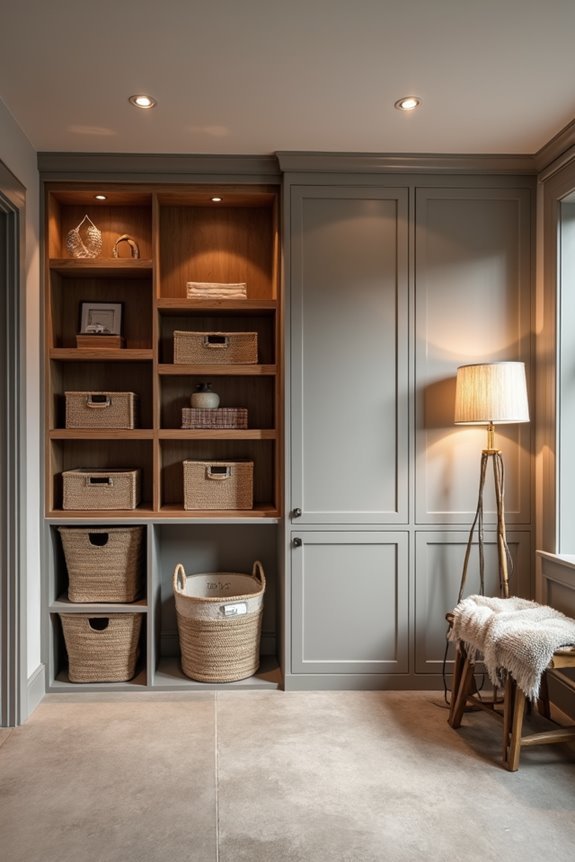
You’ve got the textures down, the lighting’s looking good, and then you open a closet door and—whoops—a avalanche of storage bins tumbles out. That’s where smart shelving and cabinets save the day. Built-ins and millwork that match your basement’s trim create a polished, unified look while hiding clutter. Install full-height cabinetry to maximize vertical space without eating into your living area. Use labeled containers and designated zones to keep organization working long-term. Shelving walls display décor while concealing utilities, and baskets remain functional while contributing visual interest. The key is choosing storage solutions that work harmoniously with your design. When cabinets and shelving are planned thoughtfully rather than added as afterthoughts, your basement becomes an organized, welcoming space where everything has its place—and actually stays there.
Add a Wet Bar or Snack Nook for Entertaining
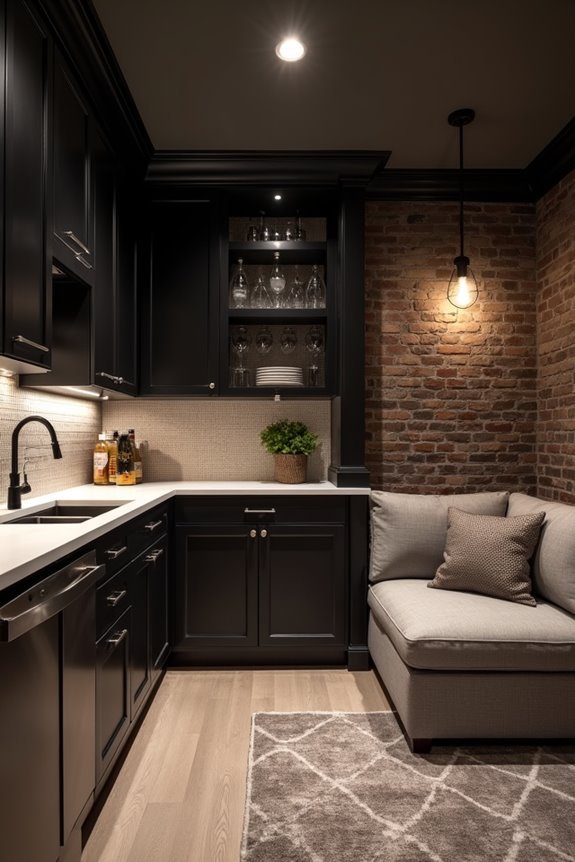
What’s the point of having a basement hangout space if you can’t actually serve your guests a drink without running upstairs every five minutes? A wet bar gives your basement real entertaining capability. You’ll want quality cabinetry for beverage storage, sleek quartz countertops that handle anything you throw at them, and dedicated glassware storage so everything’s within arm’s reach.
A wet bar transforms your basement into a real entertaining space where you never leave your guests to run upstairs for drinks.
Consider these essentials for your basement bar setup:
- Integrated sink and plumbing to keep drinks flowing without trips upstairs
- Under-cabinet lighting that makes your lounging area feel sophisticated and bar-like
- Mahogany or modern cabinetry that stores supplies while looking deliberate
Your guests will actually want to hang out down here. You’re not just adding furniture; you’re building the space where your crew belongs and wants to spend time.
Match Your Basement Decor to Your Home’s Style
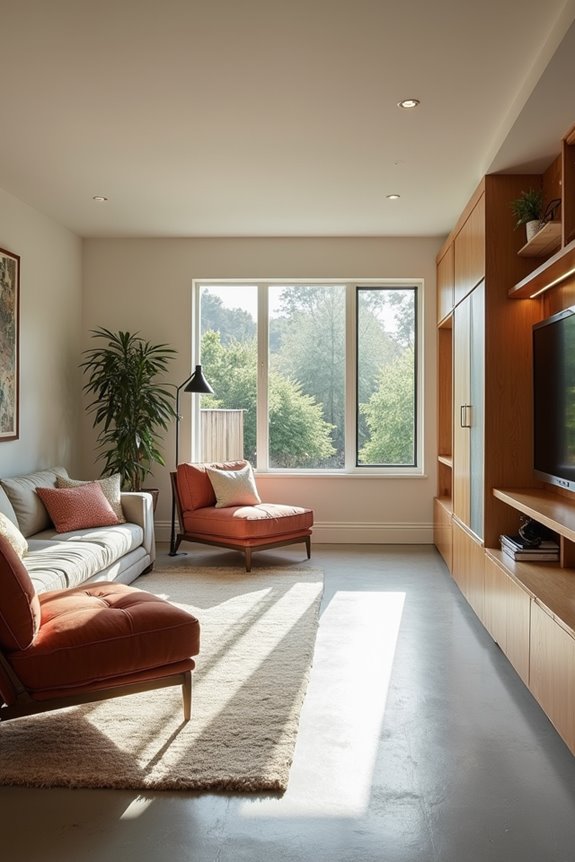
If your basement looks like it belongs to a completely different house than the one upstairs, it’s time to fix that disconnect. You’ll create a cohesive appearance by matching your basement décor with the rest of your home. Start with a unified color palette—pick colors that echo your main floors. Next, align your trim and millwork with upstairs finishes; mismatched baseboards indicate a lack of planning rather than intentional design. Choose unified materials that flow throughout, whether that’s flooring, wall treatments, or cabinetry. Don’t forget architectural cohesion by incorporating similar design details like brick veneer or ceiling styles. These thoughtful transitions between levels make your basement feel like a natural extension, not an afterthought.