
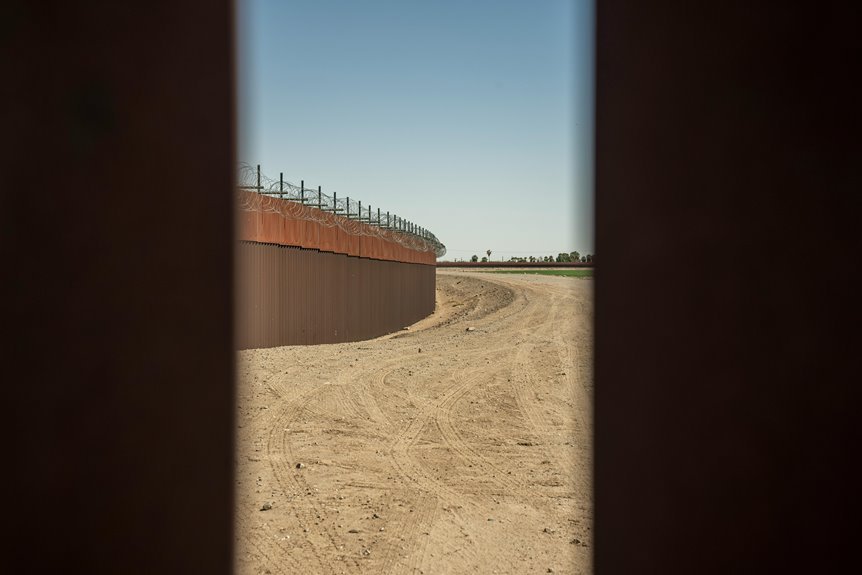
You’d track apprehensions before and after construction, compare crossing locations to see if they just shift elsewhere, and measure actual costs against promised budgets. Document agent response times, monitor maintenance expenses (they balloon over time), and check whether walls alone work or need tech and personnel backing them up. You’d also weigh environmental impacts and tribal rights against deterrence gains.
The tricky part? Walls displace rather than stop crossings, so you’re really measuring difficulty, not elimination. Continue exploring to identify which metrics actually predict long-term success.
Do Border Walls Actually Work? What the Evidence Really Shows
How much can a wall actually stop people from crossing a border? Here’s the honest truth: it depends. When you look at real-world examples like San Diego’s integrated wall-system approach, you’ll find notable results. They dropped apprehensions from roughly 500,000 yearly to about 27,000 by combining barriers with lighting, roads, and surveillance. That’s meaningful deterrence.
But—and here’s where it gets complicated—walls don’t solve everything. People seeking entry often just shift to riskier routes through water or remote terrain, which ironically increases danger. Your cost-benefit analysis needs accounting for displacement effects, wildlife disruption, and tribal concerns alongside security gains. Modern walls work best when integrated with technology and enforcement. They’re one tool, not a complete solution. Understanding these trade-offs helps you make informed decisions about border strategy’s real effectiveness.
When Walls Deter Crossings: Success Factors and Geographic Limits
When you combine walls with patrols, sensors, and lighting in the right spots—like San Diego’s busy entry points—you’ll see significant drops in crossings, but here’s the reality: smugglers will adapt by shifting to remote desert areas or maritime routes where walls can’t even go. Geography matters way more than you’d think, too; mountains, rivers, and private land can make building a solid barrier nearly impossible in certain regions, which means you’ve got to get creative with alternative designs or placement strategies. The real takeaway here is that walls work best as one piece of a larger puzzle—not as some standalone solution—and their effectiveness basically depends on how you combine them with enforcement zones, technology, and quick-response teams in the specific areas where smugglers actually try to cross.
Deterrence Through Infrastructure Integration
Want to know what actually stops people from crossing a border illegally? It’s not just a wall—it’s everything working together. You need a real wall system that combines multiple barriers with enforcement zones, lighting, surveillance, and roads all connected through integrated technology. Think of it like a team effort instead of one person trying to do everything alone.
San Diego proved this works. When they added a second barrier, lights, paved patrol roads, and advanced surveillance together, annual apprehensions dropped from 500,000 to about 27,000. That’s a measurable result—Arizona–Mexico showed 90-plus percent declines over 18 years using this exact multi-component approach.
The catch? Geography matters. Mountains and rivers limit where you can actually build barriers effectively, requiring customized designs for different terrain.
Geographic Barriers and Terrain Constraints
Why does a wall that works perfectly in one place fall apart in another? You’re dealing with real-world complications that don’t fit neat blueprints. Terrain shapes everything—mountains make construction impractical, rivers shift unpredictably, and ownership disputes bog down siting decisions. Consider what happens when you ignore these factors:
| Challenge | Impact |
|---|---|
| Irregular Rio Grande flow | Fence placement conflicts with water rights |
| Mountainous terrain | Construction becomes economically unfeasible |
| Private land ownership | Eminent domain battles delay barriers |
| Native lands | Consultation requirements and cultural concerns |
You’ll find that effective barriers require consultation with stakeholders—tribal nations, landowners, and engineers. Maritime routes then become your next headache, shifting pressure to water crossings. Geography doesn’t cooperate with one-size-fits-all solutions; successful siting demands local adaptation and genuine partnership.
Smuggler Adaptation and Evasion Tactics
Here’s the thing about barriers—they’re kind of like a game of whack-a-mole that nobody really wins. When you install border barriers in one spot, smugglers don’t just give up; they shift their evasion tactics to less-protected routes and different times. You build a wall, they adapt. It’s frustrating, right?
That’s where surveillance and rapid-response teams come in. Combining cameras, lighting, and quick patrols actually reduces successful crossings by forcing smugglers toward remote terrain constraints—places where geography itself becomes their enemy. Water routes get riskier. Mountain passages take longer.
The real win? It’s not eliminating smuggler adaptation entirely. It’s making their job harder, slower, and more expensive. Defense-in-depth systems work because they layer multiple obstacles together, creating friction that discourages attempts rather than blocking everyone perfectly.
The Cost Problem: From $6.5 Million to $25 Million Per Mile
When you look at border wall costs, you’ll quickly realize that the price tag keeps climbing—starting at around $6.5 million per mile back in 2009, then jumping to $15–$25 million per mile for remaining sections. However, the full financial picture is more complex: you must account for annual maintenance expenses (running hundreds of millions of dollars per year) plus the costs of acquiring land from property owners, which adds another significant layer to an already expensive project. These three expense categories—construction, upkeep, and land purchases—combine to make the total cost substantially higher than that initial $5 billion proposal suggests.
Initial Construction Expenses Escalate
How’d you like to plan a project where the bill keeps climbing faster than you can say “budget revision”? Well, that’s exactly what happened with wall cost estimates. Early on, you’d have heard about initial construction costs running around $6.5 million per mile for simple fencing. Sounds manageable, right? Wrong. By the time planners looked at remaining segments, those fencing cost per mile figures had skyrocketed to roughly $16 million—nearly triple the original number.
This escalation didn’t happen overnight. Funding for border infrastructure jumped dramatically: $298 million in 2006, then $1.5 billion just one year later. You’re watching projects get more expensive as real-world challenges emerge. And here’s the kicker—maintenance expenses could exceed $750 million annually just to keep two-thirds maintained. That’s when you realize initial estimates? They’re basically guesses.
Maintenance Costs Compound Annually
Maintenance costs compound annually, and they’ll catch you off-guard like unexpected bills. The border barrier costs don’t stop at construction. You’re looking at a serious cost trajectory that keeps climbing each year.
| Year | Miles Fenced | Annual Maintenance | Total Cumulative |
|---|---|---|---|
| 1 | 500 | $250M | $250M |
| 5 | 1,000 | $500M | $2.75B |
| 10 | 1,500 | $750M | $6.5B |
| 15 | 2,000 | $1B | $11.25B |
| 20 | 2,300 | $1.15B | $17.5B |
That $274 million maintenance budget from 2017? It’d balloon to over $750 million if you completed everything. Maintenance funding typically lags behind construction spending, meaning your compounding costs catch everyone off-guard.
Land Acquisition Adds Significant Burden
Beyond the concrete and steel, there’s a hidden cost problem that quietly doubles or triples your expenses—and it’s called land acquisition. You’re not just buying materials; you’re navigating eminent domain battles with private landowners who aren’t thrilled about giving up their property. Rights-of-entry negotiations drag on, adding months to your timeline. Then there’s the tribal consultation piece—groups like the Tohono O’odham Nation require extensive discussions about environmental and cultural protections on their lands. What started as a $6.5 million per-mile fence suddenly costs $16 million or more per mile when you factor in acquisition expenses. These aren’t minor line items; they’re budget killers that significantly impact your project’s economics entirely, making careful planning absolutely necessary.
Why Walls Displace Rather Than Stop: The Route-Shifting Effect
When you build a wall in one spot, you’re basically playing a frustrating game of whack-a-mole with migration patterns—and honestly, the mole usually wins.
Here’s the thing: barrier displacement happens because people seeking entry don’t just disappear when you block one route. Instead, they find another way through, creating what experts call route-shifting. You’ll see illegal crossings move from monitored urban zones to remote, dangerous areas nearby. Smugglers adapt faster than you’d expect, exploiting border surveillance gaps and shifting tactics between land and water routes.
San Diego’s wall reduced apprehensions dramatically, yet crossings didn’t stop—they relocated. That’s deterrence effectiveness in reality: you’re redirecting the problem, not solving it. The smuggling networks simply adjust their playbook, finding those gaps in coverage you couldn’t anticipate.
Walls Alone Fail: The Role of Technology, Personnel, and Integration
A barrier by itself is like a bouncer who only blocks the front door—sure, it stops some people, but if you don’t have cameras watching the back exits or security guards ready to respond, determined folks’ll just find another way in. That’s why border wall effectiveness really depends on technology integration and Border Patrol personnel working together. You need the whole wall system: barriers plus enforcement zones, lighting, surveillance, and communication technology. San Diego proved this—their second barrier with cameras and lights dropped apprehensions from 500,000 to 27,000 annually. Arizona’s integrated approach combining walls, enforcement zones, and tech showed 90-plus percent crossing declines over eighteen years. The lesson’s clear: a wall standing alone is just an expensive structure without the team backing it up.
Habitat Destruction and Wildlife Impact: The Environmental Cost
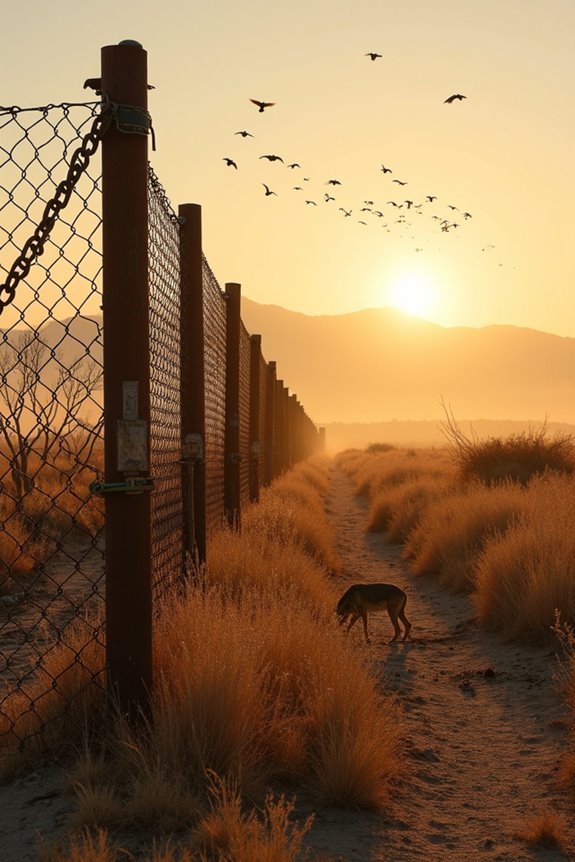
When you build a wall across migration routes, you’re essentially telling animals like jaguars and birds, “Sorry, you can’t pass”—and that’s a real problem for their survival. The fragmentation of these corridors disrupts the genetic diversity and breeding patterns species depend on, while the biotic community degradation ripples outward, affecting everything from soil health to water availability. You need to weigh whether stopping human border crossings is worth the ecological cost of species loss and habitat destruction that’s happening right in front of us.
Fragmented Wildlife Migration Corridors
How’s this for a tough spot: you’ve got animals that’ve been crossing the same routes for thousands of years, and then suddenly there’s a wall in the way.
When you think about wildlife corridors—those natural pathways animals depend on—barriers create real problems. Here’s what happens:
- Jaguars, coyotes, and deer can’t reach feeding grounds or mates
- Barrier footprints slice through national refuges and riparian areas
- Gene flow stops, making populations weaker over time
- Crossing risks spike as animals face water hazards and roads
Solutions exist. Underpasses and overpasses let animals pass safely. Maintaining gaps in barriers helps too. By coordinating ecological mitigation efforts with security needs, you’re not choosing between wildlife protection and safety—you’re doing both smartly.
Ecosystem Degradation And Species Loss
Beyond just blocking wildlife paths, barriers actually damage the entire ecosystem—and we’re talking serious harm that spreads out in ways you might not expect. When you build walls, you’re not just stopping animals; you’re destroying habitat connectivity that species depend on for survival. Wildlife movement becomes restricted, forcing populations into smaller, isolated areas where they can’t breed successfully or find food. Barrier design impacts matter too—those bollard walls trap small mammals, while coastal barriers interfere with water flow and plant communities. The result? Species loss accelerates as habitats degrade. You’re creating islands of life surrounded by concrete, which sounds like an ecological problem we can actually prevent by planning smarter infrastructure that works with nature instead of against it.
Tribal Land Rights and Legal Complications: Whose Land Is It?
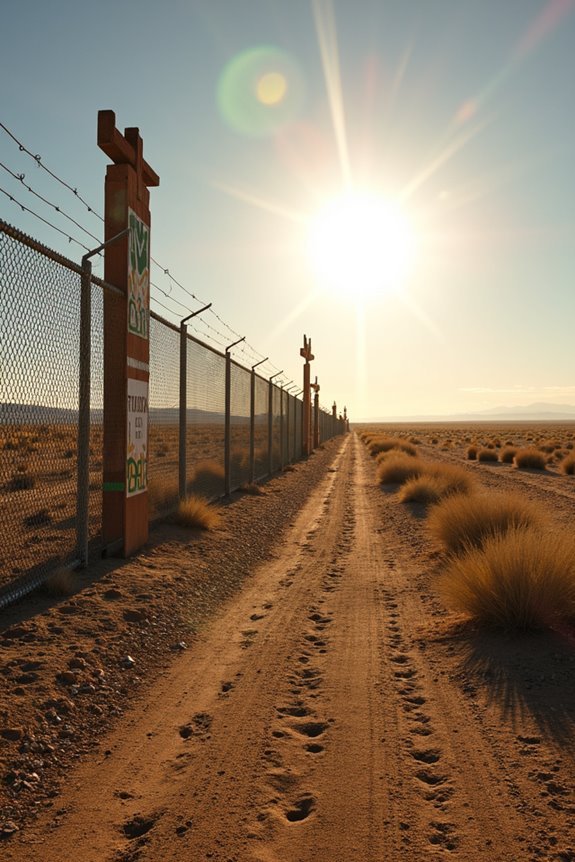
Tribal Land Rights and Legal Complications: Whose Land Is It?
So here’s where things get really complicated: when the federal government wants to build a border wall, it can’t just bulldoze through Native American reservations without asking permission first.
You’re dealing with tribal land rights, which means the government needs actual consultation with tribal governments. Here’s what makes this messy:
Tribal land rights demand genuine government consultation with tribal nations—not just legal formalities.
- Eminent domain battles tie up projects for years through compensation disputes
- Cultural preservation concerns protect burial grounds and sacred sites from disruption
- Land sovereignty issues create overlapping jurisdiction headaches between federal and tribal authorities
- Trust responsibility requires genuine partnership, not just legal checkboxes
When a wall segment spans 75 miles across reservation land, you’re threatening traditional movement patterns and cultural heritage simultaneously. Without tribal consent, delays multiply, costs skyrocket, and relationships fracture. You’re basically asking: whose land is it really?
Migrant Deaths Rise When Walls Force Longer, Deadlier Routes
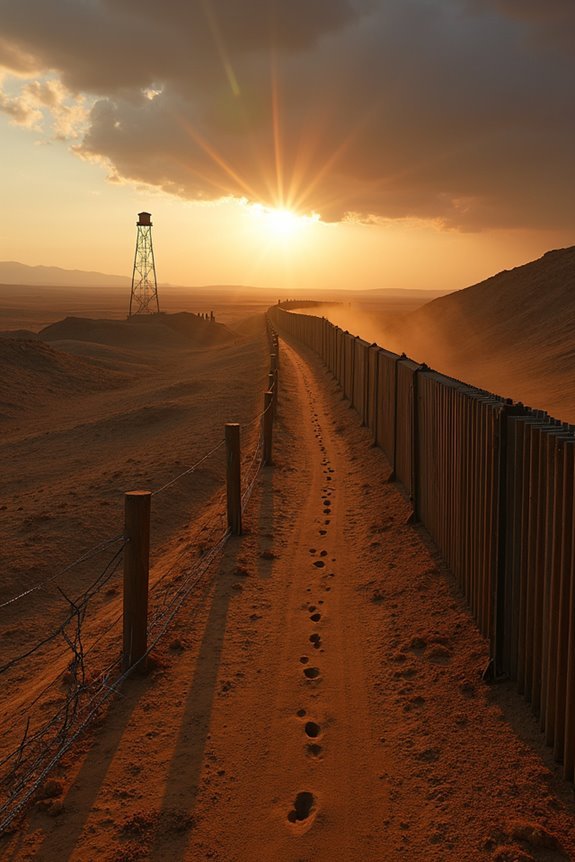
When you build a wall across a border, you’d think it’d just stop people from crossing, right? Well, here’s the tricky part: border barriers actually redirect migrants toward remote, dangerous terrain instead. You’re forcing people into perilous crossing routes—longer journeys through harsher landscapes where exhaustion and dehydration become real threats.
The detour risk is serious. When migrants can’t cross where barriers stand, they trek through deserts, mountains, and wilderness areas where fatal accidents happen more easily. Data indicates migrant deaths rise when people attempt to climb, cut through, or bypass fencing—sometimes with tragic consequences.
Maintenance Costs Grow: What Happens After Year One?
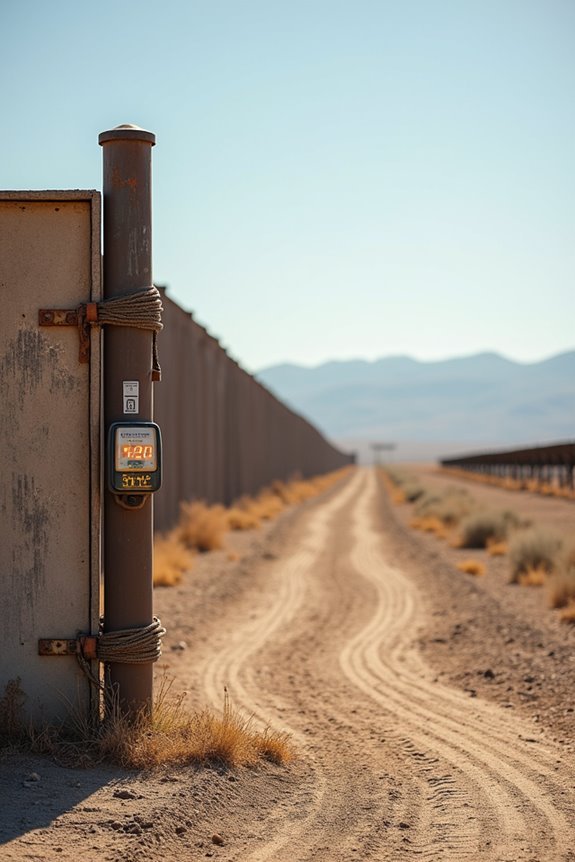
Maintenance Costs Grow: What Happens After Year One?
How much does it actually cost to keep a border wall standing year after year? You’ll quickly realize that construction’s just the beginning. Once that fence goes up, you’re locked into ongoing expenses that compound faster than you’d expect.
Here’s what you’re really paying for:
- Annual maintenance costs potentially exceeding $750 million when the final two-thirds gets fenced
- Single-layer fencing maintenance at roughly $6.5 million per mile, plus roads
- Lifecycle costs including lighting, surveillance, sensors, and technology upkeep
- Rising budgeting challenges due to missing location-specific cost analyses
The frustrating part? We don’t have complete data on exact maintenance costs yet. Without proper planning and lifecycle cost breakdowns, you’re budgeting with incomplete information. Your border fence becomes an ongoing financial commitment that stretches decades into the future.
The Prototype Problem: Why Test Performance Doesn’t Match Real-World Results
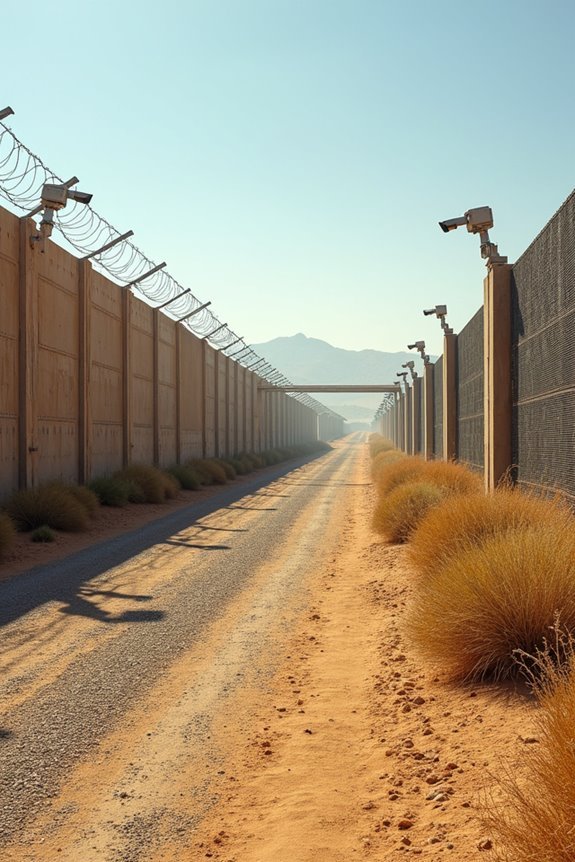
There’s a gap between what happens in a controlled test and what actually goes down in the field, and it’s bigger than you’d think. CBP’s prototype testing showed strong breach resistance in 2017, but those tests didn’t account for real smuggling tactics, private land complications, or terrain variations you’ll actually encounter.
| Testing Scenario | Real-World Factor | The Problem |
|---|---|---|
| Reinforced concrete barriers | Land ownership disputes | Can’t deploy everywhere |
| Controlled breach attempts | Smuggler adaptation | They find new routes |
| Limited movement patterns | Extended logistics networks | Multi-route workarounds exist |
Smugglers don’t follow scripts. They adjust, probe differently, and use technology alongside barriers. Your deployment planning needs to account for these dynamic behaviors—not just prototype performance data—if you want actual effectiveness.
Air and Sea Arrivals: What Walls Can’t Stop
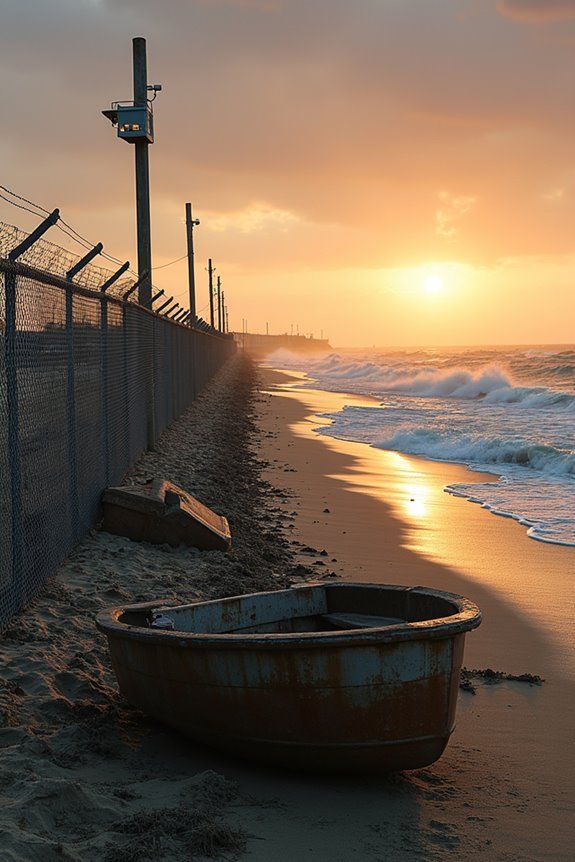
Physical barriers work well for stopping people crossing on foot through the desert, but there are important limitations—not everyone arrives that way. You need to understand that walls only address part of the picture. Here’s what you’re dealing with:
- Air routes let migrants bypass land barriers entirely using airports and smuggling networks
- Maritime interdiction requires separate detection tools since boats operate outside wall zones
- Port-of-entry enforcement demands trained personnel checking passengers and cargo carefully
- Interagency collaboration connects border patrol, coast guard, and intelligence agencies working together
The real challenge? Walls cannot address these entry points. You’ll need coordinated intelligence gathering, advanced screening technology, and teams communicating across agencies. It’s not about building higher barriers—it’s about smarter, connected systems protecting multiple borders simultaneously.
Comparing Walls to Alternative Enforcement: Is Expansion Worth It?
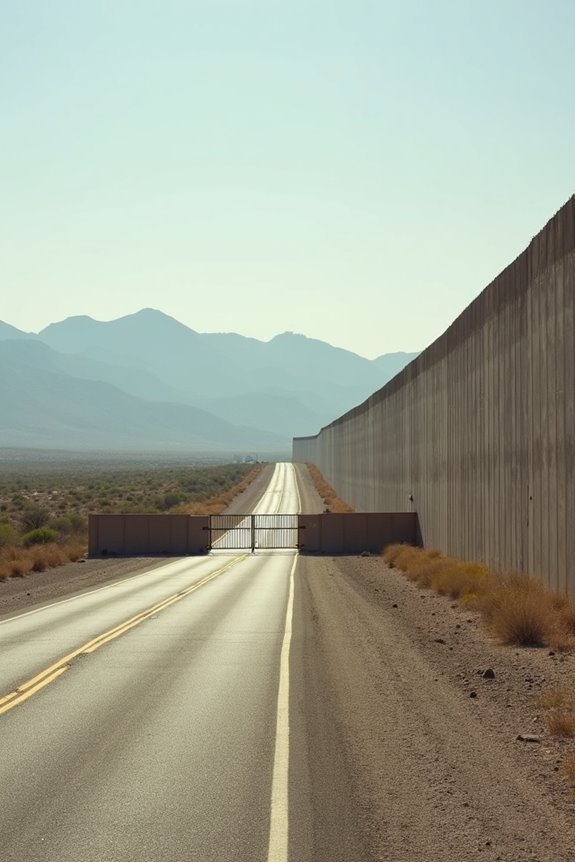
So, what’s actually worth the money—building more walls or trying different approaches?
You’re looking at a real puzzle here. Border walls show mixed results, while alternative enforcement methods like technology and agents often work just as well, sometimes better. Here’s how they compare:
| Approach | Cost | Effectiveness | Flexibility |
|---|---|---|---|
| Border Walls | High upfront + maintenance | Location-dependent | Low |
| Technology/Surveillance | Moderate | Consistent deterrence | High |
| Additional Agents | Ongoing | Terrain-dependent | High |
| Combined Strategy | Medium | Best results | Very High |
The honest truth? You’ll likely get stronger deterrence mixing enforcement methods rather than expanding walls alone. Technology adapts to changes, agents respond strategically, and combined approaches outperform single solutions. Before pouring resources into massive expansion projects, you’d want solid cost-benefit data proving walls outperform alternatives in your specific area.
How Much Deterrence Is Too Expensive to Achieve?
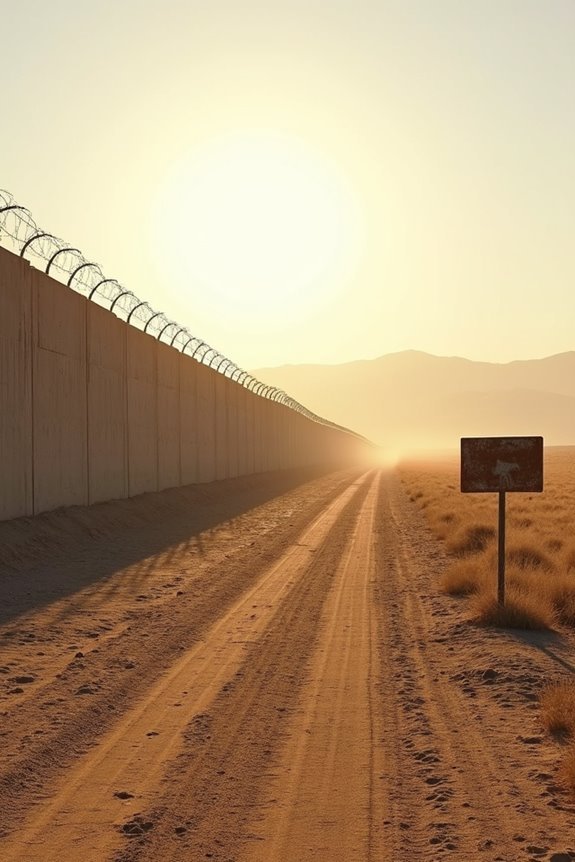
When you’re trying to stop illegal border crossings, you’ve got to ask yourself: what’s the actual price tag for the safety you’re getting?
Here’s where things get tricky. You’re balancing real deterrence against wallet-draining expenses:
- Initial fencing costs run $6.5–$16 million per mile
- Land acquisition and tribal consultations add hidden expenses
- Maintenance and surveillance systems demand ongoing funding
- Total wall system costs could reach $15–$25 billion
Look, throwing $5 billion at infrastructure sounds bold, but you’re not just paying once. Year after year, maintenance eats away at your budget. The real question isn’t whether walls deter people—they might—it’s whether that deterrence justifies decades of funding. Sometimes the cheapest solution upfront becomes the most expensive long-term commitment you’ll ever make.
Building Evaluation Into Policy: What Metrics Matter Most
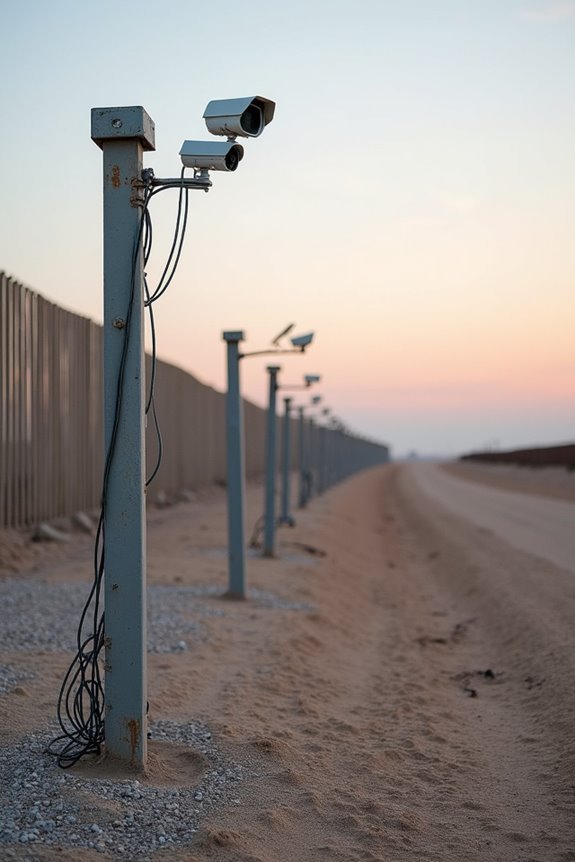
Before you spend billions on border barriers, you need to know whether they’re actually working—and that’s where most people get lost in the details. You need solid metrics that connect your wall to real results. Track apprehensions and where crossings actually happen, then compare those numbers before and after construction. Watch your lifecycle costs closely—because maintenance expenditures can balloon unexpectedly, sometimes hitting hundreds of millions annually. Measure enforcement metrics like agent response times to see if barriers help your teams do their jobs better. Finally, document everything at each decision point, linking what you planned to what you actually achieved. This isn’t glamorous, but it’s how you separate effective investments from expensive mistakes.
The Trade-Off Framework: When Barrier Expansion Makes Sense-And When It Doesn’t
When you’re deciding whether to build a barrier in a specific location, you’ve got to weigh the real benefits—like fewer crossings in busy urban areas—against the actual costs and challenges, which include the substantial price tag (we’re talking millions per mile), damage to habitats and Indigenous lands, and the practical reality that barriers sometimes just push people to more dangerous routes instead of stopping them. The honest truth is that there’s no one-size-fits-all answer, so you’ll need to analyze the numbers for each spot: Does this terrain actually work for a barrier? Can you afford it long-term with patrols and tech? Are you consulting the tribes who live here? A smart expansion strategy focuses on high-traffic segments where barriers actually work as part of a larger enforcement team, not as a standalone solution that strains your budget and creates unforeseen problems.
Cost-Benefit Analysis Framework
How do you decide where to spend billions of dollars on border barriers when you’ve got roughly 2,000 miles of border to cover and wildly different costs depending on terrain, location, and what kind of fence you’re building?
You’ll need a real cost-benefit analysis framework that actually works. Here’s what smart deployment prioritization looks like:
- Compare costs honestly—single-layer fencing runs $6.5M per mile, while advanced systems hit $16M per mile
- Measure operational effectiveness—which segments stop the most crossings per dollar spent?
- Calculate lifecycle costs—maintenance alone could exceed $750M annually, so plan long-term
- Prioritize high-value locations—focus barriers where they deliver actual results
Without location-by-location cost analysis, you’re making decisions without sufficient data. Smart barriers beat expensive ones every time.
Environmental And Social Tradeoffs
So you’ve got a wall that stops people from crossing—but what’s it actually costing you in the process? When you build barriers, you’re dealing with serious environmental tradeoffs. Habitat disruption fragments ecosystems, forcing wildlife into dangerous corridors. Meanwhile, indigenous sovereignty and land rights get tangled up in the construction process. The Tohono O’odham Nation faces real threats to sacred sites and cultural spaces. You’re also reshaping water flow and sediment patterns near rivers, which shifts crossings to riskier areas where injuries spike. Here’s the honest truth: deterrence gains matter, but so do community impacts and ecological preservation. Balancing security with environmental protection is responsible and necessary for long-term effectiveness that actually respects the people and places involved.