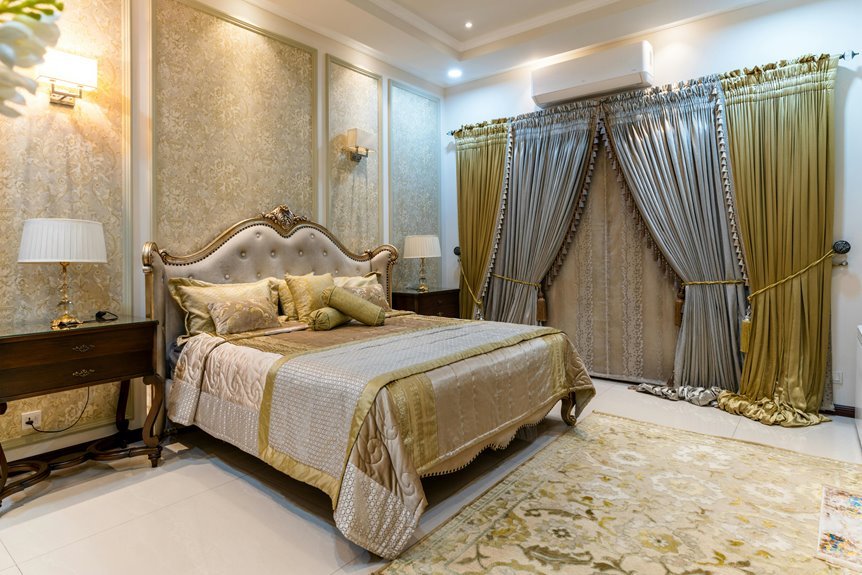
You can upgrade plain curtains without replacing them entirely. Add ribbons, tassels, or decorative tape for polish. Paint stripes using painter’s tape and fabric paint for custom designs.
Extend curtains with contrasting fabric panels to match your window height perfectly.
Layer sheer and solid panels in coordinating colors for depth and light control.
Finally, swap hardware, add a valance, and include trim details for a polished, designer look. Each technique takes just an afternoon and improves your space.
Add Trim and Borders for Instant Elegance
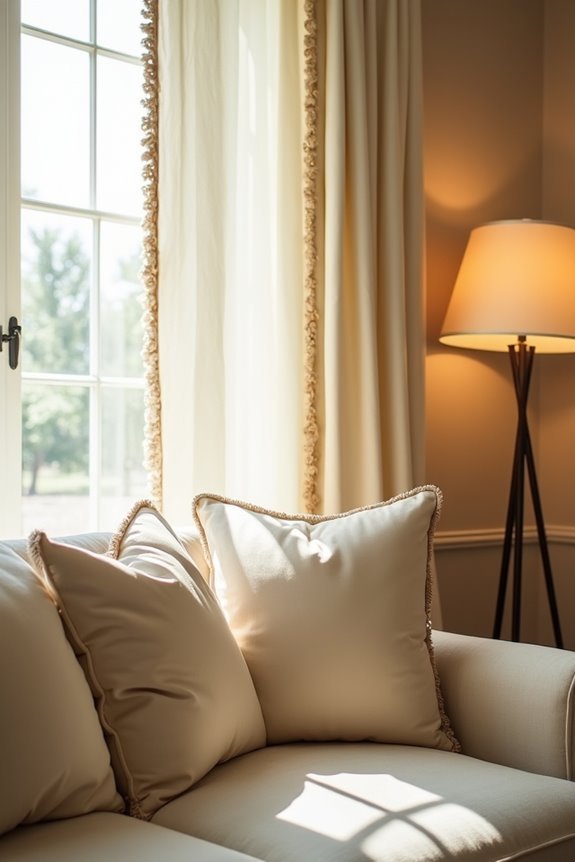
Ever stared at your plain curtains and thought, “These look like they’re missing something”? You’re not alone. Adding trim and borders changes boring panels into designer-worthy window treatments. Ribbon borders refine your curtains beautifully, offering patterns that complement solid fabrics perfectly. Tassels bring formal elegance or playful charm, depending on your style. For easy updates, consider iron-on trim featuring Greek key patterns—no sewing required. Thick decorative tape along edges creates that recurring designer detail you’ve seen everywhere. Products like Peter Pan Collection Pom Poms and Colmar Tassel Trim enhance plain panels. Start small with one border style, then build your confidence. Your windows deserve that polished, put-together appearance that shows careful attention to detail and makes your room feel welcoming.
Paint Stripes and Custom Patterns Onto Plain Fabric
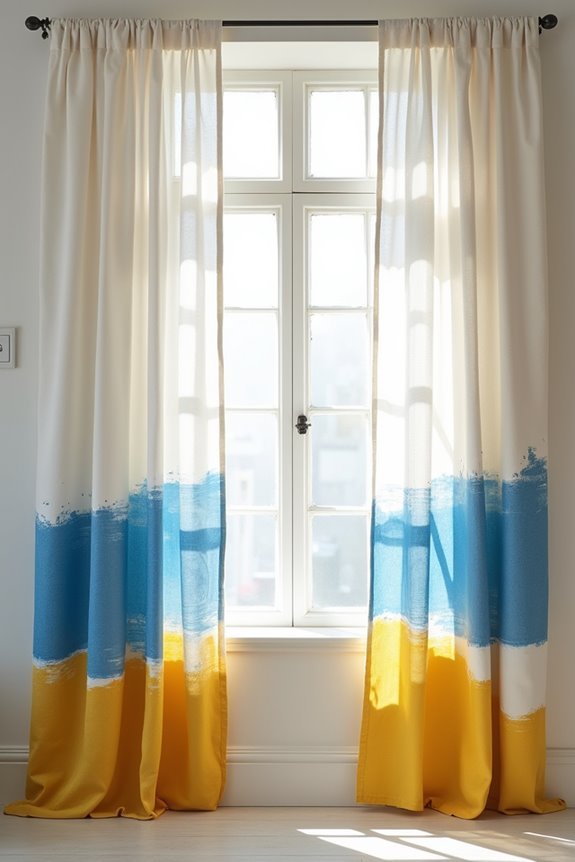
If you’ve ever wanted to change your curtains without buying new ones, painting stripes directly onto plain fabric is an effective solution. You’ll use painter’s tape to create even lines, then paint your chosen colors right onto store-bought curtains. It’s easier than you’d think, honestly.
| Color Option | Mood | Best For |
|---|---|---|
| Navy & White | Classic | Any room |
| Soft Pastels | Calm | Bedrooms |
| Bold Brights | Energy | Living spaces |
| Gold & Cream | Elegant | Dining areas |
| Charcoal & Gray | Modern | Offices |
White curtains work perfectly as your starting canvas. Your painted patterns turn basic fabric into designer-looking pieces that show your personal style. You’re not replacing anything—you’re upgrading what you already own, making striped curtains your own.
Extend Curtain Length With Contrasting Panels
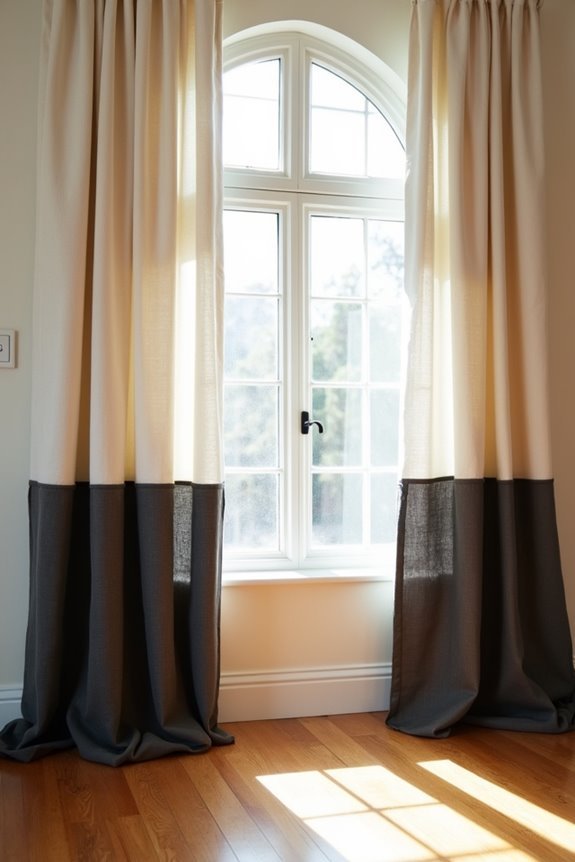
Standard curtains don’t always cooperate with our windows—they’re either too short, leaving awkward gaps, or they hit at weird heights that throw off your whole room’s vibe. Here’s the fix: extend your curtain length with a contrasting panel that makes those 84-inch curtains work for your space.
Start by finding fabric matching your curtain’s texture and weight for smooth drape. You can sew an additional fabric extension to the bottom, or use the no-sew solution with fabric glue or adhesive strips. The contrasting panel becomes a deliberate design feature, adding visual interest while reaching your exact window height.
Choose colors and textures that complement your room’s palette. This fabric extension approach gives you custom-length curtains without replacing everything, proving you can make short curtains work harder for your needs.
Layer Panels in Coordinating Colors and Textures
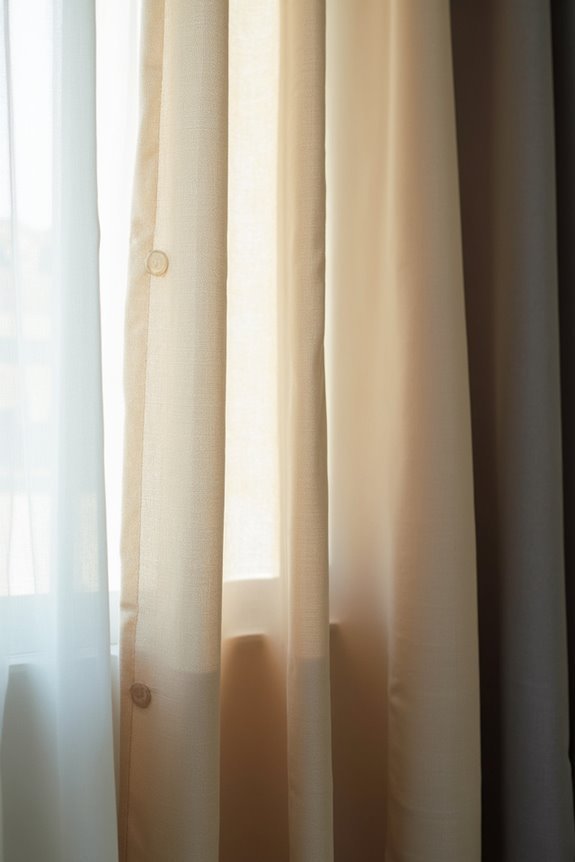
Why settle for flat, one-note curtains when you could create a whole window display with intentional design? Layering panels in coordinating colors and textures gives you window treatment ideas that look polished and well-designed.
Start by choosing a sheer back layer that lets light filter through softly. Then add your main panels on top in complementary colors and textures—think velvet with linen or cotton with silk. When you pair these coordinating colors together, you’re creating depth that makes your room feel more sophisticated.
The benefit? You’ll control light and privacy better while achieving the refined appearance you want. Your layered setup turns an ordinary window into a design element that people notice.
Finish With Hardware, Valances, and Trim Details
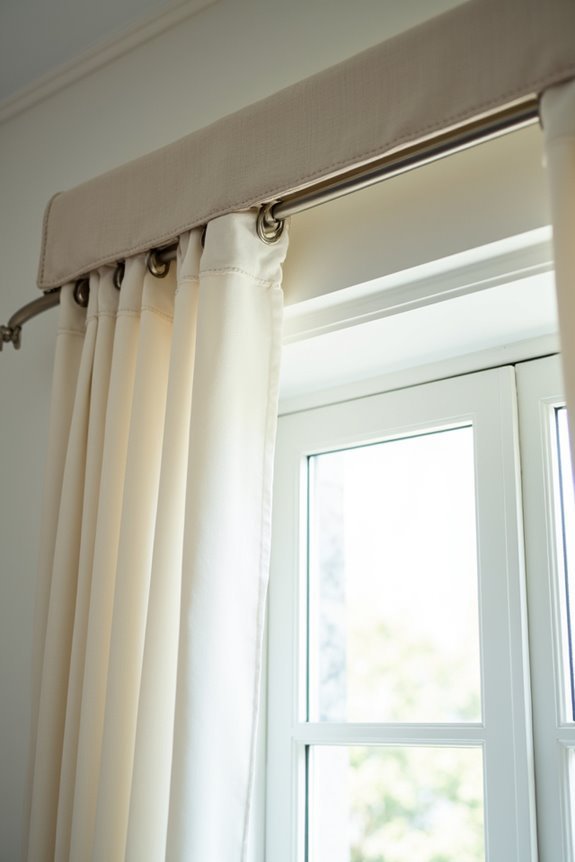
The finishing touches are what set apart professional-looking layered curtains from basic window treatments. Hardware, valances, and trim details function as the jewelry of window treatments—they enhance what’s already in place and add sophistication.
Start with hardware choices like grommets or tab adaptations that improve both operation and visual appeal. Next, consider valances in various mounting styles—pole-mounted or board-mounted options work well to soften sunlight while concealing your hardware.
Then come the trim details. Think thick edge tape, Greek-key patterns, tassels, and borders that enhance plain curtains. These small touches give ordinary panels a professionally designed appearance. Your windows will look intentional and well-planned.