

Your curtains should hit one of three sweet spots: floating a half-inch above the floor for a crisp, modern vibe; kissing the floor with one to two extra inches for that polished, designer look; or pooling luxuriously for formal spaces if you’re willing to maintain them.
Measure straight down from your rod to the floor, then adjust based on your room’s vibe and lifestyle.
The right length improves your entire window—and it’s easier than you’d think once you know the specifics.
The Three Curtain Lengths: Float, Break, and Puddle
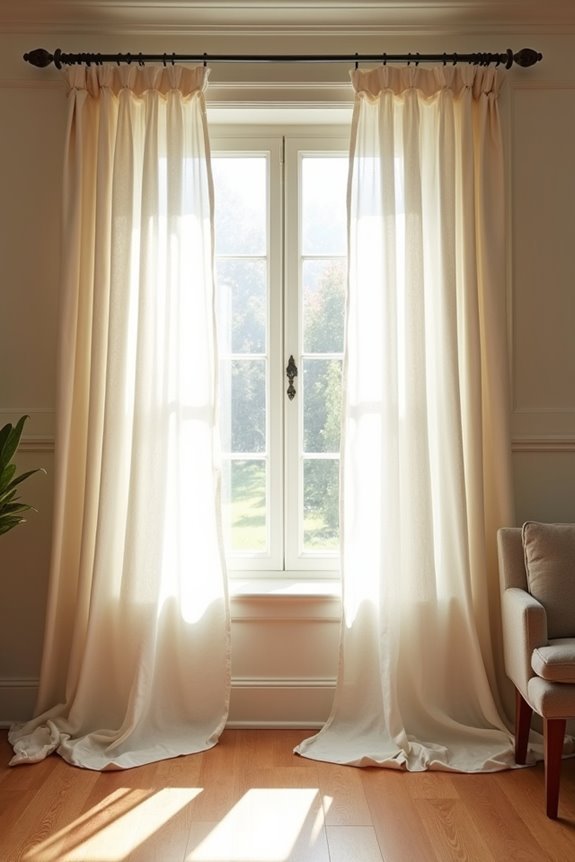
How much fabric should actually hit your floor? You’ve got three solid choices for curtain length, and each one changes your whole vibe.
Float length hangs just above your floor—about half an inch of clearance—giving you that crisp, modern look. It’s forgiving if your floors aren’t perfectly level, and honestly, it’s the easiest option.
Float length hangs just above your floor, giving you that crisp, modern look that’s forgiving and honestly, the easiest option.
Break length kisses the floor with one to two extra inches, creating an elongated finish that feels complete and polished. It hides minor unevenness beautifully.
Puddle length? That’s the formal option. You’re adding three to six inches of excess fabric pooling on your floor for maximum drama and formality. Here’s the catch: it demands quality fabric and serious maintenance, plus it doesn’t work well with kids or pets running around.
Floor-Kissing Curtains: Elegance Without the Drama

When you’re standing in front of your windows trying to figure out the *perfect* curtain length, you’ve probably noticed that break length—or floor-kissing curtains, as designers like to call it—sits right in that sweet spot between fussy and casual. You’ll measure from rod to floor, then subtract a half-inch clearance so your curtains just barely kiss the floor without dragging. This tailored look hides imperfections while giving your windows a polished finish that shows care in the details. The beauty? Floor-kissing curtains work everywhere—bedrooms, living rooms, dining spaces. They’re forgiving enough that small measuring mistakes won’t ruin everything. Just account for your hardware and hem, and you’ll have window treatments that look like they belong.
Puddled Curtains: When to Go Luxuriously Long
If floor-kissing curtains feel a little too safe for you, puddled curtains are where things get fancy. You’re adding 3–6 inches beyond your rod-to-floor measurement, creating that dramatic pooling effect on the floor. It’s the ultimate luxurious look for formal spaces, and honestly, it conveys sophistication.
Here’s the catch: puddled curtains demand high-quality fabrics like washed linen or velvet to really showcase that texture. They’re not ideal for homes with kids or pets since they create tripping hazards and need serious maintenance. Floor-heating or radiators complicate things too—you’ll want heater dividers protecting those drapes.
Your curtain length guide should note that puddle length works best in high-traffic rooms only if you’re committed. Use this measurement technique religiously: measure to the floor, then add those extra inches. That’s your puddle length formula.
Hovering Above the Floor: The Modern, Low-Maintenance Choice
Why settle for curtains that puddle on your floor like they’re melting when you could have a sleek, clean look that actually makes your life easier? Hovering length, also called float length, gives you exactly that. You’ll position your curtains just 1/2 inch to 1 inch above the floor, creating a modern appearance while ditching the dust-collecting drama.
Here’s how to do it: measure from your curtain rod to the floor, then subtract about 1/2 inch. That’s it. This floor clearance keeps your curtain length crisp and intentional, perfect for minimalistic room aesthetic choices.
The best part? Your curtains stay cleaner longer, pets won’t wreck the hem, and you’ll maintain that polished modern interiors look with minimal effort. Just avoid uneven floors or fabrics prone to shrinking, since precision matters here.
Common Curtain Length Mistakes to Avoid
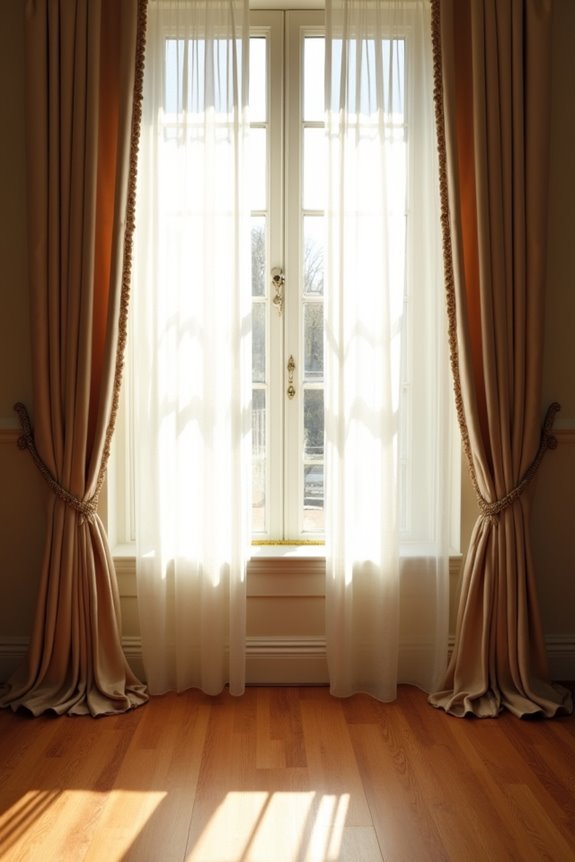
You’ve probably noticed that too-short curtains make your room look unfinished and awkward, like you ran out of fabric mid-project—and honestly, it happens to the best of us. Your rod placement matters just as much as the curtain length itself, because hanging it too low or too close to the window frame throws off the whole balanced look you’re going for. Getting these two things right is what separates a polished space from one that feels a little off, so let’s break down exactly where you’re going wrong and how to fix it.
The Too-Short Problem
One of the easiest mistakes to make when hanging curtains is stopping too short, and honestly, it’s way more common than you’d think. When your curtain length falls inches above the floor, you’re basically announcing that something’s off—even if you can’t quite pinpoint what bothers you.
Short curtains create an unfinished appearance that makes your entire room feel smaller. You lose privacy control and light filtration where you need it most, particularly in bedrooms and living spaces. Poor rod placement or measuring your drop without accounting for rings and hem length compounds the problem.
The fix? Extend your rod outward, add panels, or adjust your hem length to achieve proper floor length. This simple adjustment restores visual balance and makes your space feel deliberate and complete.
Rod Placement Miscalculations
Rod placement is where a lot of people stumble, and it’s totally understandable because the math feels sneaky. You’re juggling ceiling height, window height, and that tricky curtain length all at once. Here’s where most folks go wrong:
- Hanging too low – Placing your rod close to the window sill makes curtains look awkwardly short and throws off visual balance
- Forgetting the extension – Not extending the rod 3–4 inches beyond each side limits your light and view when curtains open
- Measuring wrong – You’ve gotta measure from rod to floor accurately, then subtract for float length or add for break and puddle lengths
- Ignoring ceiling height – Hanging 4–6 inches above the window visually raises the room, making everything feel bigger
Get these right, and your curtains’ll look considered and proportional.
How to Measure From Rod to Floor
How’s the actual measuring part going to work, though? You’ll grab your measuring tape and start from the curtain rod or track, then extend it straight down to your floor. Don’t skip the hardware—those rings, grommets, or tabs matter because they affect your total curtain drop. Once you’ve got that rod-to-floor measurement, you’re ready to decide your look. Want a float that hovers above the floor? Subtract half an inch so nothing drags. Prefer a floor-kiss where fabric just touches down? Keep that measurement as-is. Craving puddle-length drama? Add two to six inches for pooling effect. Check both sides near your window trim to verify consistent floor clearance and balanced results.
Which Length Works Best for Your Room?
Choosing your curtain length isn’t just about measurements—it’s about matching how you actually use the room and the vibe you’re going for. If you’ve got kids bouncing around or pets doing their thing, you’ll probably want float or break length so your curtains don’t turn into dust collectors or tripping hazards, whereas a fancy dining room that barely moves might rock that luxe puddle look. Think about whether you’re trying to make your space feel taller and more formal, or comfortable and lived-in, because that choice’ll shape everything from how the fabric hangs to how often you’re vacuuming underneath it.
Room Function and Activity Level
Why does your curtain length matter so much? Your room’s function and activity level determine which curtain length works best for you.
- High-traffic spaces like kitchens and bathrooms need float or break lengths to prevent snagging and resist moisture damage
- Kids’ rooms benefit from shorter lengths since puddle styles create tripping hazards and require constant maintenance
- Formal living rooms and bedrooms work well with floor-length curtains that deliver privacy, light control, and sophistication
- Active households should skip puddle lengths entirely—they’re beautiful but impractical for durability
Consider your daily routine honestly. Do you have pets darting around? Choose float length. Want elegance without the fuss? Break length works well. The room function guides everything, making your curtain length decision straightforward.
Aesthetic Goals and Visual Impact
Now that you’ve picked a length based on what actually happens in your space, it’s time to think about the vibe you’re going for—because honestly, the same curtain length can look completely different depending on how you style it.
Your curtain length directly shapes your room’s visual impact. Float length delivers that crisp, modern aesthetic, while break length creates a classic look that designers favor. If you’re chasing drama, puddle length spills onto the floor with opulence—though it works best in decorative spaces.
Consider your ceiling height illusion too. Floor-kiss and break lengths visually lengthen walls, making rooms feel taller and more sophisticated. Think about fabric behavior; natural fibers relax over time, affecting your chosen length. Balance privacy and light control with your room aesthetics, keeping your selection aligned with the atmosphere you’re trying to create.
Hanging Curtains Wide and High for Maximum Impact
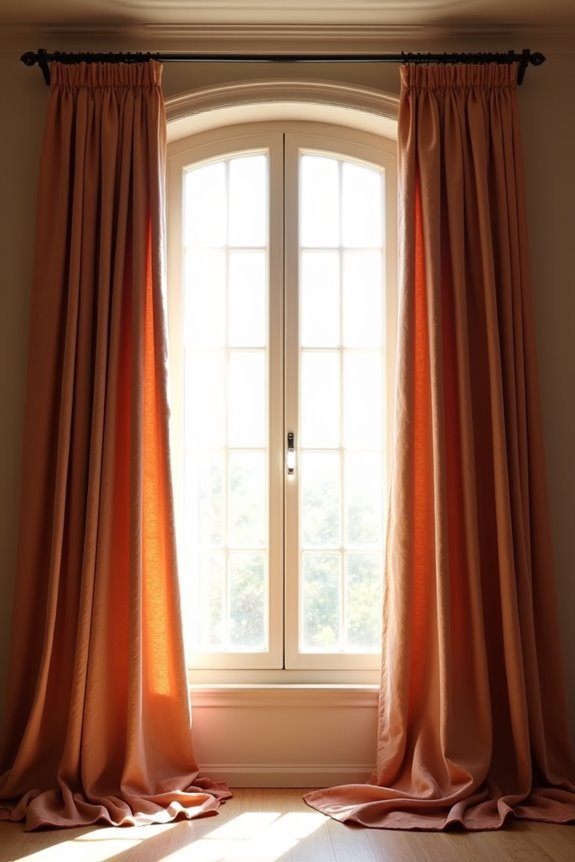
We hang our curtains right at the window frame like we’re afraid they’ll escape, then wonder why the room still feels small and gloomy. The solution is straightforward: go high and wide.
Here’s how to maximize light and visual impact:
- Mount your rod 4–6 inches above the window or closer to the ceiling to influence how light enters and make your space feel taller
- Extend the rod 3–4 inches beyond each side to maximize light when panels open and enlarge your window frame
- For wide windows, go 6–12 inches wider on each side to maintain fullness and avoid a stretched appearance
- Use four panels for very wide windows—two per side—to preserve the fullness that makes curtains look deliberate and polished
This ceiling-mounted approach lifts your eye level, creating a brighter, more spacious room you’ll actually want to spend time in.
Quick Length Guide by Room Type
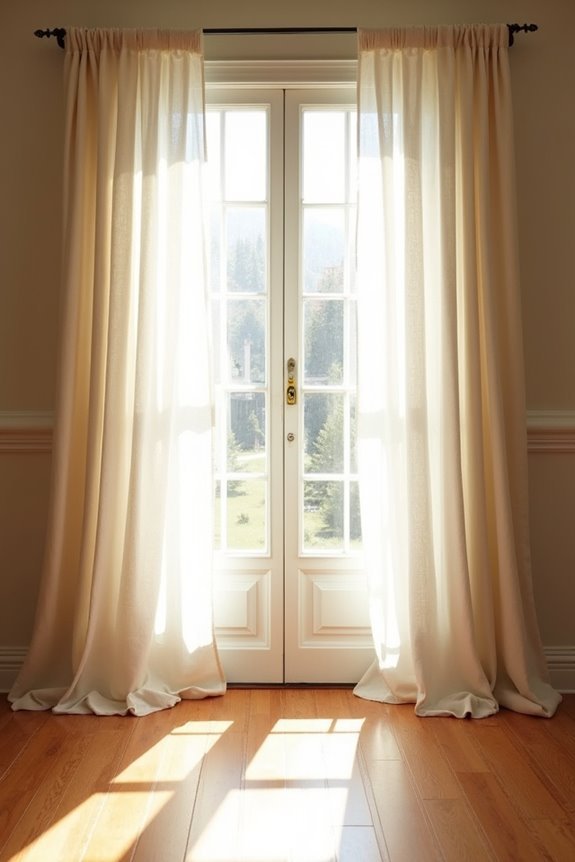
How do you know what length to actually buy when curtains come in so many different sizes? Your room type helps guide your decision.
Living rooms need floor-length curtains around 96 to 108 inches—hang them 4 inches above your window to add height to the space. Bedrooms benefit from that same elegant look with curtains finishing about 1 centimeter above the floor, and blackout options help you sleep better.
Kitchens and bathrooms work best with shorter lengths that handle moisture without dragging through spills. For those wider windows, go longer—think 108 to 120 inches—and extend your rod 6 to 12 inches beyond each side. Matching your curtain length to your room type makes a real difference in how your space looks and feels.