
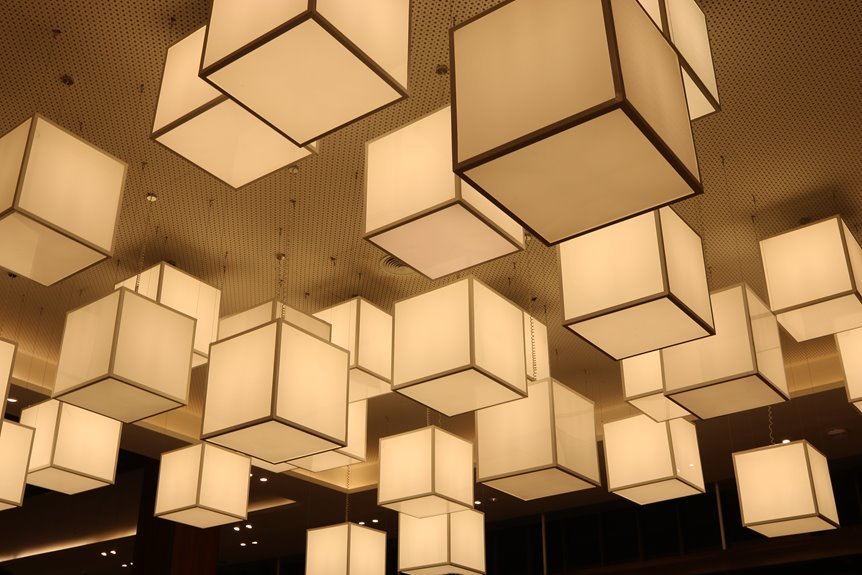
Start with ambient lighting—your room’s baseline brightness from ceiling fixtures—then layer in task lighting for specific activities like reading or cooking.
Finally, add accent lighting to highlight artwork or architectural features.
Use dimmable bulbs to shift from bright mornings to relaxed evenings, and position multiple light sources to eliminate shadows and dark corners.
Match your fixture styles to your room’s aesthetic, whether modern or rustic, and lighting becomes an effective design tool.
Understand the Three Layers of Lighting
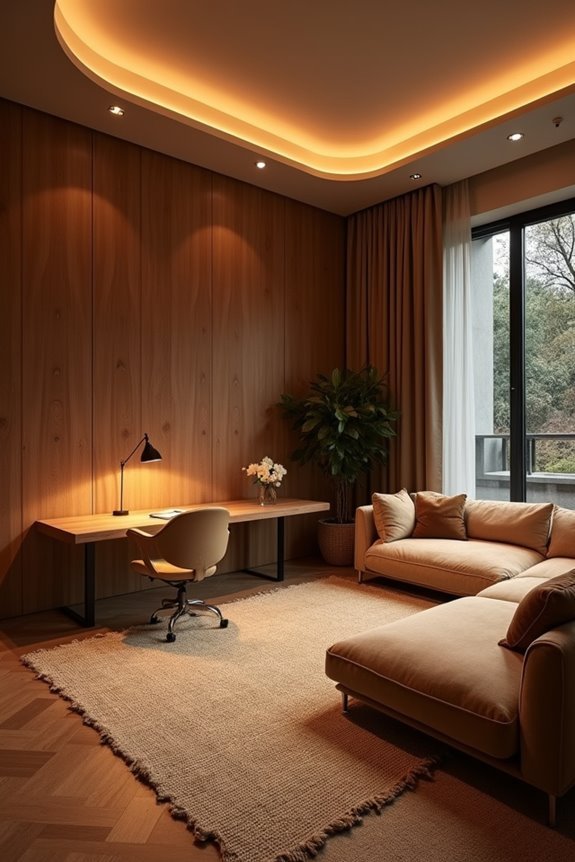
Before you panic about turning your room into a disco or a dungeon, here’s the good news: you don’t need to be an interior designer to get lighting right. The secret? Understanding three simple layers that work together like a team.
First comes ambient lighting—your room’s baseline brightness from ceiling lights or floor lamps. Think of it as your foundation. Next, you’ll add task lighting for specific activities like reading or cooking, which is brighter and more focused. Finally, accent lighting highlights artwork or architectural features, adding personality and depth.
You don’t need all three instantly. Start with ambient lighting, then layer in task and accent lighting as you go. This balanced approach changes how your space feels, shifting from energizing during the day to warm at night.
Calculate How Much Light Your Room Needs
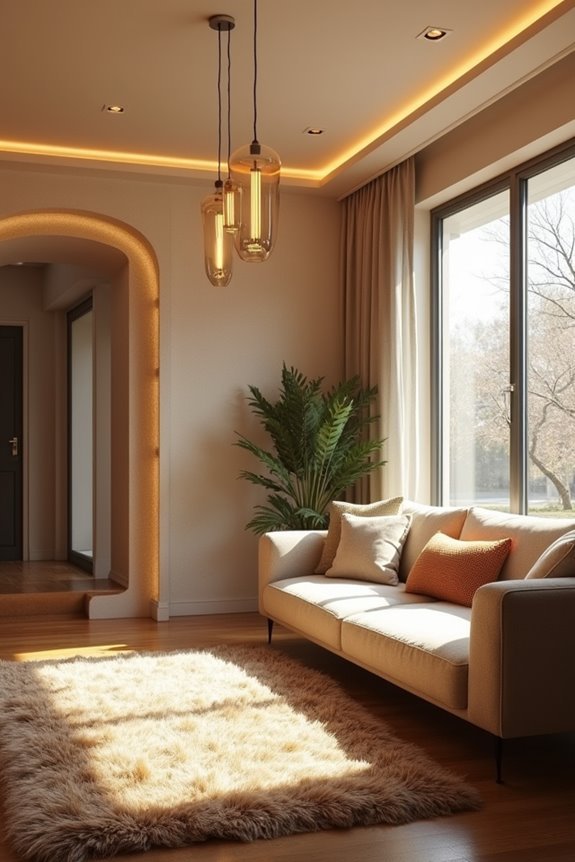
Now that you’ve got your lighting layers mapped out, it’s time to figure out exactly how bright your room actually needs to be—because “pretty bright” isn’t a measurement, and neither is “not cave-like.” This is where lumens come in.
Lumens measure actual brightness you’ll perceive in your space, unlike watts which just measure energy use. Here’s your approach:
- Multiply your room’s length by width to find square footage
- Use 10-20 lumens per square foot as your baseline guideline
- Multiply square footage by your chosen lumens rate for total lumens needed
- Add 10–15% extra lumens if you’ve got dark walls or big windows
- Round up when you’re between numbers—better slightly brighter than disappointingly dim
This straightforward calculation gives you a reliable starting point that works.
Use Ambient Lighting as Your Foundation
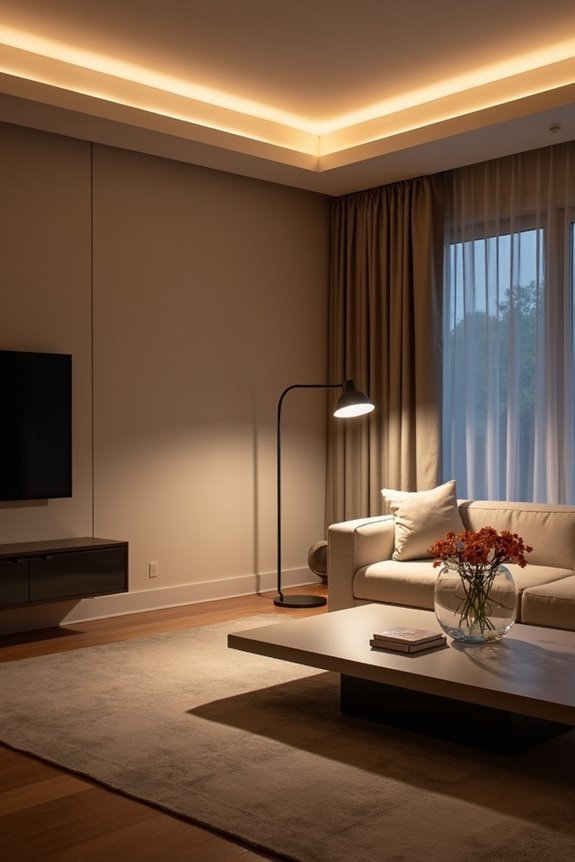
You’ll want to start with ambient lighting as your foundation because it’s basically the backbone of your whole room—it gives you that basic brightness you need to see what you’re doing without stumbling into furniture like a confused zombie. The easiest way to nail this is by going with ceiling-mounted fixtures or recessed lights, which spread light evenly across your space, and here’s what matters: pick dimmable options so you can dial the brightness up for cleaning day and down for when you’re ready to chill out. This combo gives you flexibility, lets you set the mood, and keeps you from accidentally living in a cave or an interrogation room.
Ambient Lighting Sets Baseline Brightness
Why does a room feel so off when there’s only one light source doing all the heavy lifting?
That single overhead light creates harsh shadows and makes your space feel uninviting, even if everything else looks perfect. You’re not alone in this frustration—it’s a common design mistake. Ambient lighting sets your room’s baseline brightness, establishing a comfortable foundation for the entire space.
Here’s what makes ambient lighting essential:
- Provides even illumination throughout your room
- Creates a welcoming atmosphere that invites people in
- Supports safety by eliminating dark corners and tripping hazards
- Works perfectly with dimmers for mood adjustments
- Reduces eye strain compared to single-source lighting
Think of ambient lighting as your room’s best friend—it’s always there, quietly doing its job. Ceiling fixtures, recessed lights, and large floor lamps all contribute to this foundational glow. When you layer it with task and accent lighting, you’re building a space that actually works well and feels right.
Choosing Ceiling-Mounted Fixtures
When you’re standing in your room staring up at that lonely ceiling fixture, you’ve probably wondered if there’s a better way to light things up—and there absolutely is. Your ceiling-mounted fixture is where ambient lighting starts, so picking the right one matters. Look for fixtures that match your room’s vibe—whether that’s modern, cozy, or somewhere in between. Consider dimmable options; they work well for shifting from bright daytime energy to relaxing evening mode. Choose fixtures that coordinate with your other lighting layers, creating a unified look instead of a mismatched mess. Browse styles online, check measurements twice, and don’t settle for boring. The right ceiling fixture sets your whole lighting foundation, making everything else work together beautifully.
Dimmable Options for Flexibility
How many times have you turned on your ceiling light at 6 p.m. and immediately felt like you’re sitting in an office building?
That harsh brightness doesn’t match the cozy vibe you’re actually going for. Here’s where dimmable lighting helps. You’ll install dimmers on your main ceiling fixtures, giving you complete control over your room’s mood. When you dim those lights, you’re adjusting the atmosphere from energizing mornings to relaxing evenings.
What dimmable lighting does for you:
- Adjusts brightness without changing fixtures or bulbs
- Meets your baseline of 10-20 lumens per square foot for comfort
- Pairs seamlessly with task and accent lighting
- Preserves warm or neutral color temperatures when dimmed
- Adjusts your space as your day changes
You’re building flexibility into your lighting design, creating a room that actually works for you.
Layer In Task Lighting for Activities That Need It
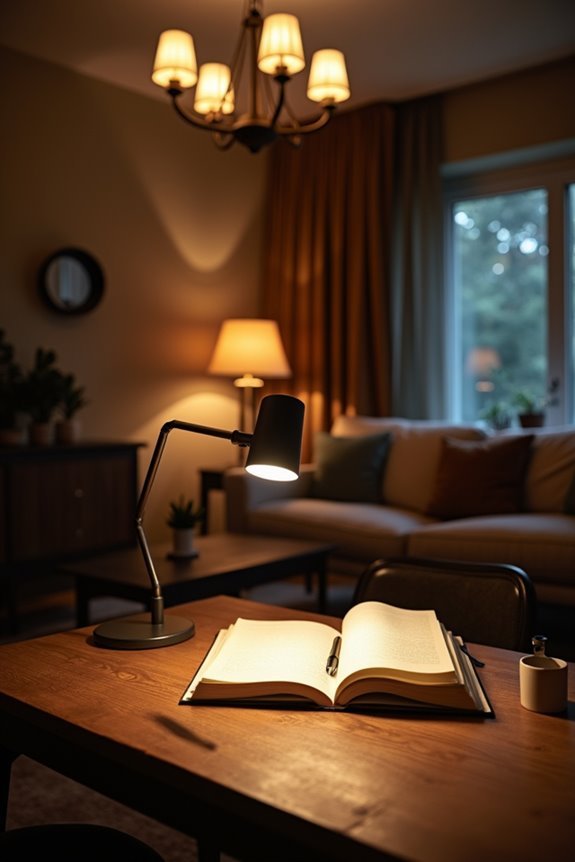
Now that you’ve got your ambient lighting down, it’s time to figure out where you actually need to see what you’re doing—because reading by general light alone will give you squinting headaches. You’ll want to identify which activities in your room demand brighter, focused light: maybe it’s your desk where you work, the kitchen counter where you chop vegetables, or that comfortable reading nook that deserves its own lamp. Once you know your task lighting needs, positioning becomes key, so you’re placing lights directly where the action happens rather than just hoping light lands on your work surface.
Identifying Your Task Lighting Needs
Why do you squint at your desk or hold your book at arm’s length, hoping the overhead light’ll somehow make reading easier?
You’re not alone. Most spaces need task lighting—bright, focused light for specific activities. Here’s what you should evaluate:
- Reading nooks requiring dedicated desk or table lamps
- Kitchen zones needing under-cabinet lights for meal prep
- Bathroom vanities demanding proper grooming illumination
- Work areas where eye strain reduces productivity
- Hobby spaces calling for adjustable, directional fixtures
Identify each activity zone in your room, then match it with appropriate task lighting. Position fixtures at or slightly below eye level to eliminate glare and strain. Consider dimmable options for flexibility. This targeted approach improves how you work and relax, creating comfortable spaces where you actually enjoy spending time.
Positioning Lights for Optimal Function
Ever notice how you’re constantly adjusting your reading position or leaning closer to your work surface, trying to catch enough light? You’re not alone—we’ve all squinted our way through tasks we shouldn’t have to struggle with. The fix? Strategic task lighting positioned exactly where you need it.
Place your task lights at or slightly below eye level to eliminate those annoying shadows and glare that make work harder. Position directional fixtures like swing-arm lamps or adjustable sconces to beam light directly onto your desk, reading nook, or kitchen counter. This focused illumination targets precisely where activities happen, reducing eye strain during detailed work.
Want flexibility? Add dimmers to adjust brightness when you’re doing precision tasks versus unwinding. You’ll finally stop fighting your space and start actually enjoying it.
Balancing Task and Ambient Lighting
Here’s the thing about relying only on your ceiling light—it’s like trying to read a book while someone shines a flashlight at your forehead instead of the page.
That’s where task lighting helps. You’ll want to layer in dedicated lights for specific activities:
- Desk lamps positioned at eye level for focused work
- Under-cabinet kitchen lights that illuminate countertops without shadows
- Reading lights angled slightly above your shoulder
- Dimmable options you can adjust throughout the day
- Multiple sources creating balanced, shadow-free zones
When you combine ambient lighting with task lighting, you’re not just brightening spaces—you’re creating comfort. Your eyes won’t strain as much, and you’ll actually enjoy working or reading. Position task lights strategically, and watch how everything clicks into place. You’re building lighting that works for you, not against you.
Add Accent Lighting to Showcase What Matters
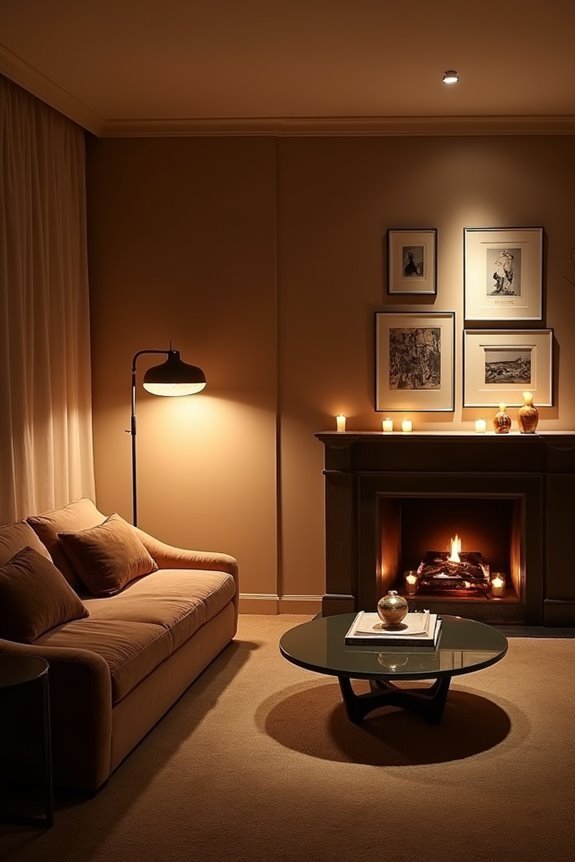
Once you’ve got your basic lighting down, it’s time to stop hiding the good stuff in your room—and accent lighting is your tool for showing it off. Think of it as the spotlight that says, “Hey, look at this!” whether it’s your favorite painting, that cool textured wall, or architectural details you’ve worked hard to feature.
You’ll want dimmable fixtures like wall sconces or LED strips positioned strategically around your key areas. This layered approach adds depth and drama without overwhelming the space. Match your fixture style to your room’s vibe—industrial, modern, rustic, whatever speaks to you—so everything feels considered rather than randomly placed together. Done right, accent lighting changes ordinary rooms into spaces that show who you are.
Choose Color Temperature to Set Your Room’s Mood
You’ve got two main lighting vibes to work with: warm light that makes spaces feel relaxing, and cool light that keeps you sharp and focused when you’re tackling tasks. Warm bulbs (around 2700K–3000K) are your go-to for bedrooms and living rooms where you want to kick back, while cooler temperatures (3500K–4100K) work better in kitchens and home offices where you need to stay alert. The trick is mixing both—use that warm glow for your overall mood, then add some cooler task lighting right where you actually work, and you’ll create that balanced feel that works well in any room.
Warm Light For Coziness
Why does your living room feel more like a waiting room at the dentist’s office than a place where you actually want to hang out?
The culprit? Harsh, cool lighting that zaps all the coziness right out of your space. Warm light works well for creating an inviting atmosphere that makes you want to relax.
Here’s what warm light does for your room:
- Creates a yellowish, amber glow that feels naturally soothing
- Works best around 2700K to 3000K color temperatures
- Pairs beautifully with natural wood and soft textiles
- Allows dimmer switches for mood adjustments
- Changes how any relaxation space feels
When you swap cool bulbs for warm ones, your bedroom or lounge suddenly feels like the comfortable retreat you’ve been looking for, not a sterile office. You’re building the gathering space you’ve always wanted.
Cool Light For Focus
Now here’s the thing: if you’re trying to power through a work project or study session in warm, cozy lighting, you’re basically asking your brain to run a marathon in bedroom slippers.
That’s where cool white light bulbs come in. These helpful tools use temperatures between 3500K and 4100K to sharpen your focus and boost clarity—exactly what you need when concentration matters. Cool light naturally energizes you, making it perfect for home offices, kitchens, and study spaces where you’re tackling detailed work.
The science is straightforward: your brain responds to cooler light by staying alert and engaged. Installing cool-temperature light bulbs in task areas keeps you productive without the drowsy vibes. You’ll notice the difference right away—suddenly, that spreadsheet doesn’t feel quite so overwhelming, and your work quality improves noticeably.
Create a Focal Point With an Eye-Catching Pendant Light
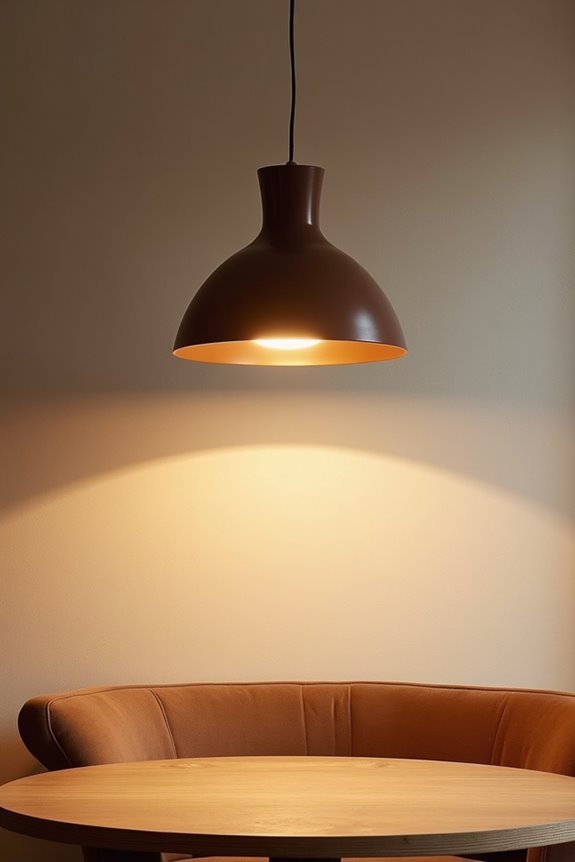
A pendant light or chandelier can reshape a room by becoming the focal point—and we’re talking about drawing everyone’s eyes straight up to your ceiling. You’re basically hanging a conversation starter above your head, and honestly, that’s practical.
Here’s how to do it:
- Position your pendant light directly over a coffee table or dining area to anchor your seating
- Choose a design that matches your room’s color scheme and finishes
- Scale the fixture to fit your room—too big feels overwhelming, too small gets lost
- Make sure it provides enough light for both general brightness and specific tasks
- Pick something visually interesting that reflects your personal style, whether modern or rustic
When you get this right, you’ve created an instant centerpiece that ties your whole room together.
Balance Your Lighting With Matching Lamps and Sconces
Once you’ve chosen that standout pendant light, you’re halfway there—but consider this: one beautiful fixture can’t do all the work by itself. That’s where matching lamps and sconces come in.
Think of it like this: your room needs a lighting team, not solo performers. Place matching lamps at each end of your sofa to create balance and eliminate those annoying shadows that make everything look gloomy. Pair wall sconces on either side of a mirror or artwork to frame your focal point beautifully without harsh glare.
The key? Choose lamps in the same finish and height. This consistency creates a unified appearance that works well together. Layer in floor or table lamps for task lighting, and your room will feel professionally lit and genuinely welcoming.
Select Bulbs and Dimmers to Control Your Mood
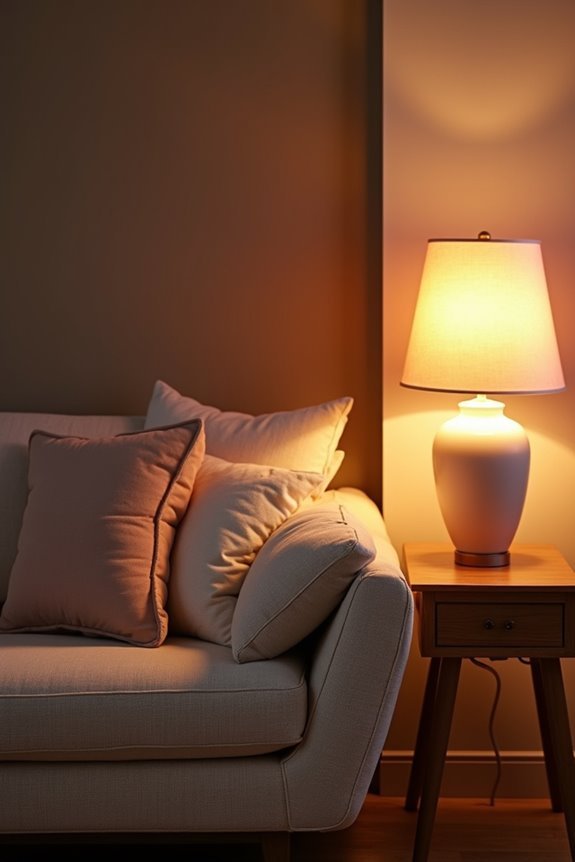
Why does your room feel like a dungeon at 6 PM when it looked perfectly fine at noon? The answer lies in your bulbs and how you control them.
Your room transforms from bright workspace to dark cave by evening—blame your bulbs, not the sun.
You’ve got options to adjust your lighting:
- Warm bulbs create cozy, inviting vibes perfect for winding down
- Cool white or daylight bulbs keep you focused for work and reading
- Dimmers let you smoothly adjust brightness from energetic to relaxing
- Smart bulbs automatically shift color temperature throughout your day
- Layered lighting combines different bulb types to eliminate harsh shadows
Here’s the deal: pair your bulbs with dimmers for total mood control. You’ll shift from bright daytime productivity to soft evening ambiance without any hassle. This simple combination lets you create the atmosphere you actually want, whenever you want it. Your room finally feels livable, not a cave.
Combine Multiple Light Sources to Eliminate Dark Zones
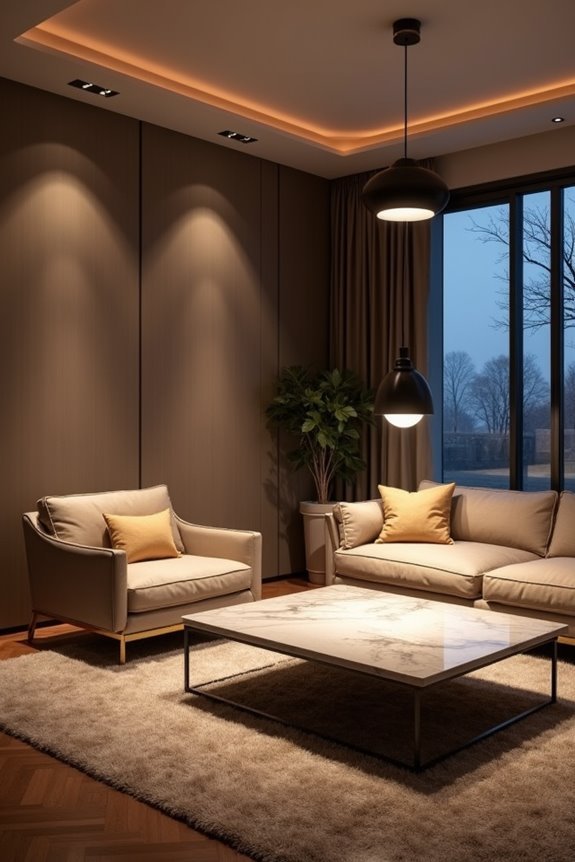
Now that you’ve got your bulbs and dimmers dialed in, here’s the truth: one light source—even a perfectly dimmed one—won’t cut it. You’ll end up with those annoying dark corners that make your room feel incomplete.
Here’s where layering saves you. Combine ambient lighting from ceiling fixtures with task lights like floor and table lamps, plus accent lights such as wall sconces. Position them strategically—flank artwork, frame seating areas, light those shadowy corners. Think of it like building a team where everyone covers different spots.
This multi-source approach eliminates those frustrating dark zones, creating balanced illumination throughout your space. When you audit your room and fill those gaps, you’ll suddenly have a well-lit space that actually works together.
Pick Statement Fixtures That Fit Your Budget and Style
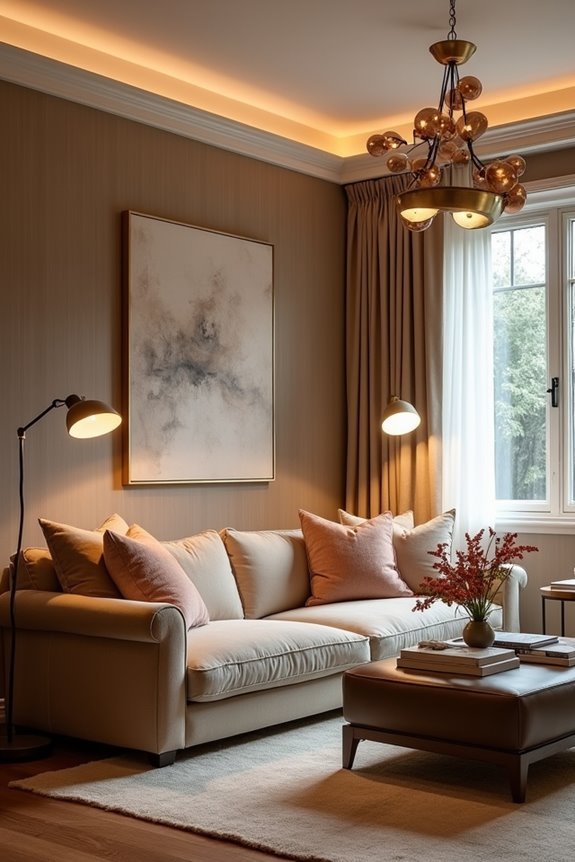
Picking a statement fixture that makes you excited to flip the switch matters. You’ll want something that expresses your style while staying within your budget.
Here’s how to do it:
- Match your fixture to your room’s vibe—think sculptural pendants for modern spaces or crystal chandeliers for traditional dining
- Set your budget upfront, then hunt for pieces that deliver ambiance at a price you’re comfortable with
- Prioritize dimmable options so you can shift from bright mornings to cozy evenings
- Pair one bold piece with simpler ambient and task lighting to avoid visual chaos
- Choose durable fixtures with replaceable bulbs and easy-clean finishes
When you balance style, budget, and function, your lighting becomes more than decoration—it becomes part of who you are.
Put It All Together: Your Complete Living Room Lighting Plan
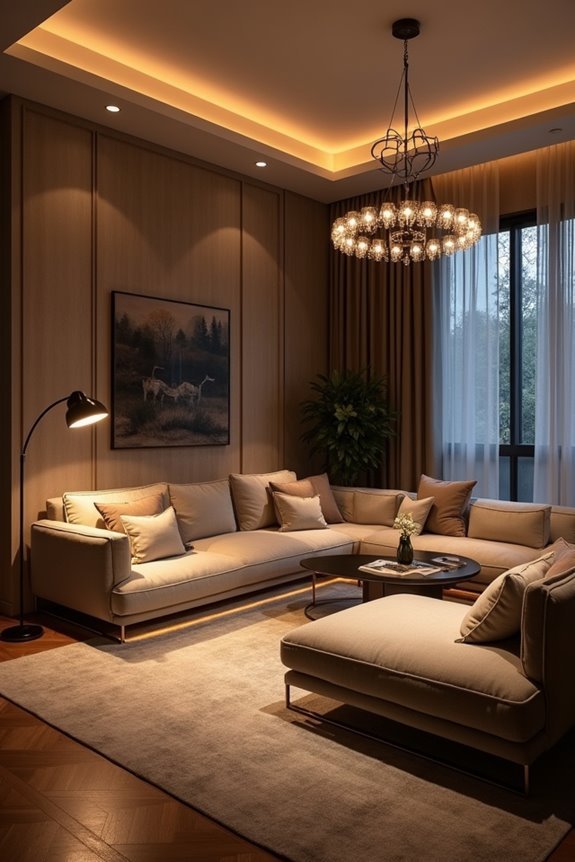
You’ve picked your statement fixture—now what? Time to layer in the rest of your lighting plan so your living room actually works—not just looks pretty.
Start by combining three lighting types: ambient (general brightness), task (reading lights), and accent (art highlighting). Place identical floor lamps on either side of your sofa for balanced, shadow-free lighting. Add wall sconces to showcase art and architectural features, creating depth in your space.
| Lighting Type | Best Location | Purpose |
|---|---|---|
| Ambient | Ceiling center | Overall brightness |
| Task | Beside seating | Reading comfort |
| Accent | Above artwork | Visual interest |
| Focal | Coffee table | Eye anchor |
Make everything dimmable so you’ll shift moods from energetic day to cozy night. Match warm white tones and natural wood finishes across fixtures. You’re not just decorating—you’re building a space where you belong.