
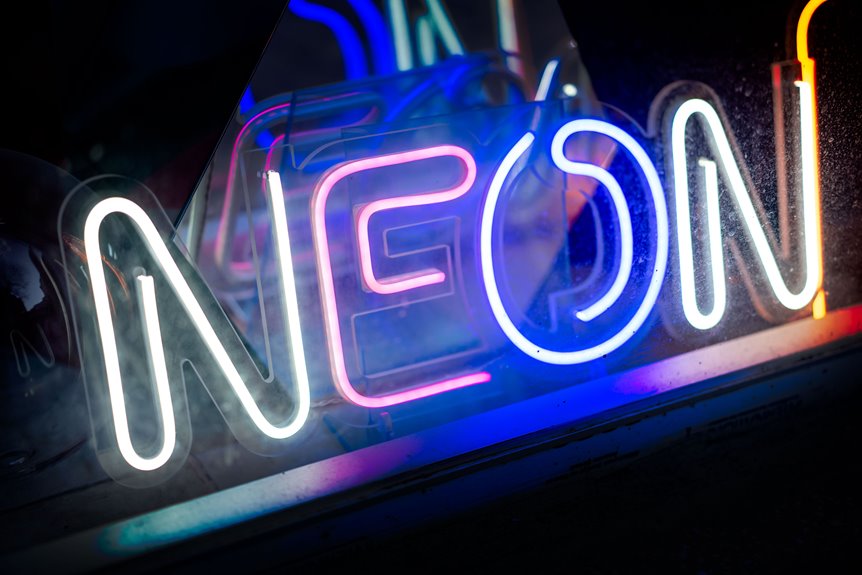
You’ve got options depending on the vibe you’re after. Neon gives you that classic red-orange glow for retro signs, while argon produces trendy blues and purples for modern spaces.
Want something softer? Helium delivers warm pinkish tones, and krypton offers white or pale purple for ambient lighting.
Each gas lights up differently when electrified because excited electrons release energy as they settle down. The right choice depends on your design goals, budget, and whether you prioritize durability or visual impact—and there’s plenty more to unpack about picking the perfect fit.
Why Noble Gases Glow Different Colors When Electrified
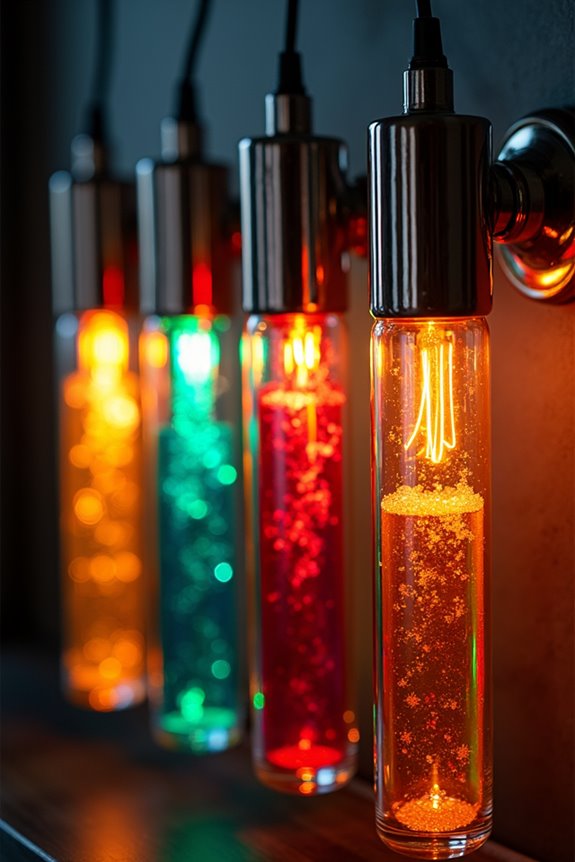
Ever wonder why neon signs aren’t actually always neon, or why some glow red while others shine blue? Each noble gas has its own personality. When you electrify neon, you get that classic red-orange glow, but argon? That’s your blue or purple option. Krypton delivers white-blueish light, and xenon goes bright blue to white. The mechanism is in each gas’s electron energy levels—basically, they’re like different musical instruments that play different notes when you turn them on. You can also modify the colors by adding phosphor coatings or mercury vapor, which is how people create all those decorative effects. Nature’s built-in light shows are quite customizable.
Neon Gas: Bright Red-Orange Glow for Iconic Signs
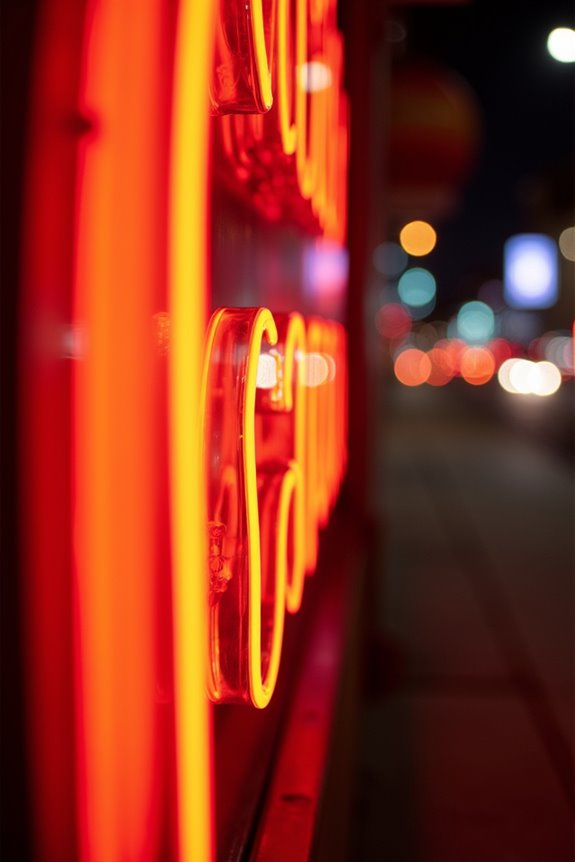
You’ve probably walked past a neon sign and wondered why it glows that distinctive red-orange instead of, say, blue or green—and that’s all thanks to neon’s unique atomic properties that make it the preferred choice for decorative lighting. When you apply high voltage to neon gas, the electrons get excited and release that warm color as they settle back down, which is exactly why those iconic signs you see in diners and shops use neon instead of other noble gases. From vintage theater marquees to modern storefront displays, neon has become the reliable workhorse of decorative lighting because it delivers that lasting glow with low energy costs.
Neon’s Distinctive Color Properties
Why do neon signs glow that unmistakable red-orange color instead of, say, blue or green? Well, you’ve got neon gas to thank for that signature look. When electricity energizes neon gas, it releases that distinctive color naturally—it’s just what neon does. You can’t really negotiate with chemistry here, which is both fantastic and limiting if you’re hoping for variety.
The interesting part? You’re joining countless others who’ve fallen for neon’s iconic warmth. That red-orange glow isn’t some fancy trick; it’s neon gas doing what it does best. The gas itself creates this unmistakable hue, making it the go-to choice for signage lighting everywhere. Since neon’s a noble gas, it stays stable and reliable, meaning your sign keeps glowing beautifully without fussing around with color changes.
Applications in Modern Signage
Now that you know why neon glows that iconic red-orange, let’s talk about where you’ll actually see it in the real world—and honestly, neon’s dominated modern signage for good reason. You’ve probably walked past countless neon gas signs lighting up storefronts, bars, and restaurants. Here’s what makes neon gas effective for decorative lighting: it requires little power to create those bright displays, yet produces that unmistakable glow everyone recognizes instantly. Businesses favor neon signage because it’s energy-efficient, consuming only milliwatts while delivering strong visual impact. Whether you’re drawn to vintage aesthetics or contemporary designs, neon gas remains the preferred choice for creating memorable, striking displays that make spaces feel distinctive and inviting.
Argon Gas: Blue and Purple Light for Modern Spaces
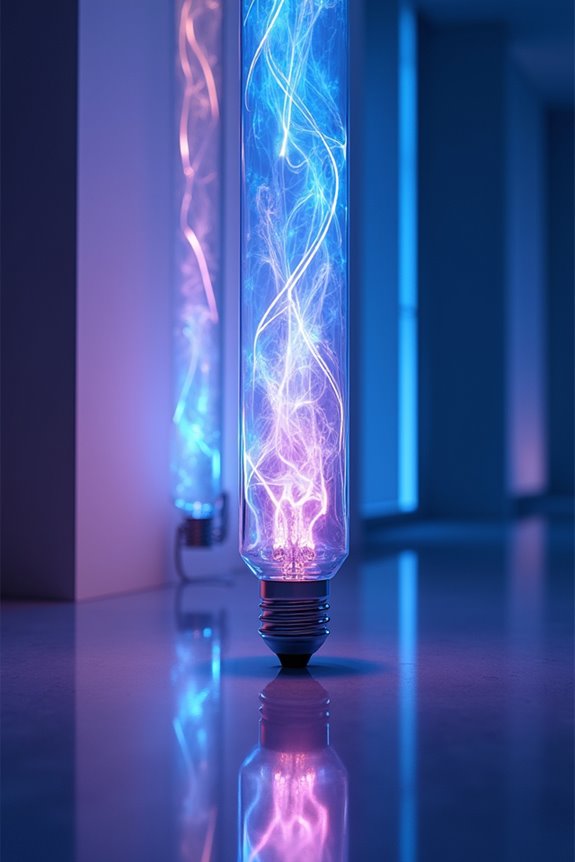
You’ve probably noticed how argon gas creates those blue and purple lights that feel more modern than the classic red neon signs, and here’s the useful part: you can actually mix argon with mercury to shift those colors from pure blue into deeper purple tones that work well in contemporary spaces. What makes argon practical is that it’s not just visually appealing—it’s also durable and energy-efficient, so your decorative lighting won’t burn out after a few months or significantly increase your electric bill like some other options. Whether you’re thinking about upgrading your home design, creating an architectural feature, or adding flair to automotive projects, argon’s combination of color range, longevity, and efficiency makes it a smart choice for modern decorative lighting.
Argon’s Luminous Color Range
Ever wondered how those cool blue neon signs got their glow? You’re looking at argon gas doing its thing! This noble gas creates a range of colors available for your space.
| Condition | Color Output | Best Use |
|---|---|---|
| Pure argon | Bright blue | Modern accent lighting |
| With mercury | Deeper blue | Dramatic effects |
| With phosphor | Light purple | Softer ambiance |
| Mixed gases | Pale blue tones | Versatile designs |
| In decorative tubes | Lavender hue | Cool-toned fixtures |
You can shift argon’s blue light by adding phosphor coatings or mercury inside the tubing. This inert gas stays stable, meaning your decorative lighting stays reliable. Whether you want that crisp blue punch or subtle lavender whisper, argon delivers the atmospheric vibe you’re after.
Applications In Modern Design
What makes argon gas such a popular choice in today’s interior design world? You’re probably noticing these blue glows everywhere—and there’s a reason why. Argon-based fixtures have become the preferred option for designers who want that modern, sophisticated vibe without the complications of traditional lighting.
Here’s why argon works in contemporary spaces:
- Stable, vivid blue hues that create atmosphere without flickering or fading
- Energy efficiency combined with impressive lamp longevity, reducing long-term costs
- Versatile mixing options with mercury or other gases to achieve purple tints and customized color effects
You’ll find argon decorative lighting in minimalist lofts, trendy restaurants, and sleek retail spaces. Its cool operating temperatures mean you’re not overheating your room while creating visual appeal. It’s the lighting equivalent of achieving multiple objectives simultaneously.
Energy Efficiency And Durability
Beyond creating that eye-catching glow in your space, argon gas delivers something just as important: it actually saves you money while lasting way longer than you’d expect.
Here’s the thing: argon gas reduces filament temperatures, which means your decorative fixtures won’t burn out as quickly as traditional bulbs. You’re looking at durable, low-maintenance lighting that doesn’t demand constant replacements. When combined with phosphors, argon gas creates those beautiful blue and purple tones while maintaining strong energy efficiency—so your electric bill stays reasonable.
The real benefit? Argon-filled tubes keep running strong year after year, making lamp longevity from a frustrating expense into genuine peace of mind. You’ll join countless people who’ve ditched frequent bulb swaps for reliable, efficient lighting that actually performs.
Helium Gas: Warm Pinkish-Red Lighting Effects
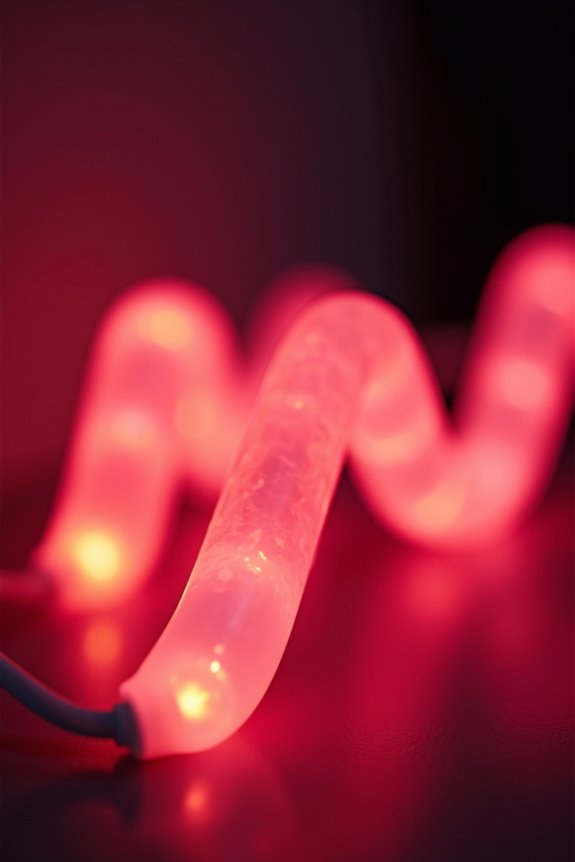
Have you ever noticed those warm, glowing signs that seem to glow with an almost cozy pinkish-red vibe? That’s often helium doing its thing in decorative lighting. When you electrify helium gas, you get a naturally warm tone that feels inviting.
Here’s what makes helium stand out:
- Noble gas stability: Helium’s super unreactive nature means your decorative lighting lasts longer without degrading
- Customizable hues: You can tweak the pinkish-red effect by adjusting tube pressure and electrical current to match your preference
- Supplemental flexibility: Mixing helium with phosphors or other gases gives you more color options
The benefit? You get authentic, long-lasting glow. Helium decorative lighting creates that warm atmosphere you want without constant maintenance headaches.
Krypton Gas: White and Pale Purple Hues
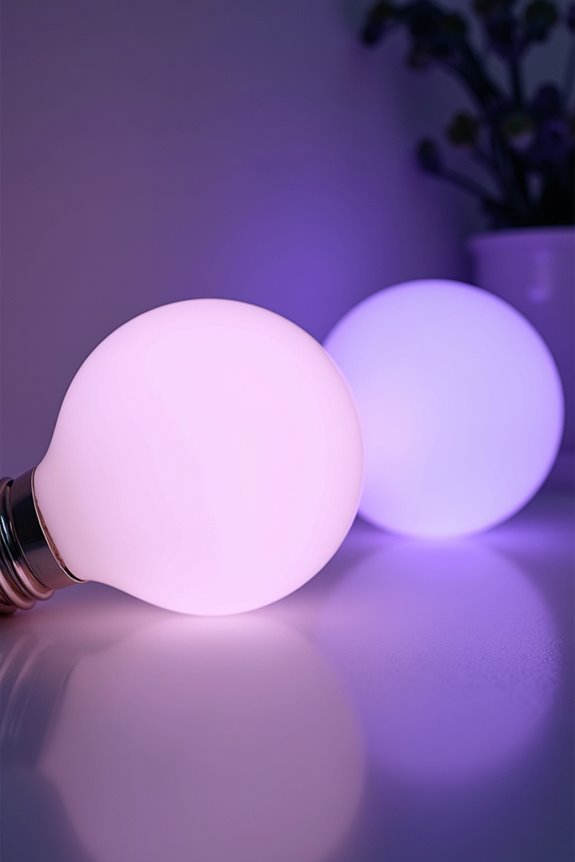
When you’re looking to create that perfect soft glow in a room, krypton gas offers you something special—it produces those gorgeous white and pale purple hues that feel way more sophisticated than the obvious bright neons you see everywhere. You can actually play around with krypton’s color range by adjusting electrical conditions, and if you’re feeling fancy, pairing it with tinted glass lets you dial in exactly the subtle vibe you’re after without things getting too intense. It’s basically the decorative lighting choice for people who want their spaces to look deliberate rather than like a retro arcade exploded, which honestly, we respect.
Krypton’s Color Range
Why’d krypton get stuck with the understated glow while neon hogged all the attention? You’re looking at a gas with serious range, honestly. Krypton produces whitish-yellow to pale purple light—totally different vibes from neon’s bold red-orange. Here’s what makes krypton’s color range useful for neon signage:
- Soft, adjustable hues: You’ll get white, gray, or light purple tones that work well for sophisticated designs
- Customization flexibility: Pair krypton with tinted glass or phosphor coatings to fine-tune your exact color vision
- Brightness control: Mix it with mercury vapor or other gases to boost intensity while maintaining those delicate pale tones
Krypton’s low-intensity, bluish-white glow gives you softer lighting effects that neon simply can’t match. It’s a choice for those who prefer understated elegance over flashiness.
Applications In Decorative Design
Krypton’s decorative design applications showcase where this gas performs effectively—literally. You’ll find krypton working in fixtures where you want that perfect ambient glow without excessive brightness. It’s your option for creating sophisticated lighting setups because it produces those subtle whitish-yellow and pale purple tones naturally.
Here’s what matters: when you combine krypton with tinted glass or phosphor coatings, you access an entire color palette toolkit. You’re not limited to one option anymore. Designers pair krypton with these coatings to achieve broader color ranges, giving you flexibility for different moods and spaces.
Whether you’re designing safety lighting or decorative accents, krypton delivers that distinct glow that makes your space feel deliberate and welcoming without any fuss.
Performance With Tinted Glass
How’s this for a plot twist: the real magic happens when you pair krypton gas with tinted glass, and suddenly you’ve got a lighting setup that actually works with your design instead of against it.
When you combine krypton with tinted glass in decorative lighting, you’re basically accessing a whole new level of customization. The krypton’s pale white-to-light purple discharge interacts beautifully with the colored glass, creating colors you wouldn’t get otherwise. You’ll notice improved color temperature perception, meaning your space feels more thoughtful and deliberate.
Here’s what makes this combo special:
- Enhanced color variety without sacrificing subtlety or elegance
- Better light interaction that creates depth and visual interest
- Improved safety lighting with colors that feel both modern and welcoming
You’re joining designers who’ve discovered this approach for creating spaces with distinctive character.
Xenon Gas: Specialized Blue and Lavender Illumination
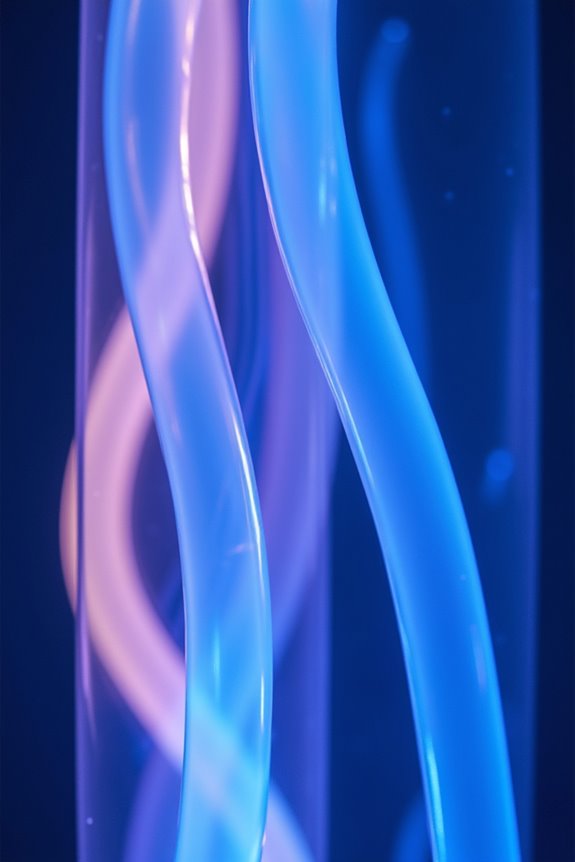
Ever wonder why some decorative lights glow with that mesmerizing blue or purple hue you see in fancy nightclubs and high-tech displays? That’s xenon gas doing its thing. When you ionize xenon gas—basically give it an electrical charge—it produces those vivid blue and lavender colors you’re after. Unlike neon, which dominates most signs, xenon gas creates something special through gas discharge processes. You control the exact shade by adjusting electrical parameters and tube design, which is quite effective. Xenon offers intense brightness and fires up instantly, making it perfect for strobe lighting and photography setups within decorative lighting installations. So if you want that sophisticated, tech-forward glow that distinguishes your space, xenon’s your answer.
Mercury Vapor Boosts Brightness in Fluorescent Tubes
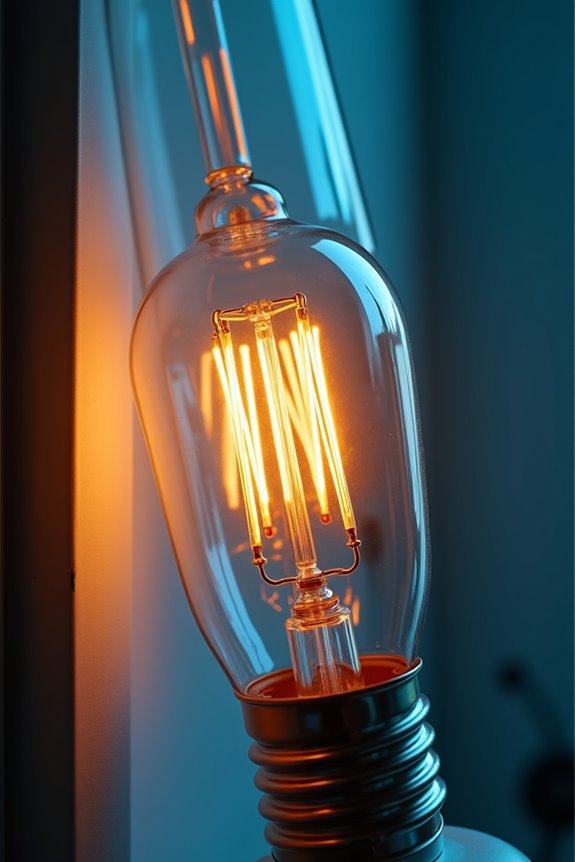
Want your decorative lights to shine brighter without cranking up the electrical bill? Mercury vapor’s your answer. This gas creates brightness in fluorescent tubes, and it’s an effective solution.
Mercury vapor gas creates brightness in fluorescent tubes, delivering brighter decorative lights without inflating your electrical bill.
Here’s what makes mercury vapor work:
- Blue hue production: Mercury vapor generates blue light that mixes with phosphors to create cooler, brighter illumination
- Higher efficiency: You’ll get better luminous efficacy, meaning more light with less energy waste
- Color flexibility: Depending on phosphor blends, you can dial in different temperatures and hues for your space
When mercury vapor interacts with phosphor coatings inside your tubes, the result is improved light output. These lamps require careful handling and proper disposal to protect our environment.
Blending Gases to Expand Your Color Palette
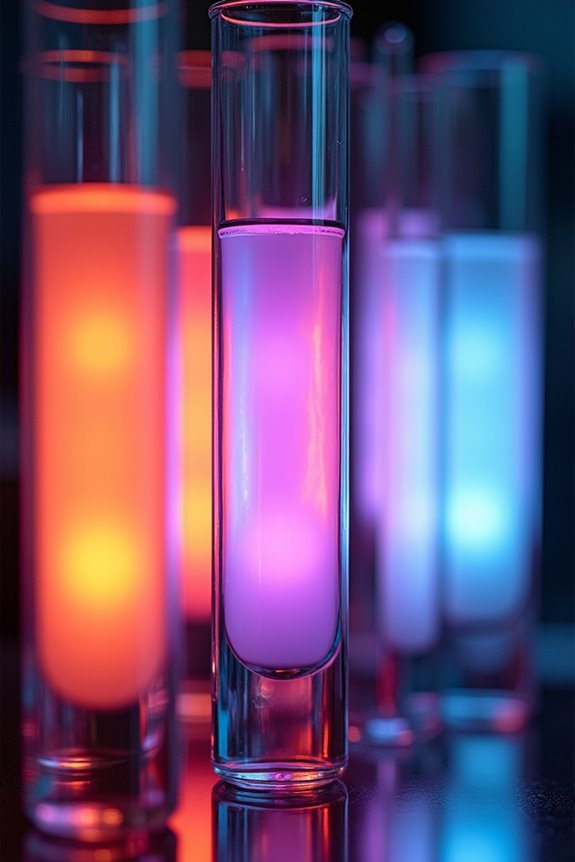
When you’re tired of choosing between red or blue for your decorative lighting, it’s time to mix things up—literally. Blending gases like neon with argon or xenon lets you create colors that neither gas produces alone. Think of it like mixing paint—you’re expanding your options beyond basic primary colors.
Here’s why this matters: pure neon gives you red-orange, while argon delivers blue. But combine them? You’ll reveal purples, pinks, and entirely new shades that give your space a distinct character. You’re not stuck with single-color limitations anymore.
The beauty of blending gases is improved color rendering too. Your decorative displays look richer and more vibrant because you’re working with a wider palette. It’s the difference between a basic crayon box and the deluxe set—suddenly everything’s possible.
Neon vs. Argon: Which Is Right for You?
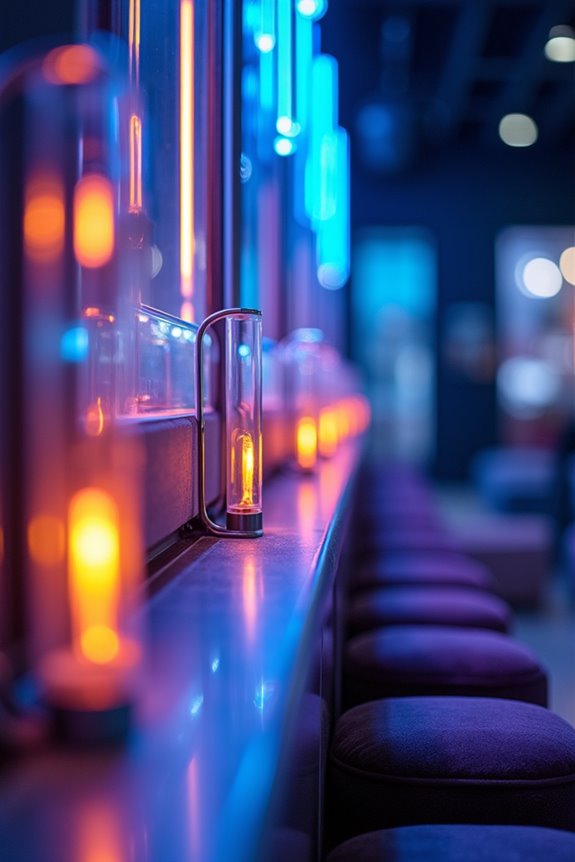
So you’ve decided you want decorative lighting that actually pops—but now you’re standing at a crossroads, wondering if neon or argon’s your best bet.
Here’s the thing: they’re both fantastic, but they shine differently. Neon gives you that classic bright red-orange glow that screams “vintage cool,” while argon produces beautiful blue light that pairs nicely with phosphor coatings for added brightness. Your choice depends on the vibe you’re creating.
Consider these factors:
- Color preference: Neon’s warm red-orange versus argon’s cool blue tones
- Efficiency needs: Argon works great with coatings to boost brightness
- Classic versus modern: Neon feels retro; argon feels contemporary
Both lighting colors work in the right space. Think about your room’s personality and what makes you feel at home.
Voltage Your Decorative Gas Lights Actually Require
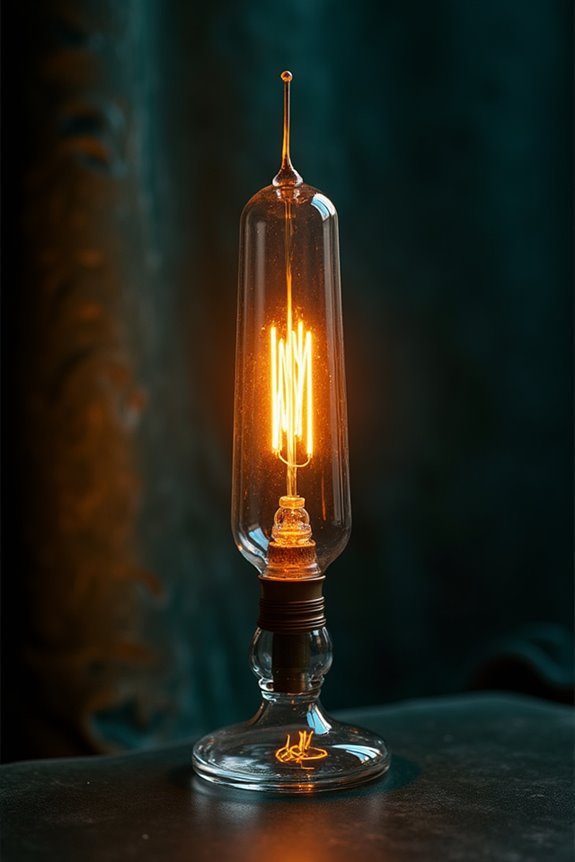
You’ll need to understand that your decorative gas lights aren’t like regular lightbulbs—they demand serious electrical power, often requiring hundreds or even thousands of volts to get started and keep glowing safely. The exact voltage you’re dealing with depends on your tube’s length, the gas mixture inside, and how tightly packed that gas is, which means longer tubes generally need more electrical muscle to do their job. That’s why we’re going to walk through the high-voltage demands, the safety requirements you can’t skip, and how all this voltage translates to what you’ll actually pay on your electric bill.
High Voltage Requirements Explained
Why do decorative gas lights need so much electrical power to work? When you’re trying to create that neon glow, you’re actually ionizing gas molecules—basically turning them into charged particles that emit light. That’s no small feat, so you’ll need serious voltage to make it happen.
Your gas discharge tubes require high voltage because the gas particles need enough electrical kick to start glowing. Here’s what makes this work:
- Ignition voltage: You’ll need 4,000–15,000 volts just to get neon tubes started
- Mercury and xenon demands: These trickier gases can require 20,000–80,000 volts initially
- Current control: Modern supplies limit current to prevent dangerous arcing and keep your lights stable
The takeaway? High voltage isn’t overkill—it’s required for creating that distinctive decorative light you’re after.
Safety Considerations For Operation
Because those high voltages we talked about can pack a serious punch, keeping your decorative gas lights safe isn’t optional—it’s absolutely necessary. You’ll need appropriately rated ballasts to manage that electricity safely, and honestly, skipping this step is asking for trouble. Make sure your high voltage components stay enclosed so nobody accidentally touches them—shocking yourself isn’t fun. For outdoor setups, invest in weather-rated enclosures that handle rain and temperature swings reliably. Check your insulation regularly, inspect tubes for leaks or discoloration, and confirm your supply voltage matches what your lights actually need. These simple checks prevent overvoltage damage and keep your lighting display running smoothly all season long.
Power Consumption And Efficiency
those brilliant decorative gas lights that seem to glow forever barely sip electricity compared to regular incandescent bulbs. You’re looking at milliwatts to a few watts depending on size, which means your electric bill won’t suffer. The component called a ballast controls the gas discharge, keeping your lights bright while conserving power.
- Neon uses incredibly low power — typically just a few watts — making it practical for displaying without concern for energy costs
- Argon setups consume low to moderate wattage while the ballast maintains consistent, efficient performance
- Luminous efficacy improves with optimized designs, giving you bright light while minimizing input voltage and current
Decorative gas lighting delivers strong visual impact without draining your wallet or requiring specialized electrical upgrades.
Why Noble Gas Fixtures Consume Less Power
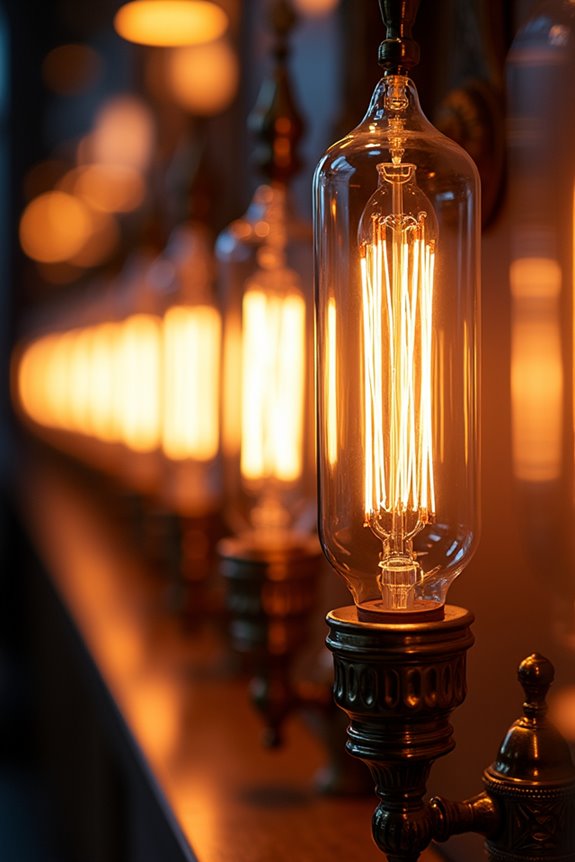
How do noble gas fixtures pull off the trick of being so bright while barely sipping electricity like a tiny straw? It’s all about how these discharge lamps work differently than old-school bulbs. When you fill a tube with noble gas and apply electrical current, the gas atoms excite and release light with high efficiency—far superior to heating a metal filament like incandescent bulbs do. Your noble gas setup doesn’t waste energy creating heat; instead, it converts nearly all that electrical power directly into visible light. Add phosphor coatings to the mix, and you’re boosting energy efficiency further. That’s why you’ll notice argon and neon fixtures running cooler while delivering strong brightness. You’re getting professional-quality light output without a high electric bill.
Electrical and Installation Safety Hazards to Address
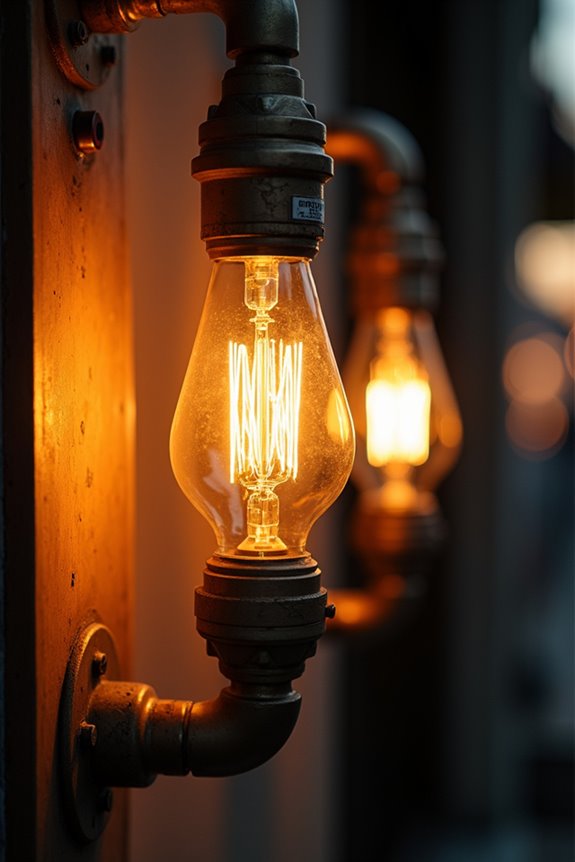
What makes noble gas lighting risky if you’re not careful is that you’re dealing with seriously high voltages—even when using just milliwatts—that can deliver nasty electric shocks or create dangerous arcs if something goes wrong.
Here’s what you need to watch out for:
- Your gas discharge lighting needs a quality ballast/driver; if it fails, you’re risking overcurrent, overheating, and potentially fire
- Fixtures must be rated specifically for your noble gas mix and pressure to prevent electrical faults and gas leakage
- Proper grounding, secure enclosures, and local electrical code compliance aren’t suggestions—they’re your protection against shock and arc flash hazards
Following these electrical safety guidelines keeps you and your space safe while enjoying that gorgeous glow.
Do Gas Lights Cost More Upfront: and Is It Worth It?
Now that you’ve got the safety side locked down, you’re probably wondering if all those precautions are worth the price tag—and yeah, gas lights cost noticeably more upfront than installing some regular electric fixtures.
| Cost Category | Gas Lighting | Electric Lighting |
|---|---|---|
| Installation | $500–$2,000+ | $200–$800 |
| Annual Fuel | $150–$400 | $20–$60 |
| Maintenance | $100–$300 | $0–$50 |
Your upfront costs jump because you’re paying for specialized piping, regulators, and quality burners. But here’s what matters: maintenance and fuel costs add up over time. You’ll replace mantles yearly and cover gas expenses. However, you’re getting durability and that distinctive ambiance that electric fixtures simply cannot provide. For many people, that’s worth the investment.
How to Choose the Best Gas for Your Space
Once you’ve decided that gas lighting’s worth the investment, picking the right gas matters more than you’d think, because different gases create different visual effects in your space.
Think about what feeling you’re going for. Want that classic red-orange warmth? Neon’s your friend. Craving something cooler and more modern? Argon gives you blues that feel fresh and contemporary. If you prefer a sophisticated look, xenon delivers those blue-to-lavender tones that work well for upscale settings.
- Color matching your décor: Choose gases that complement your existing design style
- Room size and brightness: Larger spaces might need multiple tubes; consider how bright you want things
- Atmosphere creation: Your gas choice shapes how your space feels to visitors
Consider your room’s purpose, lighting needs, and the feeling you want guests to experience when they walk in.
What to Do Before You Buy: A Quick Checklist
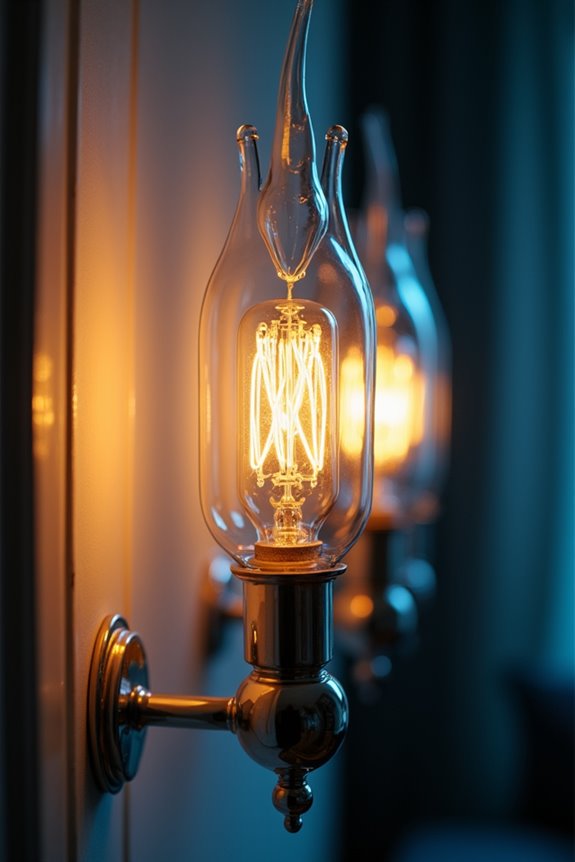
Before you hand over your hard-earned cash, here’s the thing: you’ll want to nail down a few important details so you don’t end up with decorative lighting that looks wonderful in the store but feels all wrong in your actual space. First, think about your room’s vibe—do you want that classic neon red-orange glow or something cooler? Next, measure your space carefully; gas signs need proper clearance. Consider your budget too, since neon requires higher voltage initially but runs super efficiently afterward. Check what colors actually work with your décor—mercury mixes create blues and greens that might catch you off guard. Finally, verify your electrician can handle the installation. Taking these steps helps you avoid buyer’s remorse and confirms your decorative lighting investment becomes the conversation piece you’re hoping for, not a regrettable purchase gathering dust in your closet.