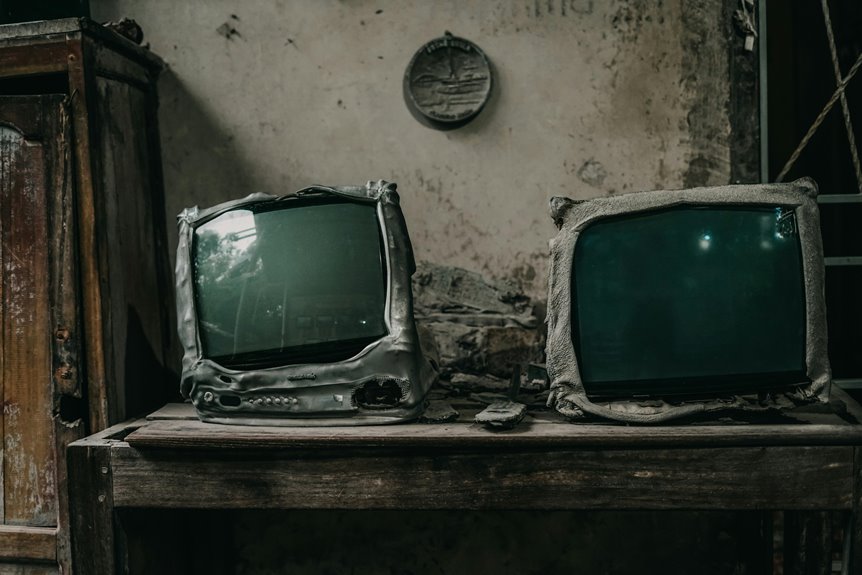
Yes, your fireplace can damage your TV if you’re not careful, but it’s totally preventable. Heat rising from the fire can harm internal components and shorten your TV’s lifespan, especially with wood-burning fireplaces that radiate intense, unpredictable heat. Gas fireplaces are more manageable, and electric ones pose minimal risk.
The good news? A deeper mantel shields your screen, proper clearances matter, and professional guidance keeps your setup safe. Get the specifics on what your exact setup needs to stay safe.
Will Your Fireplace Damage Your TV? (The Short Answer)
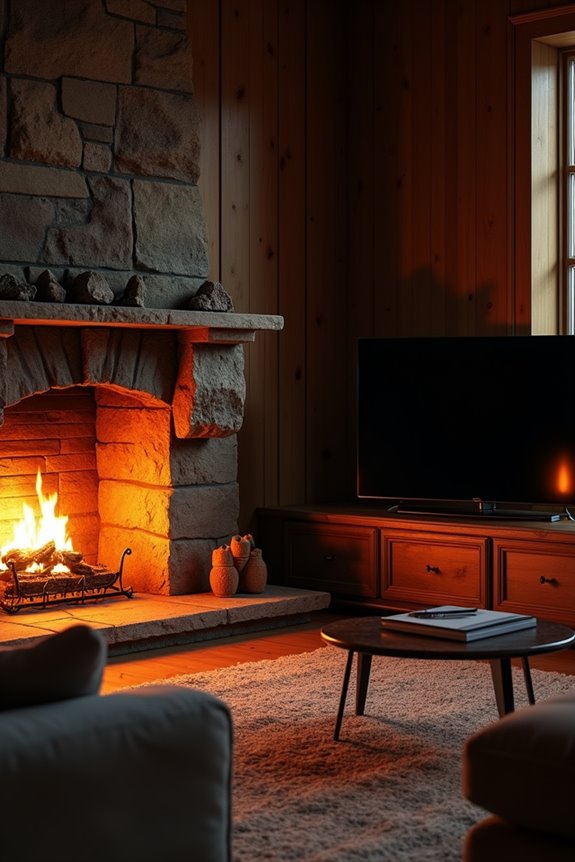
Yes, a fireplace can absolutely damage your TV if you don’t manage heat properly. The heat rising from your fireplace can harm your TV’s internal components, warping circuits and reducing its lifespan. But you have solutions available.
You can protect your screen with proper planning. Installing a mantel protection system redirects heat away from your TV, keeping dangerous temperatures at a safe distance. You’ll also need to follow proper clearances—maintaining enough distance between your fireplace and TV as manufacturers recommend.
Think of it this way: respecting these clearances and deflection measures is your TV’s protection. Professional installation confirms you’re following all specifications correctly, so your fireplace and entertainment setup can work together without conflict.
Gas vs. Wood-Burning vs. Electric: Which Poses the Most Risk?
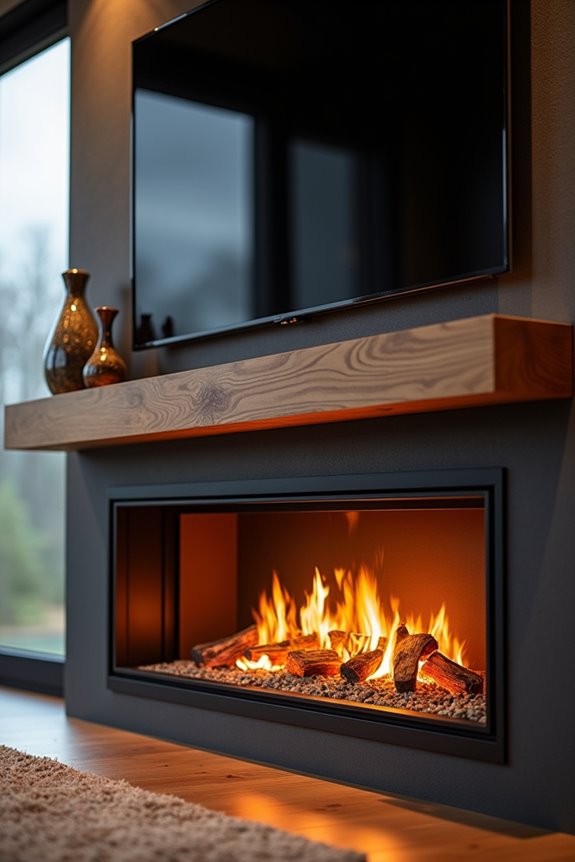
Not all fireplaces create the same heat challenge for your TV, and that’s actually good news—it means you can choose the setup that works best for your space.
You’ve got three main heat sources to consider:
- Gas fireplaces transfer heat predictably, so you’ll know what you’re dealing with if you respect clearances and use proper heat deflection
- Wood-burning fireplaces radiate intense, variable heat that demands generous clearances and substantial deflection to protect your TV safely
- Electric fireplaces emit minimal ambient heat, making them the gentlest option for wall-mounted TVs
The best approach? Whatever setup includes a mantel, proper venting, and dedicated heat-deflecting design. Before mounting anything, verify your specific fireplace model’s heat distribution with the manufacturer and consider professional installation. You’ll have peace of mind knowing your TV’s truly protected.
How Deep Your Mantel Shields Your TV From Heat
Ever wonder why some people’s TVs survive years above a fireplace while others don’t? Your mantel depth is basically your TV’s bodyguard. A deeper mantel acts as a physical shield, deflecting radiant heat away from your screen before it causes damage.
| Mantel Depth | Heat Shielding | Safe TV Distance |
|---|---|---|
| Shallow (under 6″) | Minimal | 4-5 feet |
| Medium (6-12″) | Moderate | 3-4 feet |
| Deep (over 12″) | Maximum | 2-3 feet |
Think of it this way: deeper mantels mean you’ve got better clearances between your TV and the heat source. You’re creating an air gap that protects your investment. Whether you’re running gas, wood, or electric fires, a substantial mantel depth matters for heat management. Designers recommend prioritizing that deeper mantel as your first defense.
Safe Mounting Heights Based on Your Fireplace Type
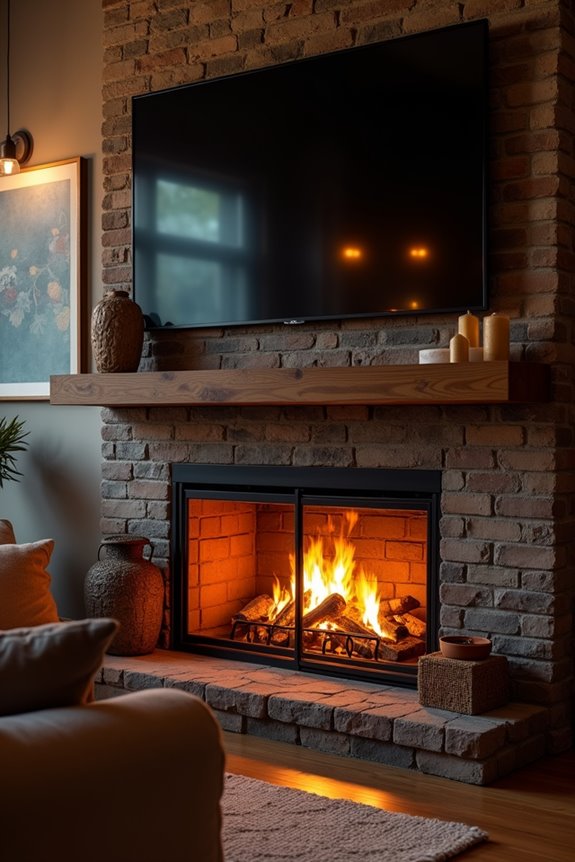
Different fireplace types throw different amounts of heat at your TV, so you’ll want to adjust your mounting height accordingly. Gas fireplaces need more breathing room than you’d think because their heat output can vary wildly depending on how they’re vented, while electric units are the lowest-heat option—12 inches up and you’re set. Wood-burning fireplaces generate the most heat and demand serious clearance or a heat-blocking mantel solution, since they produce significant radiant heat output.
Gas Fireplaces: Heat Management
What height should your TV truly sit above a gas fireplace? In short—gas heat behaves differently than wood or electric setups, so you’ll need smart heat deflection strategies. Your TV needs breathing room from that radiant warmth.
Key considerations:
- Aim for 8–12 inches minimum between your TV and the fire’s top, adjusting higher if your fireplace burns hot
- Install a heat deflection barrier or mantel to redirect gas heat away from your screen
- Use a full-motion mount that lets you lower your TV during high-heat operation
Regular maintenance matters too. Keep your venting clear and flapper working properly—buildup creates dangerous heat that’ll shorten your TV’s life. Proper mounting clearance protects both your gear and your peace of mind.
Electric Fireplaces: Minimal Risk
When you’re mounting a TV above an electric fireplace, here’s the good news—you’ve got way less to worry about than gas or wood setups. Electric fireplaces emit substantially less radiant heat, making them the safer choice for your display. Most experts recommend positioning your TV about 8–12 inches above the fireplace, though higher heat output models might need up to 18 inches of clearance. Here’s the smart move: use a full-motion mount that lets you adjust the TV vertically, so you can bring it down to eye level while keeping it safely away from warmth. Adding a mantel acts as a heat shield too, deflecting warm air away from your screen. Always check your specific manufacturers’ clearance specifications and consider professional installation for added confidence.
Wood-Burning: Maximum Clearance
Wood-burning fireplaces are a whole different beast from electric ones—they pump out serious heat, and that’s where things get tricky for your TV. You’re dealing with intense radiant heat and rising hot air that can damage your electronics if you’re not careful.
Here’s what you need to know about safe mounting:
- Start with 12 inches minimum clearance above the mantel to protect against heat damage
- Go bigger with deeper mantels—bump it up to 14–18 inches for extra protection
- Use a full-motion mount so you can angle or lower your TV when the fireplace runs
Always check both your fireplace manual and TV manufacturer’s specs. When in doubt, choose the higher clearance requirement. Your future self will appreciate playing it safe.
DIY vs. Professional Installation: Know Your Limits
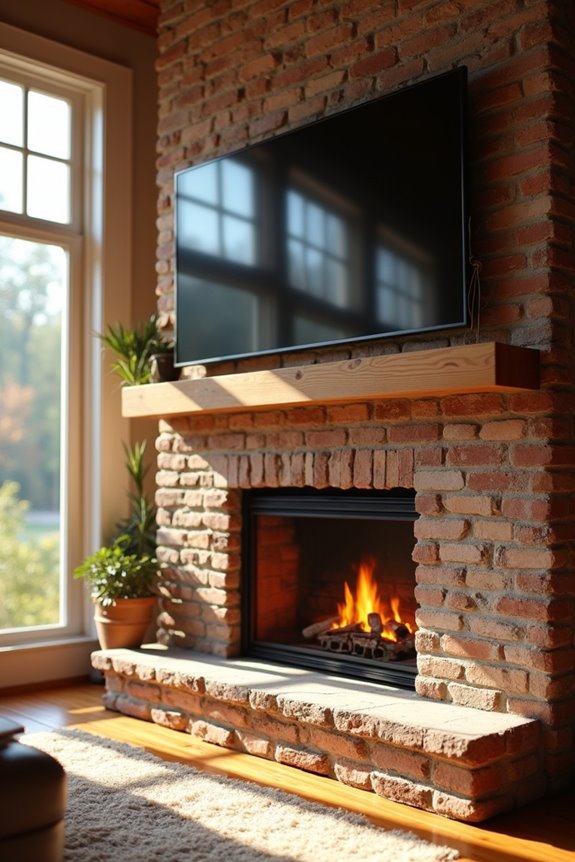
So you’re thinking about mounting that TV above your fireplace yourself—and honestly, I get it, because who doesn’t love saving a few bucks and feeling capable?
Here’s the thing: improper mounting height and inadequate heat clearance can seriously damage your TV. Without a professional assessment, you might miss critical details about your specific fireplace type, mantel depth, and ventilation needs. Professionals evaluate these factors to determine safe mounting height and methods tailored to your situation.
Getting it wrong means risking heat deflection that destroys expensive equipment. That’s not the outcome you wanted. Professional installers verify proper clearance distances (typically 8–12 inches minimum) and confirm correct venting. They’ll also reassess if you upgrade your fireplace later.
Sometimes calling an expert saves you money and frustration.
Chimney, Flapper, and Ventilation: Pre-Installation Checks
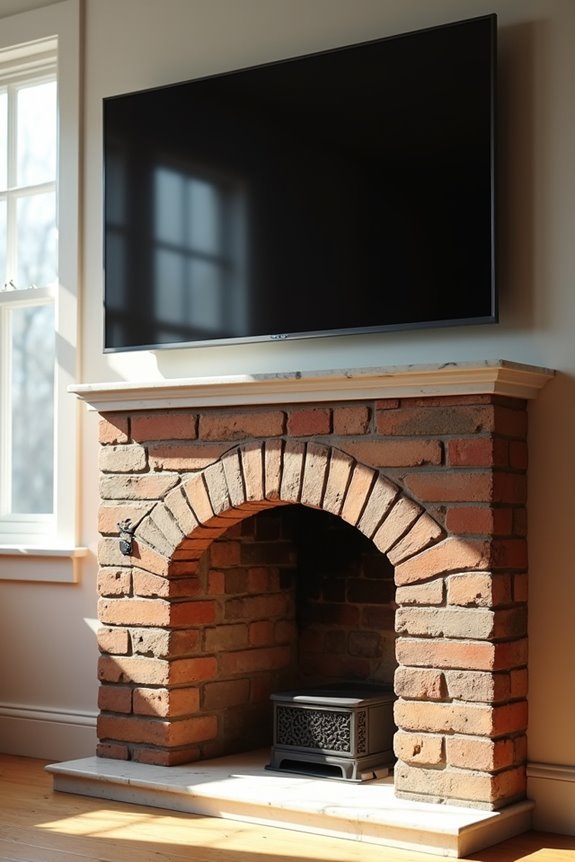
Before you even think about mounting that TV, you’ve got to make sure your fireplace’s plumbing—yes, I’m calling it that—is actually working right.
Your chimney needs serious attention first. Here’s what you’re checking:
- Chimney sweep and inspection – Get a professional to clear out any soot or blockages that could mess with airflow
- Flapper operation – Make sure it opens completely; a stuck flapper traps heat straight toward your TV
- Ventilation flow – Confirm your fireplace works properly to prevent heat buildup
These three things work together. A clean chimney plus proper ventilation plus a fully-opening flapper equals a cooler environment around your mounted TV. Skip these checks, and you’re basically asking for trouble. Regular maintenance keeps everything running smoothly, protecting both your equipment and your peace of mind long-term.
What to Ask an Expert Before You Mount
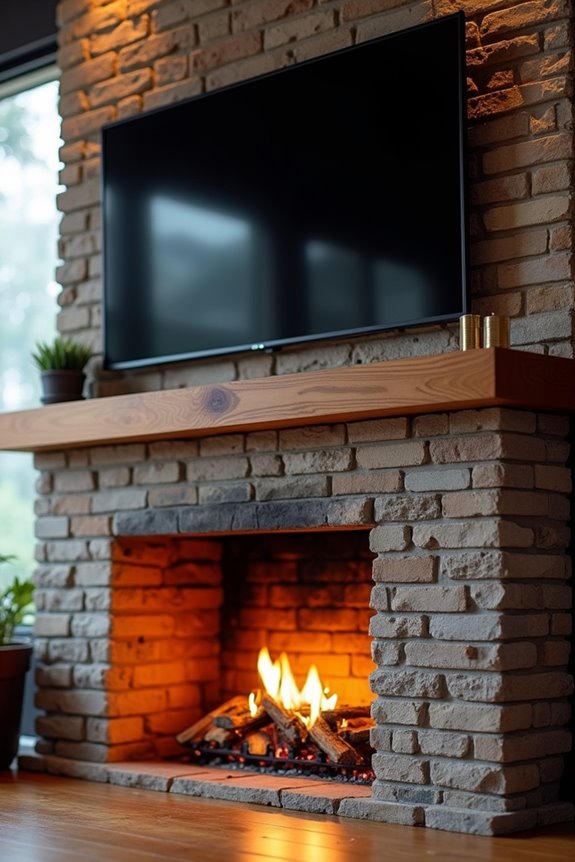
When you’re ready to actually put that TV above your fireplace, don’t just wing it—talk to a pro first. Ask an expert about the minimum clearance distance your setup needs; most fireplaces require 8–12 inches between the TV and heat source, but yours might differ. Identify whether you’ve got a gas, wood, or electric fireplace, since each produces different heat levels that affect mounting height and protection strategies. Request specific guidance on using a mantel or specialized mounting system to deflect heat away from your TV. Most importantly, verify that both your fireplace and TV manufacturers’ instructions align with the expert’s recommendations. Finally, discuss any future changes—like switching fireplace types—so you’re not scrambling later.