Lighting candles won’t dry out your room—they’ll actually do the opposite. When you burn a candle, the flame releases water vapor straight into your air, and that warm air can hold even more moisture. Without proper ventilation, that humidity gets trapped and builds up, sometimes even condensing on your windows. If you’re serious about controlling moisture, you’ll want to crack a window, run a dehumidifier, or upgrade your ventilation instead. The details on effective strategies are waiting below.
The Short Answer: Candles Actually Raise Humidity, Not Lower It
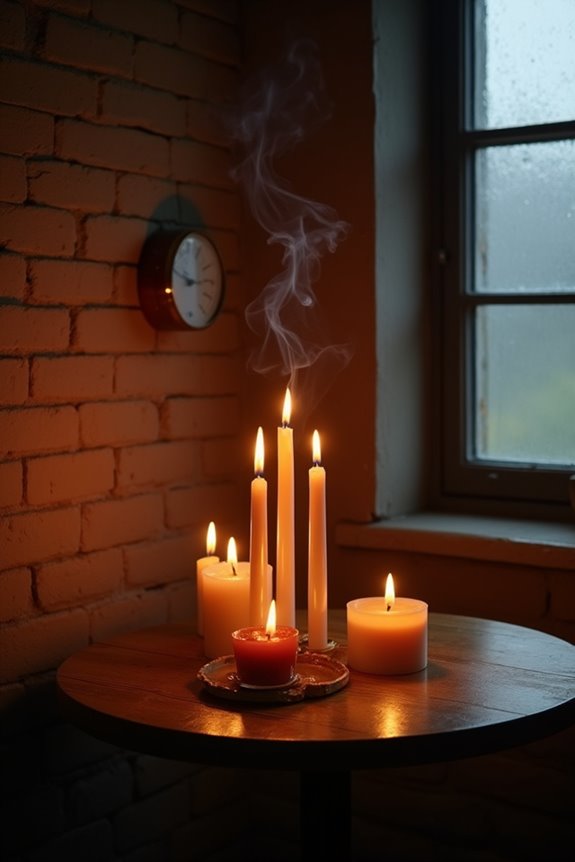
Ever wonder if lighting a candle might help dry out your sticky, humid room? Here’s the truth: you’d actually make things worse. When you burn a candle, the wax burning humidity process releases water vapor into the air around you. Sounds counterintuitive, right?
The combustion creates moisture that combines with your existing indoor moisture, raising humidity levels instead of lowering them. In enclosed spaces humidity becomes even more noticeable because that water vapor has nowhere to escape. Your candle combustion humidity situation gets trapped, potentially causing condensation on windows and mirrors.
Why Candles Actually Raise Humidity
How’s this for irony: you’re trying to solve your humidity problem, and your cozy candle is actually making it worse?
When you light a candle, combustion happens—that’s just fancy chemistry for burning stuff. Here’s the thing: that burning process releases water vapor directly into your air. Paraffin wax candles are particularly guilty; they pump out moisture along with other combustion byproducts while they burn. The heat from your flame also warms the air around it, and warm air holds more moisture, creating a humidity rise in your space.
Without proper ventilation, that water vapor gets trapped nearby, settling on surfaces and lingering in your room. So yeah, your candle’s doing the opposite of what you wanted. Oops.
The Real Air Quality Threat From Burning Candles
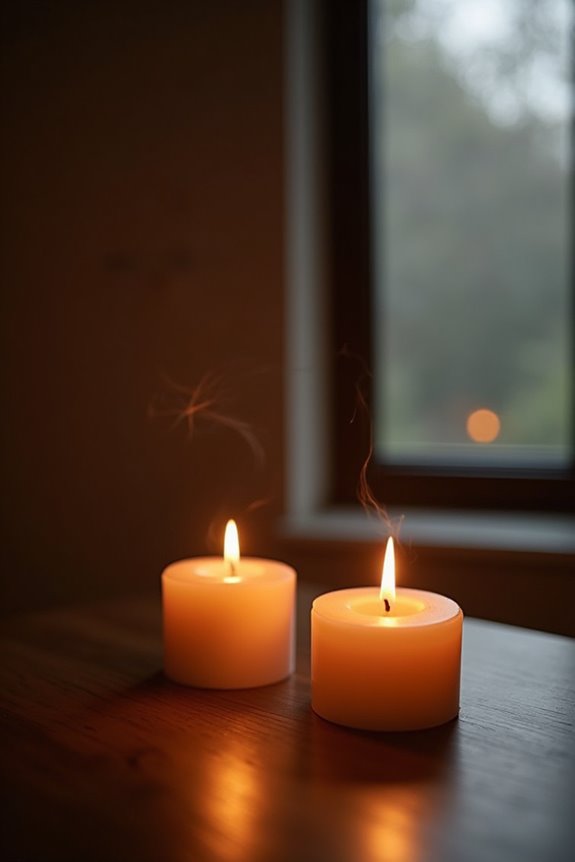
So here’s the thing: while you’re worried about moisture in your room, there’s actually a sneakier problem brewing right above that candle flame.
When you burn candles, you’re releasing PM2.5 and VOCs—tiny particles and chemicals that hang around in your air. Paraffin candles produce soot containing benzene and formaldehyde, which irritate your lungs and trigger allergies. Scented candles? They’re worse, pumping out even more pollution.
| Type | Issue | Impact |
|---|---|---|
| Unscented | Moderate soot | Mild irritation |
| Scented | Heavy soot + VOCs | Severe irritation |
| Paraffin | Benzene, formaldehyde | Respiratory problems |
| Burning | PM2.5 spikes to 41 µg/m³ | Poor indoor air quality |
That soot travels through your HVAC system, recirculating contaminants everywhere. You’re basically trading one problem for another—a worse one, honestly. Your indoor air quality matters more than humidity levels.
Candles vs. Alternatives: Which Is Better for Your Home
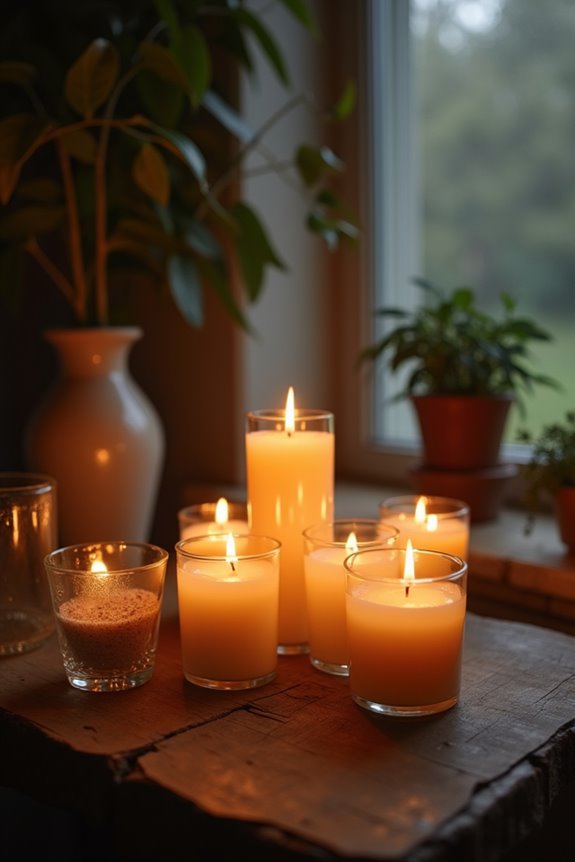
If you’re going to burn something in your home, you might as well pick the option that won’t turn your lungs into a chemistry experiment.
You’ve got solid alternatives to traditional paraffin candles that’ll keep your air cleaner while maintaining that cozy vibe you’re craving:
- Soy or beeswax candles burn cleaner, producing less soot and fewer harmful VOCs (that’s volatile organic compounds—basically invisible nasties floating around)
- Candle warmers give you fragrance without smoke, protecting your indoor air quality completely
- Essential oil diffusers deliver scent with minimal combustion pollution when you use pure oils
- Unscented candles release significantly fewer VOCs than scented versions
Honestly, if you love candles, stick with soy or beeswax. Your lungs—and your humidity levels—will thank you. Trim those wicks, ventilate well, and you’re set.
The Best Ways to Actually Control Humidity
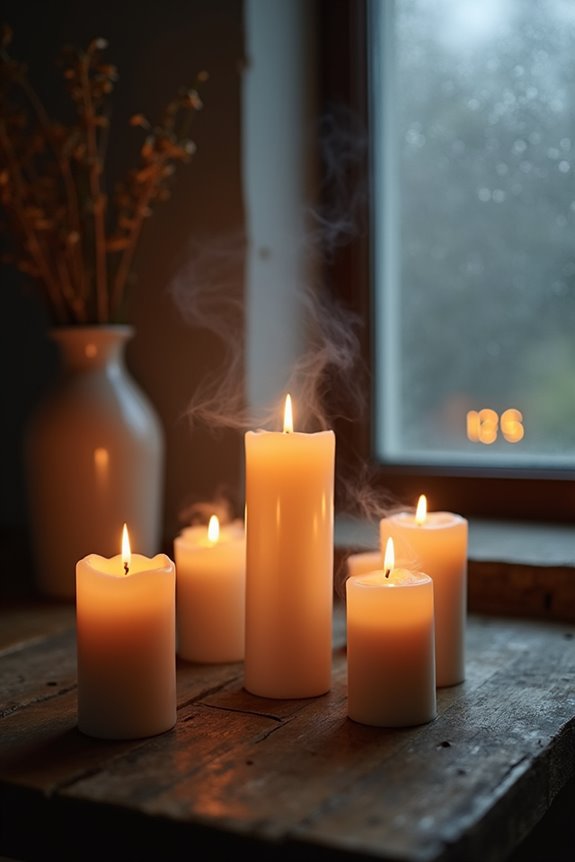
Now that you know candles aren’t actually helping your humidity problem—and might even be making it worse—let’s talk about what actually works. You’ll want to focus on three key strategies: dehumidification, ventilation, and air exchange. Start by cracking a window or running a vent to remove moisture from candle combustion and stale air. Next, invest in a mechanical dehumidifier, which actively pulls water vapor out instead of just hoping it disappears. Finally, consider upgrading your HVAC system for better climate control. These approaches actually reduce humidity levels, unlike candles that add water to your space. If you’ve tried everything else, these methods will deliver results.
Professional Help: When to Upgrade Your HVAC
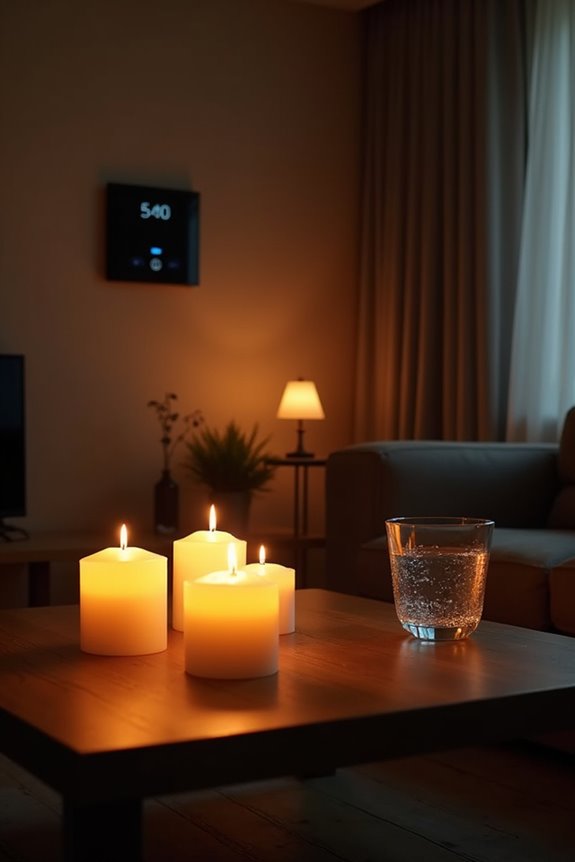
When you’re tired of playing humidity detective with dehumidifiers and open windows, it’s time to contemplate upgrading your HVAC system—because honestly, your current setup might be working way too hard for way too little payoff.
Consider these signs you need professional help:
- Your humidity levels stay stubborn despite humidifiers running constantly
- Mold spots appear even after lighting candles and cracking windows
- Standard filters can’t keep dust and allergens under control
- Your energy bills climb while comfort drops
Professional IAQ services in Belle Chasse assess your current system and recommend upgrades like HEPA filters, UV lights, and electronic air cleaners. These additions work together—not against each other—to manage humidity properly while filtering particulates. You’ll finally breathe easier knowing your HVAC handles everything.