
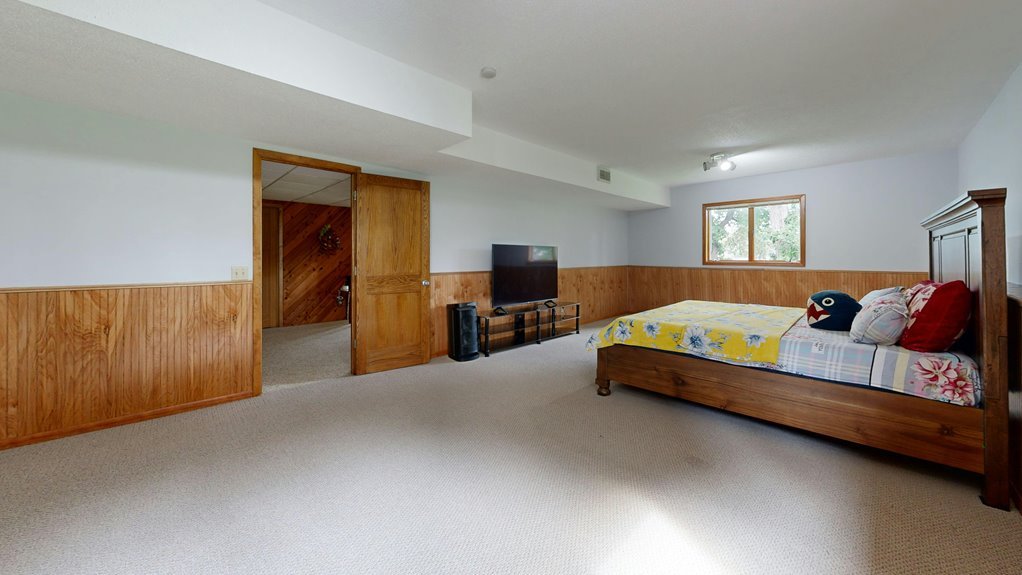
Your basement bedroom counts—but only if it meets specific requirements. You’ll need an egress window (that emergency exit), proper ceiling height, heating, and ventilation throughout.
Appraisers typically value below-grade bedrooms at 50-75% of main-level square footage, and they won’t officially count the space without code compliance.
Document everything with photos and measurements, because lenders and appraisers follow strict standards.
Get it right, and you’re looking at recovering about 86% of conversion costs while boosting your home’s appeal—but there’s definitely more to know about maximizing that value.
What Basement Bedrooms Are Actually Worth: Appraisal and Resale Impact
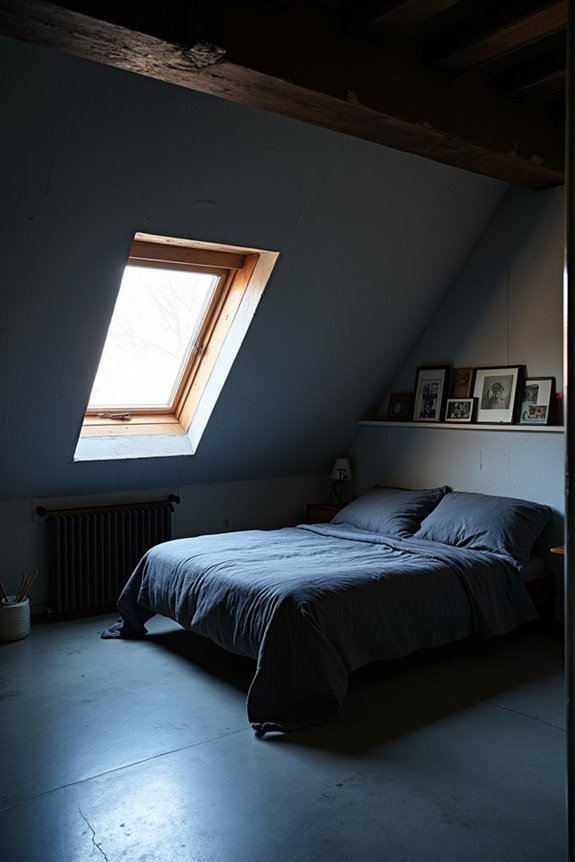
So you’ve finished that basement and converted it into a bedroom—but here’s the million-dollar question: does it actually count toward your home’s value the way you’d hoped?
Here’s the reality: your basement bedroom value depends heavily on your local market. Appraisers typically value below-grade living space at only 50% to 75% of what main-level square footage brings in. That’s frustrating, we know.
The appraisal labeling matters too. If your basement bedroom meets code requirements—proper egress window, heating, ventilation—appraisers may officially count it. Without these features, you’re looking at a tougher resale impact.
The good news? Data indicates basement conversions recover about 86% of costs. You’re gaining usable space and genuine appeal, even if the dollar-per-square-foot math isn’t perfect. Your investment still counts.
Does Your Basement Bedroom Count? What Appraisers and Lenders Need to Know
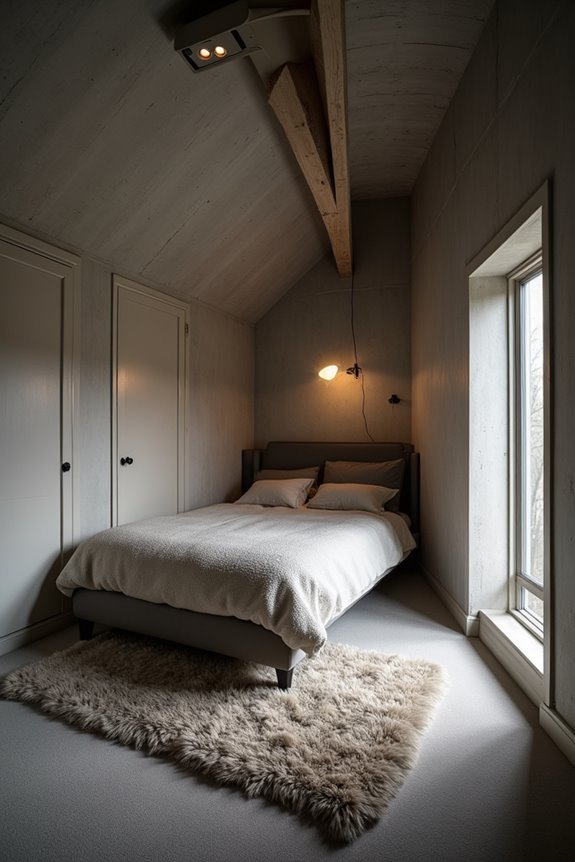
Why does your basement bedroom matter so much when you’re trying to sell or refinance your home? Because appraisers and lenders won’t count it as a real bedroom unless it meets specific requirements. Your finished basement needs an egress window—that’s a properly-sized escape route meeting local codes. The window must open wide enough and sit low enough for emergency exit. Without it, your appraisal value drops, and lenders hesitate to approve loans based on that bedroom count. You’ll also need adequate ceiling height, heating, and ventilation throughout the space. Meeting these standards makes your basement bedroom a legitimate sleeping quarters that boosts your home’s financial value and marketability.
The Basement Bedroom Checklist: Egress, Height, and Code Compliance
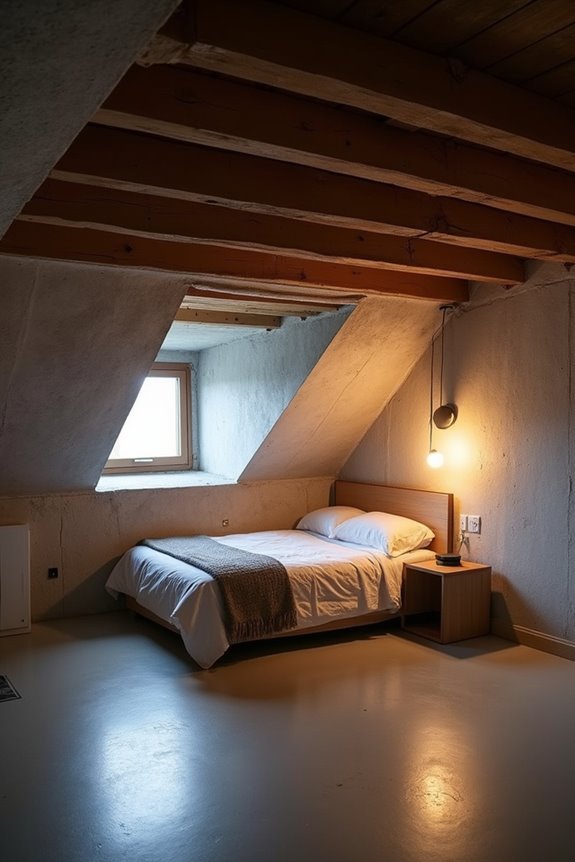
You’ve probably wondered if that finished basement room actually counts as a real bedroom—and honestly, it’s trickier than you’d think. To determine whether your space qualifies, you’ll need to check three major things: whether you’ve got a legal exit window or door (called egress), if your ceiling clears that 7-foot height mark, and if the room’s at least 70 square feet. Since building codes vary depending on where you live, what passes inspection in one town might get flagged in another, so you’ll want to verify your local requirements before you finalize your plans.
Legal Window Requirements
If you’re thinking about converting your basement into a bedroom, the key factor that’ll make or break your plans: you’ve got to have a legal egress window.
This isn’t just some random rule—it’s your safety net, literally. An egress window serves as an emergency exit if something goes wrong. You’ll need to meet specific measurements for both the opening size and the window itself.
| Requirement | Sill at Grade | Sill Below Grade |
|---|---|---|
| Egress Area | 5.7 sq ft | 9 sq ft |
| Width | 24 inches | 24 inches |
| Height | 20 inches | 20 inches |
| Max Sill Height | 44 inches | 44 inches |
Beyond the window, you’re checking ceiling height and natural light too. These elements work together, meeting code standards so your basement bedroom qualifies as legitimate living space.
Height And Square Footage
Once you’ve nailed down the egress window situation, there’s another big checkpoint: your basement’s height and size.
Your basement bedroom needs adequate headroom and square footage to function as a real bedroom, not a closet. Most codes require a minimum ceiling height, though requirements vary by jurisdiction. You’ll also need adequate square footage—typically at least 70 square feet for a bedroom, though some places demand more.
Here’s the tricky part: building codes treat above-grade and below-grade space differently. Below-grade bedrooms often don’t “count” as livable square footage unless they meet strict standards including that egress window we discussed. So even if you’ve got the perfect egress window installed, undersized rooms might still not qualify legally as bedrooms in your area. Check your local codes because they’re your ultimate authority.
Basement Bedroom Square Footage: How Lenders Count What Matters
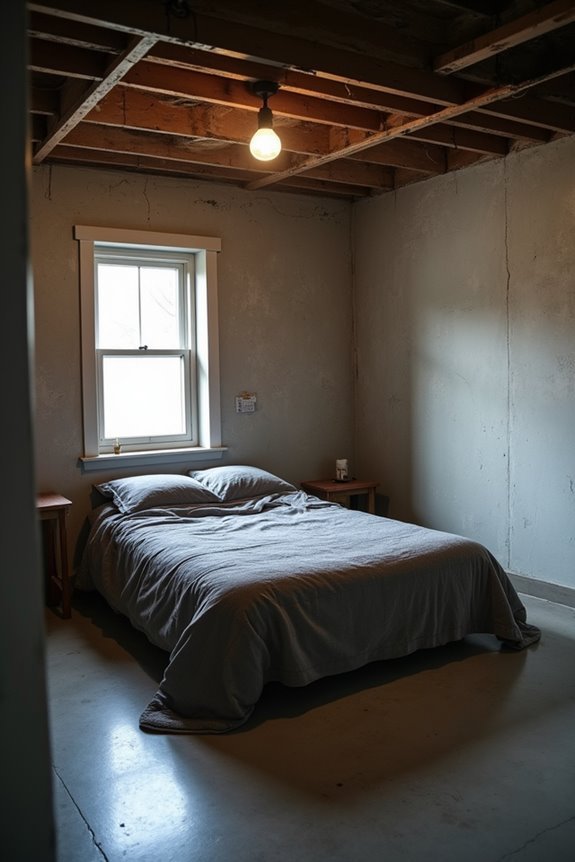
Why does your finished basement bedroom sometimes count toward your home’s value and sometimes doesn’t? The answer depends on your lender’s appraisal guidelines and where you live. Most lenders, including Fannie Mae, count only above-grade livable space in their calculations. Your basement square footage might not qualify because it’s below ground level, even if it’s perfectly finished and legal.
Here’s what matters: lenders scrutinize whether your basement meets local building codes for bedrooms. If it lacks proper egress windows or ceiling height, it won’t count. Walk-out basements fare better since they’re partially above grade. Your appraisal value hinges on these technical details, potentially affecting loan terms and your home’s marketability. Understanding your specific state’s rules helps you set realistic expectations when buying or refinancing.
Why Bedroom Count Excludes Below-Grade Spaces
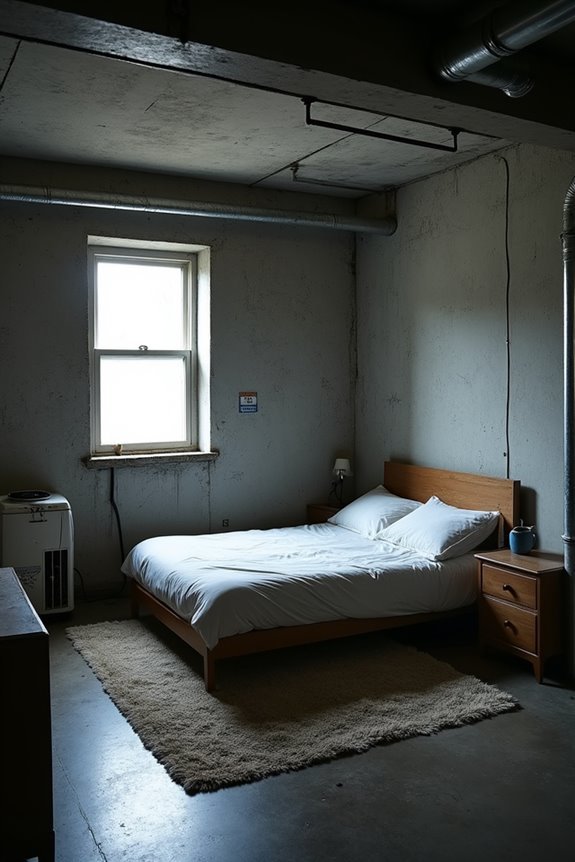
Ever wonder why your finished basement bedroom doesn’t count as an “official” bedroom on your home’s paperwork?
Ever wonder why your finished basement bedroom doesn’t count as an official bedroom on your home’s paperwork?
The reason comes down to standardized rules that appraisers and lenders follow nationwide. Here’s what keeps below-grade spaces out of your bedroom count:
- Safety requirements – Your basement room needs proper egress (that’s a legal emergency exit), which above-grade bedrooms naturally have through windows or doors
- Consistency standards – Lenders want to compare homes fairly, so they stick to above-grade bedrooms that meet uniform building codes
- Market practice – Even if your basement qualifies legally, appraisers often separate below-grade rooms from your official count
The reality? Your finished basement bedroom adds real value to your home, but it’s typically reported separately. Understanding this distinction helps you know what you have while setting realistic expectations.
Maximize Basement Bedroom Value: Code Compliance and Documentation
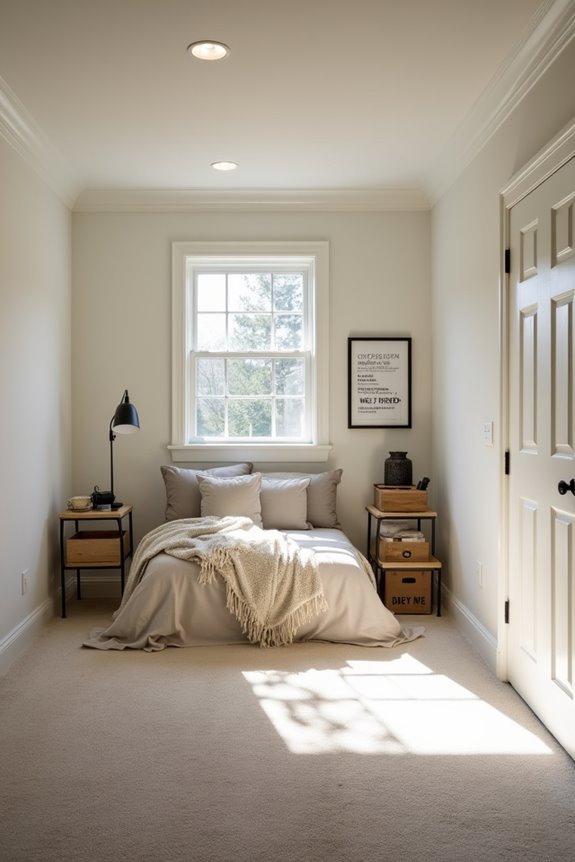
To count your basement bedroom when selling or refinancing, you must meet building code requirements—including checking local regulations on egress windows, ventilation, and lighting, which vary by jurisdiction. Official documentation through a proper appraisal is critical, since missing paperwork or code violations will reduce your home’s value significantly. Your approach should include addressing compliance from the start, maintaining detailed records of all improvements, and providing appraisers with accurate information about your space, which prevents complications and unnecessary expenses down the line.
Code Compliance Requirements
Here’s the thing about basement bedrooms—you can have the coziest, most perfectly decorated underground space imaginable, but if it doesn’t meet building codes, appraisers and home inspectors won’t count it as a bedroom, which basically means you’re leaving money on the table.
To make your basement bedroom count legally, you’ll need to check these basement bedroom code requirements:
- Egress window installation: Your egress requirements demand a minimum 5.7 square feet opening (9 square feet if below grade) with 24-inch width and 20-inch height
- Sill height limits: Keep your window sill under 44 inches from the floor for safe emergency exits
- Proper access and climate control: Install stairs or defined entry points plus heating and ventilation systems
Meeting these egress requirements converts your basement from bonus space into legitimate sleeping quarters that’ll impress appraisers and protect your investment.
Documentation For Appraisals
So you’ve knocked out all those code requirements—your egress window’s perfectly sized, your sill height’s legal, and your basement actually functions as a real bedroom now. Here’s where the real work happens: documentation for appraisals.
You’ll need to follow UAD documentation standards, which basically means recording everything about your basement bedroom legality in ways appraisers actually recognize. Don’t just mention that your space is finished; instead, document that egress window with photos and measurements. Show the window meets code minimums for opening size and placement.
Your appraisal narrative should connect code compliance directly to living space classification. This alignment prevents disconnects between what you’ve built and what appraisers officially count as bedrooms, ultimately protecting your property’s value and marketability.